Since the beginning of the war, Iran has damaged the radar and detection systems of the US military throughout the Middle East. • The targets were hit in many countries – in Qatar, Saudi Arabia, the United Arab Emirates, Jordan, Bahrain, Kuwait, etc.
In recent days, Iran has been working to damage the “eyes” of the US military in the region, and according to reports and satellite photographs, it is succeeding in doing this to some extent. According to a report published today in the Wall Street Journal, Iran has succeeded in damaging several critical radar systems of the US air defense systems in the Middle East. The report is based on American sources, military analysts and satellite photographs – according to which several such facilities have already been damaged, which may make it difficult to US and Israel to monitor missile launches from Iran.
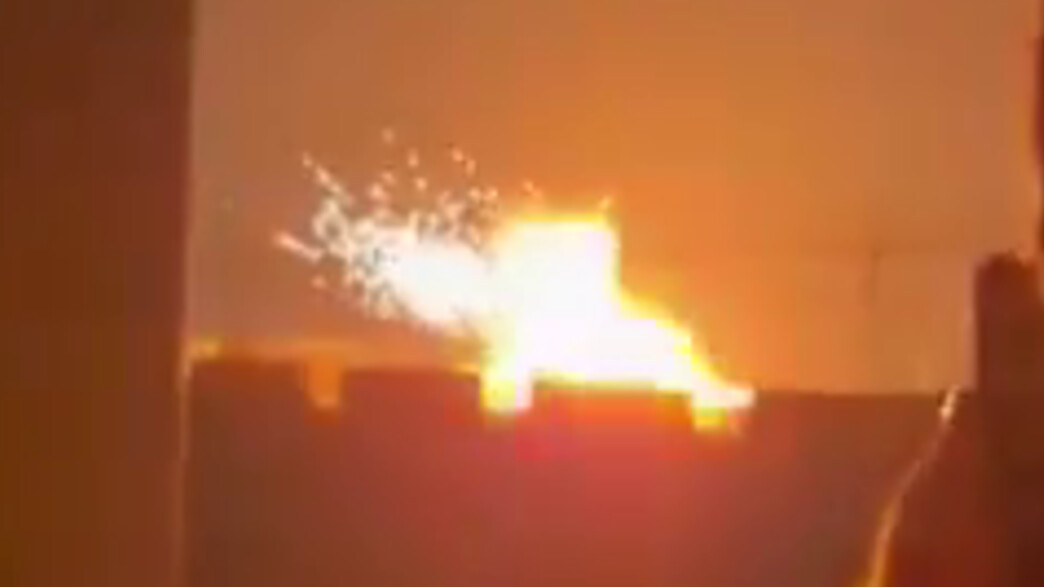
As part of Iran’s attacks, radar, communication and air defense systems of the US Army in Qatar, the United Arab Emirates, Jordan, Bahrain, Kuwait and Saudi Arabia were damaged. The documentation published tonight shows an Iranian drone hitting a radar position at the Al-Salem base in Kuwait.
In a large part of these attacks, Iran used suicide drones, including “Shahad” models, similar to the Russian drones used in the war in Ukraine. These are much cheaper means than ballistic missiles, and often more difficult to detect and intercept, and they cost only a small fraction of the price of the missiles that the advanced American defense systems are designed to intercept.
Ravi Chaudhary, former assistant secretary of the US Air Force for facilities affairs, said the defense systems were still performing well overall, but added that the Iranians were focusing their efforts on certain targets. According to him, among the targets are command and control systems as well as the ability of the US to detect approaching missiles and UAVs.
An Iranian drone hit the US Army’s radar in Bahrain
The US Army’s Central Command said that despite the vulnerability, the US Army maintains full operational capability. US officials indicated that Washington continues to strengthen defenses in the area with additional equipment and interceptors.
The US and its allies operate a network of advanced air defense systems in the Middle East, including THAAD and Patriot, along with other systems to intercept missiles and UAVs and other air threats. All of these systems rely heavily on radars that detect approaching threats, and this is sometimes extremely rare and expensive equipment.
One of Iran’s worst attacks hit an advanced early warning radar system at the Al-Odeed base in Qatar, where the largest American military base in the region is located. According to an American source and satellite images, the attack hit a type of radar AN/FPS-132 and limited his ability to act.
It is a wide-range radar designed to track a large number of targets at the same time. The United States has five fixed radars of this type as part of the North American warning system designed to protect US territory from missile launches. According to estimates, the cost of such a system can reach up to one billion dollars.
Satellite photographs indicate damage to the radar facility in Qatar. The report states that debris can be seen on the northeast side of the radar dome, from the direction of Iran, as well as signs of water flow that appear to have resulted from attempts to extinguish a fire at the site. According to him, the impact illustrates how vulnerable even relatively advanced radars can be.
In addition, Iran also hit a type of radar TPY-2 which is connected to the battery THAAD in Jordan. This radar is a key component of the ballistic missile defense system, which intercepts missiles outside the atmosphere.
Examinations of satellite photographs also revealed damage to three radar domes at the Camp Ariphan base in Kuwait, which is used by American forces, as well as damage to a satellite communication system at the US Fifth Fleet headquarters in Bahrain. In Saudi Arabia, a satellite photo from Sunday last week shows smoke rising from a building at the radar site at Prince Sultan Air Base.
The US has deployed its central radar systems at strategic points around the world to counter threats from countries such as Iran, North Korea and Russia. In addition, the US Navy operates several guided missile destroyers in the region that can also intercept ballistic missiles and other aerial threats.
These systems also played an important role during the current fighting. For example, when Iran launched a missile at the Incirlik base in Turkey where the US stores nuclear weapons, an American radar in southeastern Turkey detected the launch and transmitted the information to an American warship in the eastern Mediterranean, which was able to intercept the missile. The radar station in the city of Kyorchik was placed there more than a decade ago by the Obama administration to strengthen NATO’s air defense against Iran.
The US Army has a total of seven batteries THAAD Operationality. Two of them are permanently stationed in Guam and South Korea. Of the five alternating batteries, two are currently stationed in the Middle East, in Israel and Jordan, to deal with the Iranian threat. An eighth battery was delivered to the US Army last year but is still in the experimental stages and has not yet entered into operational activity. Saudi Arabia and the United Arab Emirates also purchased systems from the US THAAD of their own, and some have already entered service.
In many of the attacks, Iran used suicide drones that explode upon hitting the target. The drones fly at a low altitude and at a relatively low speed, so it is sometimes more difficult to intercept them using normal defense systems, which are aimed at intercepting missiles.
Despite the decrease in the number of missile launches, the UAV attacks continue at a relatively high rate. According to the Ministry of Defense of the United Arab Emirates, after a first wave of more than 500 UAVs in the first two days of the war, Iran continues to launch more than 100 UAVs per day on average.
Yesterday IDF officials denied that the time between the advance warning and the alarms was shortened due to radar problems.
https://urbanexpe.com/
https://mymoumout.com/
https://rangoonrestaurant.com/
https://vitallogy.com/
https://uk.trustpilot.com/review/starburst-not-on-gam-stop.uk
https://uk.trustpilot.com/review/creditcardcasinosuk.co.uk
https://uk.trustpilot.com/review/sitesnotongamestop.co.uk
https://uk.trustpilot.com/review/bonusbuyslotsuk.com
https://uk.trustpilot.com/review/nonukslotsites.uk
https://uk.trustpilot.com/review/nonukgccasinos.uk
https://www.reviewcentre.com/money/pensions-investments/spread-betting
https://www.reviewcentre.com/money/pensions-investments/spread-betting/independent-investor-wwwindependentinvestorcom-16035689
https://starr.org/wp-content/uploads/event-manager-uploads/event_banner/Synadentix_2026HQ.pdf
https://linktr.ee/heartopiamod
https://linktr.ee/subwaysurferscity
https://linktr.ee/blockblastpro
https://linktr.ee/sledsurfers
https://aimes.org/forums/discussion/nmn-supplement-benefits-the-complete-guide-to-energy-longevity-and-cellular/
https://pulseformai.com/blog/the-straight-a-black-sheep-when-your-sister-was-the-golden-image-and-you-were-the-threat
https://pulseformai.com/blog/when-your-wallet-is-empty-but-your-potential-isn-t-how-to-attract-wealth-from-absolute-rock-bottom
https://pulseformai.com/blog/the-narcissist-won-t-let-you-go-how-to-leave-safely-when-walking-away-feels-impossible
https://pulseformai.com/blog/why-your-life-feels-off-lately-it-s-not-burnout
https://pulseformai.com/blog/the-thought-that-quietly-sabotages-smart-people
https://pulseformai.com/blog/why-your-brain-prefers-negative-thoughts-even-when-you-re-winning