Animals|Sailors used to catch easy prey. Giant tortoises disappeared from the island of Floreana already in the 1850s.
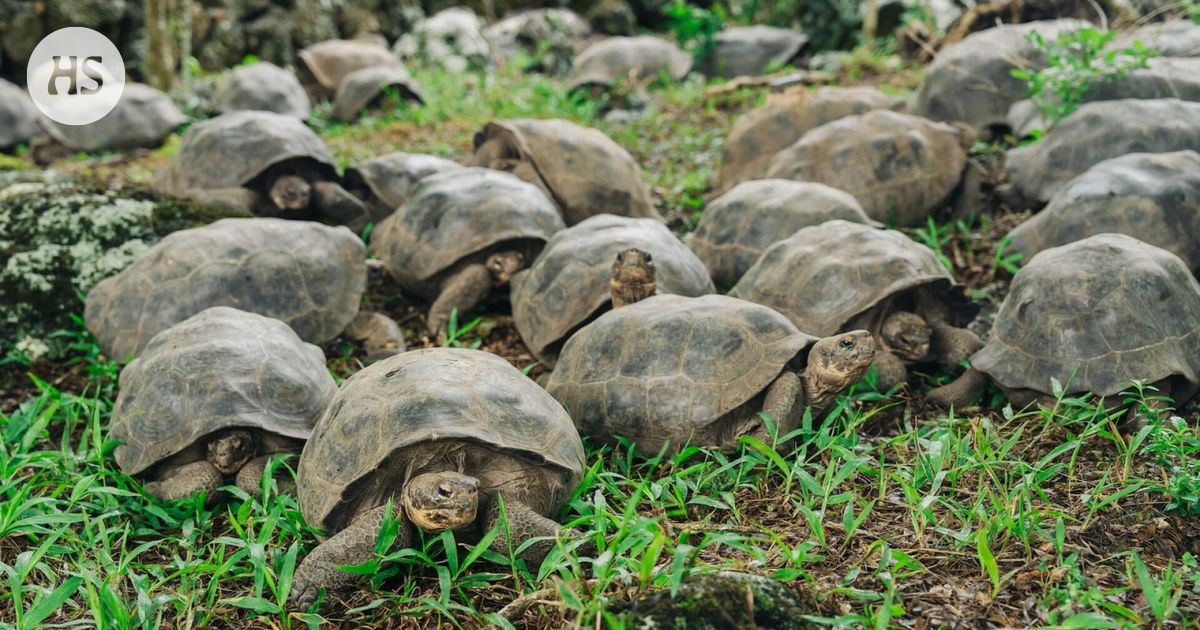
More than 150 giant tortoises have been returned to Floreana in the Galápagos Islands after an absence of more than 160 years.
Sailors once caught the native turtle subspecies to extinction by the end of the 1850s. They took thousands of turtles to their ships for food.
In 2008, zoologists found turtles on nearby Isabela Island that were closely related to the extinct subspecies on Floreana.
In all 158 giant tortoises have been returned at the end of February to Floreana, one of the big islands of the Galápagos Islands. There have been no giant tortoises living on the island for over 160 years.
Sailors once hunted the island’s giant tortoises to extinction. By the end of the 1850s, every last villain had been killed or taken aboard. Turtles provided food for long sea voyages.
Planning for the return of the species began when researchers found genetic close relatives of the extinct turtle in 2008. They lived in the neighboring island of Isabela.
Giant tortoises found on Earth only on the Galápagos Islands and the Seychelles in the Indian Ocean. Their shield may be 1.2 meters long.
The Galápagos Islands are located in South America west of Ecuador. They are known for their diverse and rare fauna.
The Galápagos Islands became a famous place because it is the father of the theory of evolution Charles Darwin visited the islands in the fall of 1835. He collected samples from the islands for five weeks.
Darwin also described the islands’ giant tortoises. He said they were so big that it took several men to lift them.
On the islands live several subspecies of the giant tortoise. Everyone has adapted to slightly different conditions. Isabela turtles are closely related to the subspecies Chelonoidis niger nigerwho once lived on Floreana.
In the late 2010s, conservationists selected 23 turtles whose genes were most suggestive of this subspecies.
By 2025, more than 600 such turtles had already been bred on Santa Cruz Island, says British Broadcasting Corporation BBC. They have been “back-breeded”, i.e. an attempt has been made to restore characteristics towards the lost subspecies of Floreana.
Floreanalla about 150 people live there. The fauna includes, for example, the marine iguana, the Galapagos sea lion, the blue footed seal and the Galapagos penguin.
Conservationists say the return of the turtles is a significant milestone in the conservation history of the Galápagos Islands.