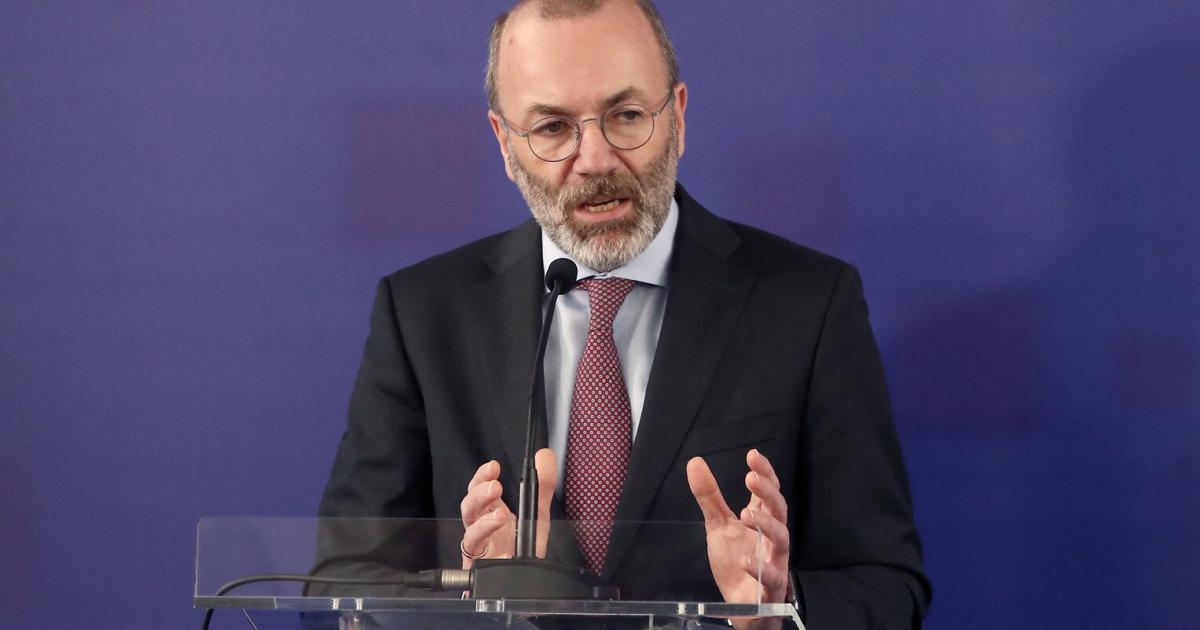
The EPP Group in the European Parliament, which also includes the ÖVP as well as the CDU and CSU from Germany, cooperates much more closely with the German one AfD and other right-wing parties such as the FPÖ than previously known. Research by the German Press Agency shows that the EPP recently worked with the right wing in a chat group and at a personal meeting of MPs on a legislative proposal to tighten migration policy.
On the question of whether the EPP group leader Manfred Weber A spokesman initially did not want to comment about the WhatsApp group and the meeting between representatives of his group and right-wing politicians. He said they would not comment on internal processes.
The negotiated legislative proposal received the necessary majority shortly after the MEPs met in the responsible committee of the European Parliament. In addition to MPs from the EPP group, parliamentarians from groups from the right-wing camp voted for him, including AfD politician Mary Khan. The planned law is intended, among other things, to enable the deportation of asylum seekers to so-called “return hubs” in countries outside the EU.
Union politician denied structured cooperation
The CSU politician and EPP parliamentary group leader Manfred Weber had always given the impression that there was no such type of cooperation with right-wing parties. At the end of last year, he told the newspapers of the Funke media group that it was important to him that there was “no structured cooperation with right-wing radical parties” in the European Parliament. He added: “The firewall is up. We know who our enemies are.” The AfD is an anti-European party.
A few days ago, the CDU MEP Lena Düpont, who sits on the responsible committee, told the “Frankfurter Allgemeine Zeitung” about the vote on the migration law: “There was no structural cooperation with the AfD and other far-right forces.” You cannot prevent other groups from joining your own proposal. Düpont could not immediately be reached for comment.
How the deal came about
The cooperation between the parties came after the legislative project was stuck for months because the EPP, Social Democrats and Liberals could not reach an agreement. These three party families actually have a kind of informal coalition that is intended to make cooperation between the EPP and far-right parties unnecessary.
In this specific case, Allianz had not found an agreement at the beginning of March. According to the information, after the Social Democrats refused to agree to the concept of “Return Hubs” in its current form, a WhatsApp group was founded in which the EPP presented its proposal to the right-wing factions.
These are the conservative right-wing populist EKR around the MEPs of Italian Prime Minister Giorgia Meloni, the Patriots for Europe (PfE) with the politicians of the FPÖ, the Rassemblement National (RN) party of France’s right-wing populist Marine Le Pen and the Lega from Italy, as well as the parliamentarians of the Europe of Sovereign Nations (ESN) party family with the AfD MEPs.
Approval for AfD proposal
Group employees responded to the proposal with requests for changes. According to information from the dpa, the EPP also took into account suggestions made by the AfD politician Khan’s parliamentary office. One of the EPP’s WhatsApp group says: “We can support that.”
Specifically, Khan advocated for additional powers for the authorities to check the age of asylum seekers. She called for medical tests to be used in cases of doubt to determine whether those seeking protection are really minors.
According to their own statements, right-wing politicians made it clear early on that there were conditions for their support. The right-wing populist MP Marieke Ehlers told the dpa that she had made it known that she would only take part if she could actively participate in the process. “I won’t just sign on the dotted line,” said the politician from the Dutch Freedom Party (Partij voor de Vrijheid), founded by the radical right-wing populist Geert Wilders.
Ehlers said she did not want to comment on confidential chats. The AfD politician Khan and the EKR politician Charlie Weimers also said in response to a dpa request that they did not want to comment on internal communications.
EPP politicians meet right-wing factions
A short time after the WhatsApp group was founded, a personal meeting of the four MPs from ESN, EKR, PfE and EPP who were negotiating the law took place on March 4th. These are the French EPP politician François-Xavier Bellamy, the AfD MEP Khan as well as Ehlers from the PfE and Weimers from the EKR. Together they developed a legislative proposal for the upcoming vote.
After the agreement, the WhatsApp group said: “Thank you for this excellent cooperation.” EPP employees react with the emoji for clapping.
When asked by the dpa, an EPP spokesman said that there had been no significant changes to the text submitted by the EPP. It is based on the European Commission’s proposal and has been expanded to include important aspects of the position of the governments of the Member States. “AfD MPs play no role in either the majority or the positioning. They are irrelevant,” he added.
German Interior Minister Dobrindt promoted the proposed law
The fact that a majority was found in the committee is seen as a breakthrough on the question of whether the EU states could soon set up “return hubs” in third countries. The vote in the entire EU Parliament, probably in a few weeks, is now considered a formality – as are the necessary discussions with the Council of Member States. The proposed return regulation stipulates that asylum seekers who are required to leave the country and who cannot be deported directly to their home or country of origin should instead be taken to reception centers outside the EU.
The German Interior Minister Alexander Dobrindt (CSU) in particular is promoting the concept. It is intended to relieve the burden on the European asylum system. The German federal government says it has developed a rough roadmap with four other EU countries for the establishment of “return hubs”. Critics see the project as endangering the fundamental rights of refugees.
German firewall debate
The announcement of the collaboration with the right could now put a strain on the project. CSU leader Markus Söder and CDU leader Friedrich Merz have repeatedly spoken out against any cooperation with the AfD in the past. There had previously been heated debates on several occasions, including after the Union tried to push through a tightening of migration policy in the Bundestag at the beginning of 2025. One motion only achieved a majority because the AfD also agreed.
It is unclear whether the EPP has cooperated so closely with the right-wing factions in the past. In migration policy, there was a vote at the end of last year to outsource asylum procedures – here too, a right-wing majority voted in favor. With the support of right-wing and right-wing extremist parties, the EPP also paved the way for a weakening of the supply chain law.
https://vallensbaekmose.dk/casino-anmeldelse/nv-casino/
https://6-dages.dk/casino-app/nv-casino/
https://mrcardesign.de/mobile-app/nv-app/
https://adentribune.com/mobile-app/nv-apps/
https://rejsbykirke.dk/betting-bonusser/nv/
https://pacificwingsmagazine.com/index.php/betting-app/nv-app/
https://novacore-studios.de/casino-bewertungen/nv/
https://cnmuc.de/casino-bonusse/nv-boni/
https://bedstekuponer.dk/casino-bonusser/nvcasino-bonus/
https://kobenhavnsdelebiler.dk/casino-bonusser/nv-casino/
https://perper.dk/casino-bonusser/casino-tivoli/
https://sbfancutouts.com/casino-bonuses/nv-bonuses/
https://jonathanbowmanlaw.com/esports-bonuses/nv-esports/
https://dylanbostic.com/mobile-casino-app/nv-mobile/
https://patassociation.com/nv-mobile/
https://pokergeeks.de/poker-login/nv-poker-login/
https://elanec-news.com/casino-reviews/nv-review/
https://savethecougar.org/casino-reviews/nv-reviews/
https://thenftwtf.com/casino-reviews/nv-reviews/
https://swir.us/slot-bonuses/nv-slot-bonus/
https://playatrock.com/slot-bonuses/nv-slot-bonus/
https://fibser.de/wettbonus/nv-sportwetten/
https://dodsulykker.dk/live-casino-bonusser/nv-live-bonus/
https://economistbg.com/kazino-bonusi/slotsvader-bonus/