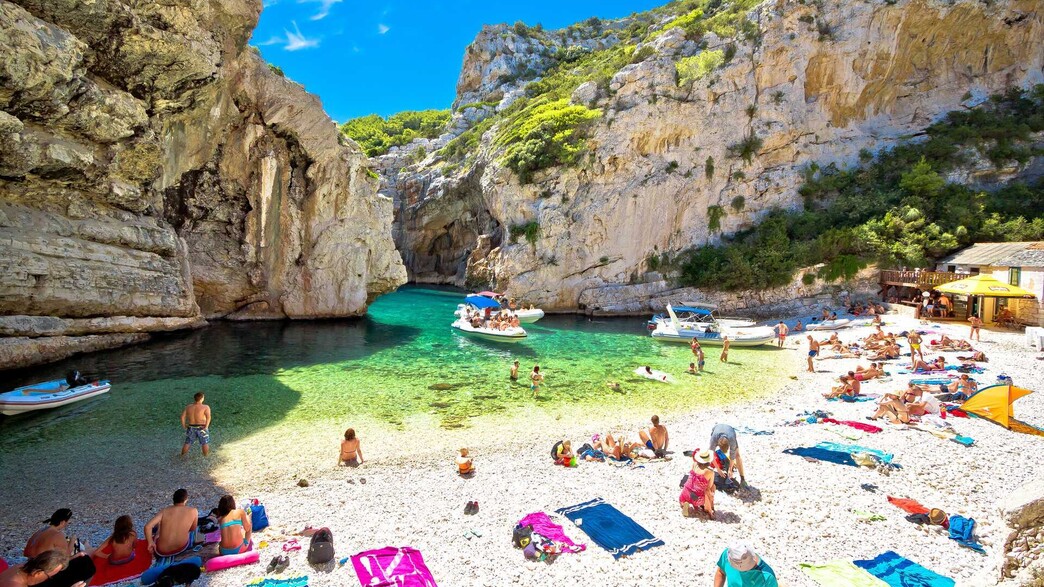
Escalating tensions between Serbia and its neighbors are shaking the Western Balkans region, with Serbia issuing a travel warning to Croatia while also announcing military readiness against what it sees as a regional threat. The Serbian Foreign Ministry recently classified Croatia as an “orange” destination in the warning system, and recommends “traveling there only in cases of extreme necessity.” According to Belgrade’s statement, the step is due to “incidents with increasing frequency, tensions and unpleasant security circumstances”. Citizens were urged to avoid gatherings, to be especially vigilant, and to protect their personal safety and property. Croatia is the only European country that appears in this category, along with 27 countries in Africa and Asia, Bolivia, and Venezuela.
The Croatian government responded strongly, dismissing Serbia’s warning as “baseless” and stressing that Croatia remains one of the safest countries to holiday in Europe. Tourism Minister Tonci Galvina and the Croatian Foreign Ministry cited Croatia’s membership in the European Union, NATO and the Schengen area, along with Eurostat statistics, to refute Serbia’s claims, describing the warning as a political statement rather than a reflection of a real security situation. Zagreb also noted that travel warnings often actually increase interest in tourism from the country that issued them, And called it “a classic example of the forbidden fruit”.
At the same time, the warning creates a practical contradiction, since despite the warning, the national airline of Serbia, Air Serbia, continues to expand its flights to Croatia, and has announced two weekly flights to the island of Birch this summer. This is the company’s seventh destination in Croatia, in addition to a network of up to 38 weekly flights to major cities such as Zagreb, Dubrovnik, Split and Pula. Political analysts in Serbia question the purpose of the Foreign Ministry’s warning, claiming that it is intended to be more of a political message than a true security warning.
This travel warning comes amid comments from Serbian President Aleksandar Vucic, who expressed concern about military developments in the region. In interviews with local media, Vucic claimed that Croatia, Albania and Kosovo are coordinating their security policies and could pose a threat to Serbia. Referring to the proposal for trilateral defense coordination signed in Tirana on March 18, 2025, the president said that Belgrade is preparing for the possibility of an attack, saying: “They are waiting for the right moment. We are preparing for their attack.”
Vucic noted the capabilities of the Serbian military, including advanced Chinese-made hypersonic missiles with a range of up to 400 kilometers, emphasizing that Serbia maintains good relations with NATO and continues a military neutrality policy. The president also accused Zagreb of trying to harm Serbia over the past year and a half, by interfering in internal affairs.
In a similar atmosphere, Vladimir Djukanovic, a senior member of the Serbian ruling party (SNS), described the cooperation between Croatia, Albania and Kosovo as a “direct threat” to Serbia, adding that it is possible that Bulgaria will join the initiative in the future. In an article published in the government-affiliated Politika newspaper, Djukanovic claimed that Serbia’s military modernization is essential for deterrence and maintaining national security. He emphasized that the military’s investments are a strategic necessity and not a provocation, and frames regional cooperation in the context of broader geopolitical tensions that include Russia and the European Union.
While Belgrade presents the developments as a potential threat, analysts and observers in the region point out that the tripartite agreement is primarily a framework for military cooperation, strengthening coordination capabilities and protection against hybrid threats. Joint exercises, personnel training, and technology exchange are intended to improve the ability to respond to security risks, and do not constitute a formal alliance against Serbia.
The latest developments come against a backdrop of wider geopolitical instability. The military attack by the United States and Israel on Iran has added to global tensions, with European leaders monitoring the possible consequences, including spillover into the European space. Vucic spoke out in the past and said that “everyone is preparing for war”.
Why Serbia and Croatia are in conflict again
The tensions between Serbia and Croatia do not arise only from travel warnings or military developments, but from deep roots of a complex history in the Balkans. The conflicts between the countries are related to a combination of political, national and religious conflicts, originating from the breakup of Yugoslavia in the 1990s with the declaration of independence of Croatia from Serbia, after which the Croatian War of Independence broke out. The war involved violent clashes between Croatian and Serbian forces, which led to hundreds of thousands of refugees and the loss of many lives. This conflict left deep scars in the collective memory of both countries, and the nationalist conflicts continue even in the following decades.
Religious and traditional differences reinforce tensions: Serbia is a country with a majority Serbian Orthodox population, while Croatia is a Catholic country. The religious differences not only express a different cultural identity, but also make reconciliation difficult and feed mutual suspicion over the years. In addition, modern political issues contribute to tensions, with Serbia not recognizing Kosovo’s independence, leading to friction with neighboring countries that support the recognition of Kosovo, including Croatia and Albania. In 2025, Croatia, Albania, and Kosovo signed the Tripartite Declaration on Defense Cooperation, whose stated purpose is to improve defense capabilities and close military cooperation. Serbia sees this as a possible threat to its security, and its military policy and warnings are part of the response.
Also, local politics in Serbia play a major role. Officials in the government and the ruling party are using the regional tensions to justify significant investments in military modernization and strengthen Serbia’s image as a country that is ready to deter any threat. On the other hand, the defense initiatives of the neighboring countries are described in Belgrade as an “anti-Serbian alliance”, although they are mainly defined as a diplomatic, security and economic cooperation framework.
https://vegasino-casino-fr.org/retrait/
https://vegasino-casino-fr.org/vip/
https://vegasino-casino.eu.com/app/
https://vegasino-casino.eu.com/bonus/
https://vegasino-casino.eu.com/casino/
https://vegasino-casino.eu.com/connexion/
https://vegasino-casino.eu.com/retrait/
https://vegasino-casino.eu.com/vip/
https://vegasino-fr.eu/app/
https://vegasino-fr.eu/bonus/
https://vegasino-fr.eu/casino/
https://vegasino-fr.eu/connexion/
https://vegasino-fr.eu/retrait/
https://vegasino-fr.eu/vip/
https://vegasino-fr.eu.com/app/
https://vegasino-fr.eu.com/bonus/
https://vegasino-fr.eu.com/casino/
https://vegasino-fr.eu.com/connexion/
https://vegasino-fr.eu.com/retrait/
https://vegasino-fr.eu.com/vip/
https://vegasinocasino-fr.net/app/
https://vegasinocasino-fr.net/bonus/
https://vegasinocasino-fr.net/casino/
https://vegasinocasino-fr.net/connexion/
https://vegasinocasino-fr.net/retrait/