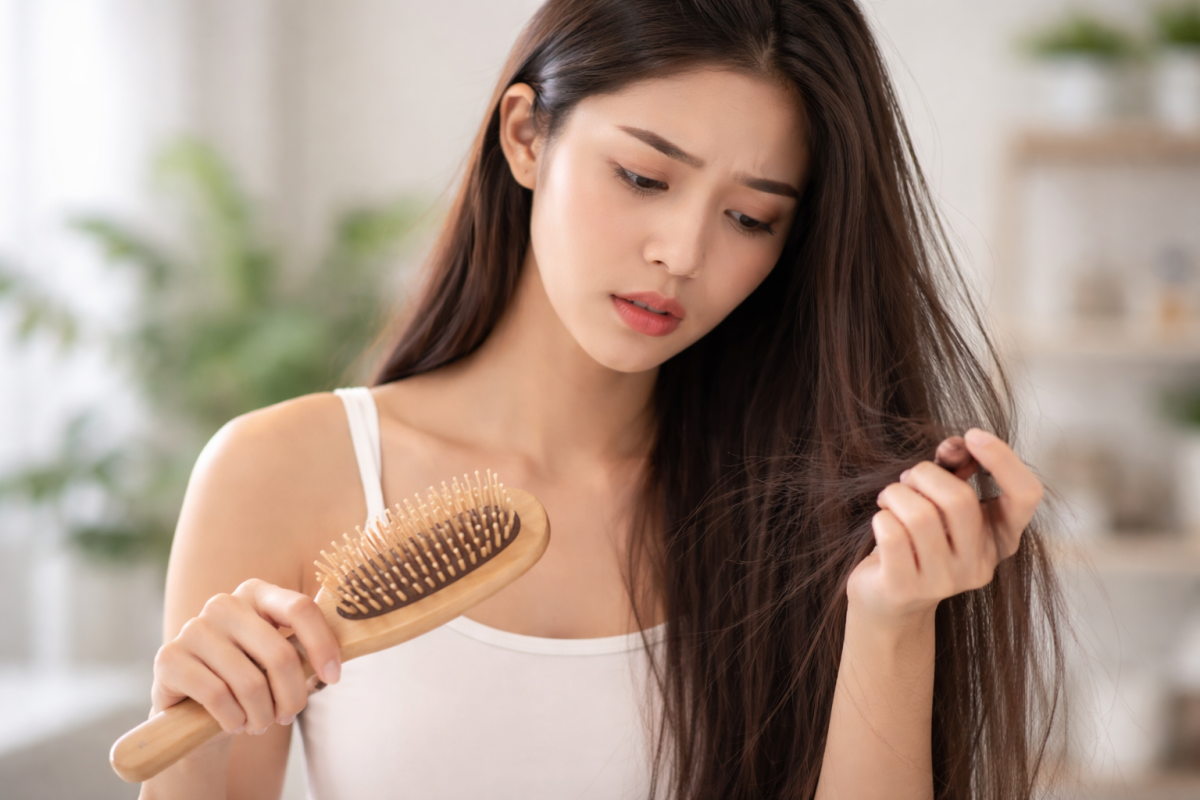
Important hormones such as androgen, estrogen, thyroid, and insulin can affect the hair growth cycle in women.
Dihydrotestosterone (DHT)
This is an androgen hormone – a derivative of testosterone, which still exists in the female body but at low concentrations. When there is excess DHT, this hormone can shrink hair follicles, shorten the growth phase and prolong the shedding phase. As a result, the hair becomes thinner, especially noticeable on the crown of the head and along the parting line.
Estrogen
This hormone helps hair maintain a long growth cycle, making hair thick and long. They can also prevent testosterone from converting to DHT in hair follicles. When estrogen levels decrease, such as during menopause, hair thins and falls out.
Progesterone
This hormone regulates the menstrual cycle and supports pregnancy. Like estrogen, progesterone inhibits the conversion of testosterone to DHT. Low progesterone levels increase DHT in the scalp, contributing to hair loss.
Cortisol
Cortisol levels increase during emotional or physical stress, causing a temporary form of hair loss. Practice deep breathing exercises, meditation, yoga, tai chi or mindfulness to relax your nervous system.
Thyroid hormones
The thyroid gland produces hormones that are essential for metabolism and overall body function, including the health of hair follicles. Hypothyroidism (low thyroid hormone levels) and hyperthyroidism (high thyroid hormone levels) both disrupt the hair growth cycle.
Insulin
This hormone regulates blood sugar levels. Insulin resistance or lack of insulin leads to high blood sugar levels, damaging blood vessels, reducing the amount of oxygen and nutrients supplied to hair follicles. This can slow hair growth, promoting hair thinning.
Although hormonal hair loss cannot always be prevented. However, changing your lifestyle helps maintain hair health.
Reduce stress: Incorporating stress-reducing activities like meditation, yoga, spending time on hobbies, and exposure to sunlight reduces cortisol levels.
Maintain a balanced dietg: Eat foods rich in nutrients that support hormone production and balance overall health.
Exercise regularly: Physical activity contributes to regulating hormones such as insulin, reducing stress.
Prioritize sleep: Try to sleep 7 to 8 hours every night to support hormonal balance and restore health.
https://nvcasino5.de/spiele/sweet-bonanza/
https://nvcasino5.de/spiele/plinko/
https://nvcasino5.de/spiele/poker/
https://nvcasino6.de/bonus/
https://nvcasino6.de/bonus/ohne-einzahlung/
https://nvcasino6.de/bonus/freispiele/
https://nvcasino6.de/login/
https://nvcasino6.de/app/
https://nvcasino6.de/auszahlung/
https://nvcasino6.de/spiele/
https://nvcasino6.de/spiele/sweet-bonanza/
https://nvcasino6.de/spiele/plinko/
https://nvcasino6.de/spiele/poker/
https://nvcasino8.de/bonus/
https://nvcasino8.de/bonus/ohne-einzahlung/
https://nvcasino8.de/bonus/freispiele/
https://nvcasino8.de/login/
https://nvcasino8.de/app/
https://nvcasino8.de/auszahlung/
https://nvcasino8.de/spiele/
https://nvcasino8.de/spiele/sweet-bonanza/
https://nvcasino8.de/spiele/plinko/
https://nvcasino8.de/spiele/poker/
https://nvcasino9.de/bonus/
https://nvcasino9.de/bonus/ohne-einzahlung/