The war between Israel, the United States and Iran has caused the largest production disruption in the history of the oil market, says the international energy organization IEA.
In its latest report, the IEA gives 10 tips suitable for buyers to reduce oil consumption as much as possible. The advice focuses on fuels for driving, flying and industry.
Iran has practically closed the Strait of Hormuz, which is vital for the transportation of oil in the Persian Gulf, by threatening to sink every tanker or cargo ship that passes through the strait with missiles or drones. This has led to a drastic increase in ship insurance, which in practice makes shipping by sea too risky for ships. About 20 percent of the entire world’s oil consumption has passed through the Strait of Hormuz.
The production disruption has led to a sharp rise in prices. The price of Brent crude oil has risen well above 100 dollars per barrel. This is despite the fact that the IEA member states decided on March 11 to release 400 million barrels of oil from their emergency reserves to the market.
Remote work is recommended
Moving to work by car accounts for 5–30 percent of all driving, depending on the location. The IEA recommends remote work for everyone who can do it. According to the organization’s report, three remote days a week could reduce personal oil consumption by up to 20 percent.
The connection between the calculation of oil consumption and the work done on site was noticed during the corona pandemic. European Commission report according to the 2020 pandemic measures, oil consumption fell by about 10 percent.
Over 10 km/h decrease in speed limits and incentives for public transport
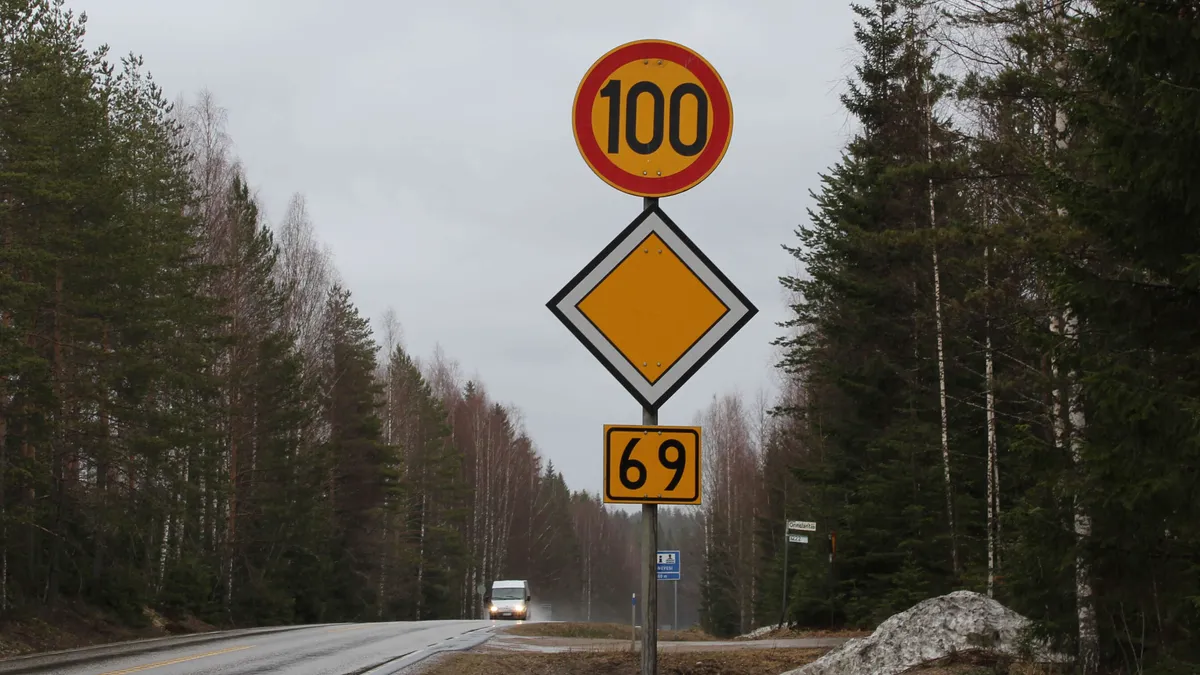
The IEA report emphasizes the reduction of vehicle consumption. The organization recommends lowering speed limits by at least 10 kilometers per hour on highways. Depending on typical speeds, this could reduce an individual car’s fuel consumption by 5-10 percent, according to the report.
If the matter is considered from Finland’s point of view, the recommendation could mean moving to winter restrictions until the availability of oil returns to normal.
In addition, the IEA encourages governments to create more incentives for the use of public transport. For example, the organization gives incentives to remove or reduce fees in areas where public transport infrastructure already exists.
Short-term solutions to previous crises have been, for example, Germany’s 9-euro ticket in 2022, which could be used to travel on all local trains and public transport in cities for a month.
THE FACTS
IEA’s 10 ways to save oil
1. Remote work should be preferred in those places where it is possible
2. Speed limits on highways and motorways should be reduced by at least 10 km/h
3. Public transport should be preferred
4. The access of cars to certain areas of large cities could be restricted in order to reduce traffic jams
5. Car sharing should be encouraged
6. Logistics should take even greater care of environmentally efficient measures in vehicles
7. The use of liquid natural gas as fuel should be reduced
8. Flying to, for example, meetings should be avoided when a remote meeting is possible
9. The use of natural gas as cooking fuel should be avoided
10. The use of industrial hydrocarbons should be optimized for those products of which there is the least shortage in nearby areas
https://1wcz.com/podpora/
https://1wcz.com/licence/
https://1wcz.com/o-nas/
https://1wcz.com/affiliate/
https://1wcz.com/jak-sazet/
https://1wcz.com/esports/lol/
https://1wcz.com/zasady-ochrany-osobnich-udaju/
https://1wcz.com/zodpovedne-hrani/
https://1wcz.com/esports/starcraft/
https://1wcz.com/bonusy/
https://1wcz.com/fotbal/
https://1wcz.com/obchodni-podminky/
https://1wcz.com/esports/
https://1wcz.com/
https://1wcz.com/android/
https://ussolrezienne.be/aanmelden/
https://ussolrezienne.be/affiliatieprogramma/
https://ussolrezienne.be/algemene-voorwaarden/
https://ussolrezienne.be/android/
https://ussolrezienne.be/app/
https://ussolrezienne.be/aviator/
https://ussolrezienne.be/betaalmethoden/
https://ussolrezienne.be/bonussen/
https://ussolrezienne.be/casino/
https://ussolrezienne.be/contacteer-ons/