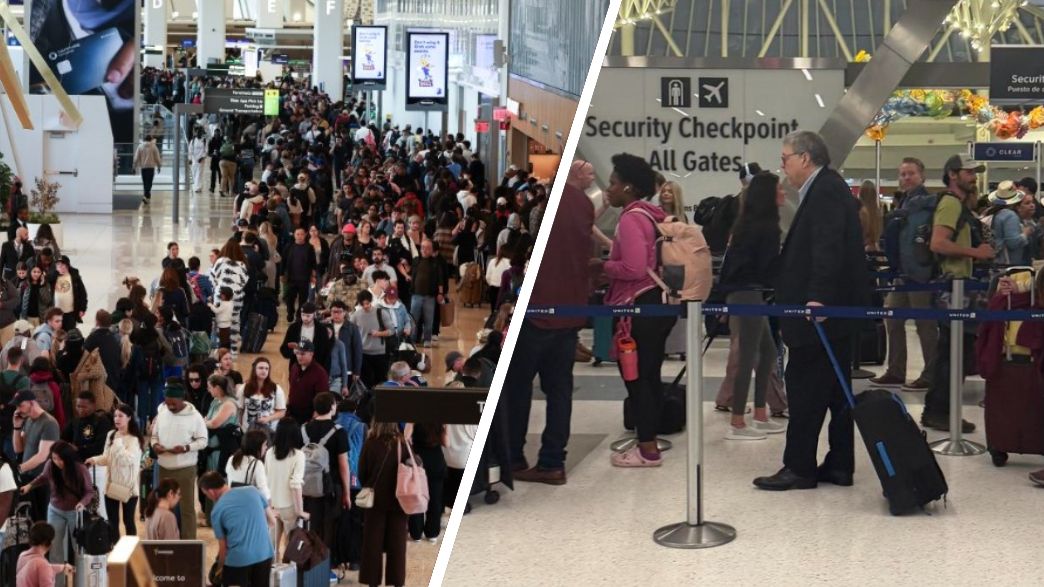
While the US administration is trying to recover from the consequences of shutting down the systems, the airports in the United States are becoming a real battlefield. The severe shortage of personnel at the Transportation Security Administration (TSA), which began following salary delays among security inspectors, has led to the creation of a new and dubious economic market: paid waiting services for affluent passengers or those who simply cannot afford to miss their flight.
The phenomenon, which was nicknamed Wait Gate, began with private initiatives and soon became an organized business. The New York company Same Ole Line Dudes, which specializes in queuing services, reports a dramatic jump in requests to wait at the security check. According to Robert Samuel, the company’s founder, it is not an easy job: “In a line that moves all the time, unlike waiting for an iPhone launch, for example, you can’t use chairs. We have to stand on our feet for hours, so the rate is at least $35 an hour.”
In Texas, the situation is even more extreme, and at George Bush Airport in Houston, where queues were recorded that stretched outside the terminals, passengers were found who paid $65 an hour to a “paid queue stander” to reserve a seat for them. Steven Dial, a resident of the place that started providing the service, claims that this is a legitimate logistical solution: “This is a trade of one for one. I leave, the passenger enters. The load of people in line remains the same.”
But what appears to be a creative solution for the desperate traveler, is a security headache for the authorities. The management of the airport in Houston issued an official and unequivocal statement against the phenomenon: “We do not approve paid queuing services. These are people who have not passed security background checks (vetting), and transferring a place in the queue to a stranger poses a risk to passengers.” The authorities also stressed that passengers must stay with their personal belongings at all times and not entrust them to unauthorized parties.
Vodka against despair
Along with the paid solutions, the passengers in the flooded airports find other ways to deal with the situation. In the footage shared on social media, a passenger in Houston is seen handing out free glasses of vodka to the dozens waiting in line. The act, which was initially seen as a provocation, turned out to be an abuse of the TSA regulations: the passenger, who was carrying a large bottle of alcohol that was prohibited from being brought onto the plane, chose to distribute its contents to the frustrated passengers instead of throwing it in the trash.
The current crisis began after the US Department of Homeland Security (DHS) budgets were frozen in mid-February, forcing many inspectors to work without pay. Although a presidential emergency order recently ordered the transfer of funds to pay salaries, the system is still struggling to get back to normal.
https://marathonbet.co.it/politica-sulla-privacy/
https://marathonbet.co.it/giochi/
https://marathonbet.co.it/contatti/
https://maxbet-ro.net/
https://maxbet-ro.org/
https://maxbet.com.ro/
https://maxbet.eu.com/
https://maxbet1.ro/
https://maxbetrs.eu/
https://maxbetrs.net/
https://maxbets.rs/
https://maxbetsport.eu/
https://maxbetsport.org/
https://maxwin-ro.com/
https://maxwin.com.ro/
https://maxwin.eu.com/
https://mega-riches-uk.com/bonus/
https://million-casino.com.ro/
https://millioncasino.org.ro/
https://monopoly-casino.biz/app/
https://monopoly-casino.biz/iniciar-sesion/
https://monopoly-casino.biz/bonos/
https://monopoly-casino.biz/politica-de-privacidad/
https://monopoly-casino.biz/juegos/
https://monopoly-casino.biz/contacto/