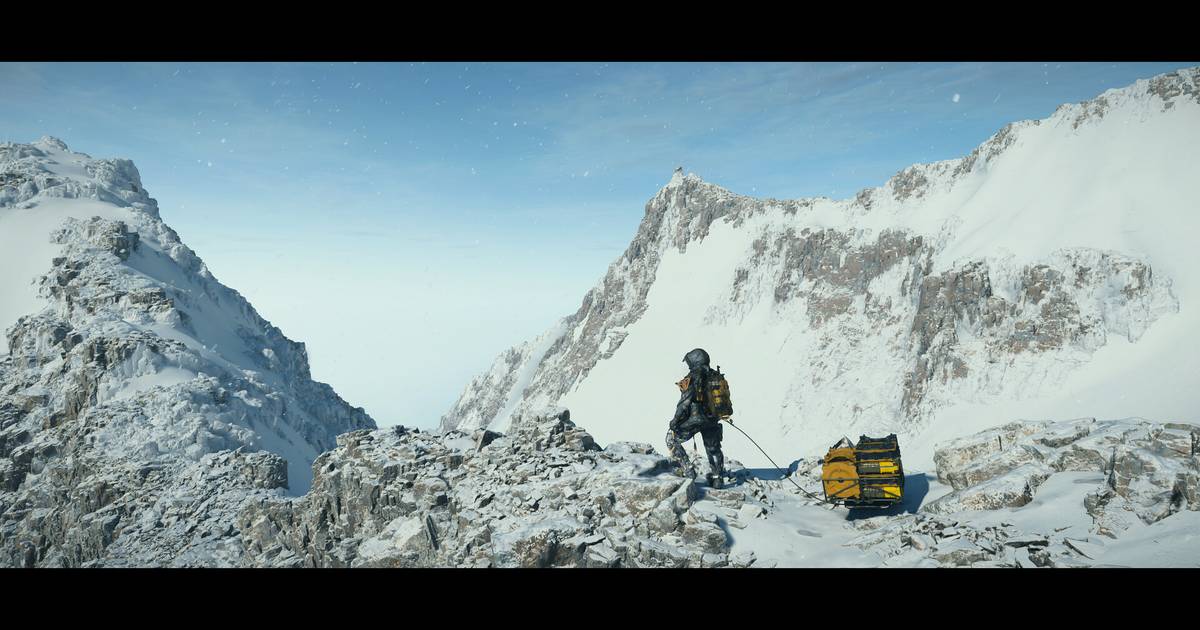
After Hideo Kojima divided the gaming world in 2019 with the first Death Stranding, we welcomed the sequel with huge expectations. Death Stranding 2: On the Beach, launched for PlayStation 5, does not shy away from its recognizable bizarre aesthetics and philosophical themes, but it brings significant changes that, in our opinion, simultaneously made it a more accessible, but potentially less unique experience.
Same mission, different continents
The story continues eleven months after the original. We are once again in the courier čisms of Sam Porter Bridges (Norman Reedus), but this time the mission of expanding the Chiral Network takes us beyond America, through Mexico to the harsh and diverse landscapes of Australia. Along the way, we are joined by a combination of old and new faces, including Fragile (Léa Seydoux) and new characters played by Elle Fanning and Shioli Kutsuna, while directors George Miller and Fatih Akin appear in supporting roles. That huge number of famous actors gives the impression that we are playing a movie and not a video game, which is a special experience in itself.
The plot is noticeably more dynamic and has a more propulsive rhythm than its predecessor, but at the same time we noticed that it relies on known narrative patterns and archetypes, which as veterans of the series occasionally seemed like recycling. However, knowing Kojima’s work, it is more likely that he consciously experimented less in order to target a slightly wider audience than was the case in the previous sequel.
Evolution or loss of identity?
We felt the biggest changes in the gameplay itself. While the original built tension on the feeling of isolation and painstakingly breaking through dangerous terrain, the sequel gave us powerful tools very early on. Vehicles, weapons and exoskeletons are available almost from the start, and the possibility of building an above-ground railway greatly facilitates transportation. Combat is more elaborate, with more options and a wider arsenal, which brings the game closer to more conventional action titles.
This “easier” learning curve and reduced friction make the game more enjoyable for a wider audience, but one gets the impression that the essence of the original has been lost. That feeling of helplessness and satisfaction after overcoming a seemingly impossible obstacle is now less pronounced, and the long journey is sometimes interrupted by an action that, frankly, does not stand out as the strongest part of the game.
Technical perfection
Where Death Stranding 2 absolutely delights is the technical performance. Built on the Decima Engine, this is undoubtedly one of the most visually impressive titles out there today. Environmental details, realistic character models, and an advanced dynamic weather system with sandstorms, floods, and avalanches create an incredibly believable world. Special praise should also go to the sound design, from the ambient noises to the fantastic background music that perfectly accompanies the emotional climaxes of the story.
Despiteč with the aforementioned criticisms directed at the gameplay, it is clear why the game achieved a huge critical success. Kojima’s polarizing vision continues to find its way to its audience, and although with mixed feelings, we have to admit that this is a journey that has been worth taking.