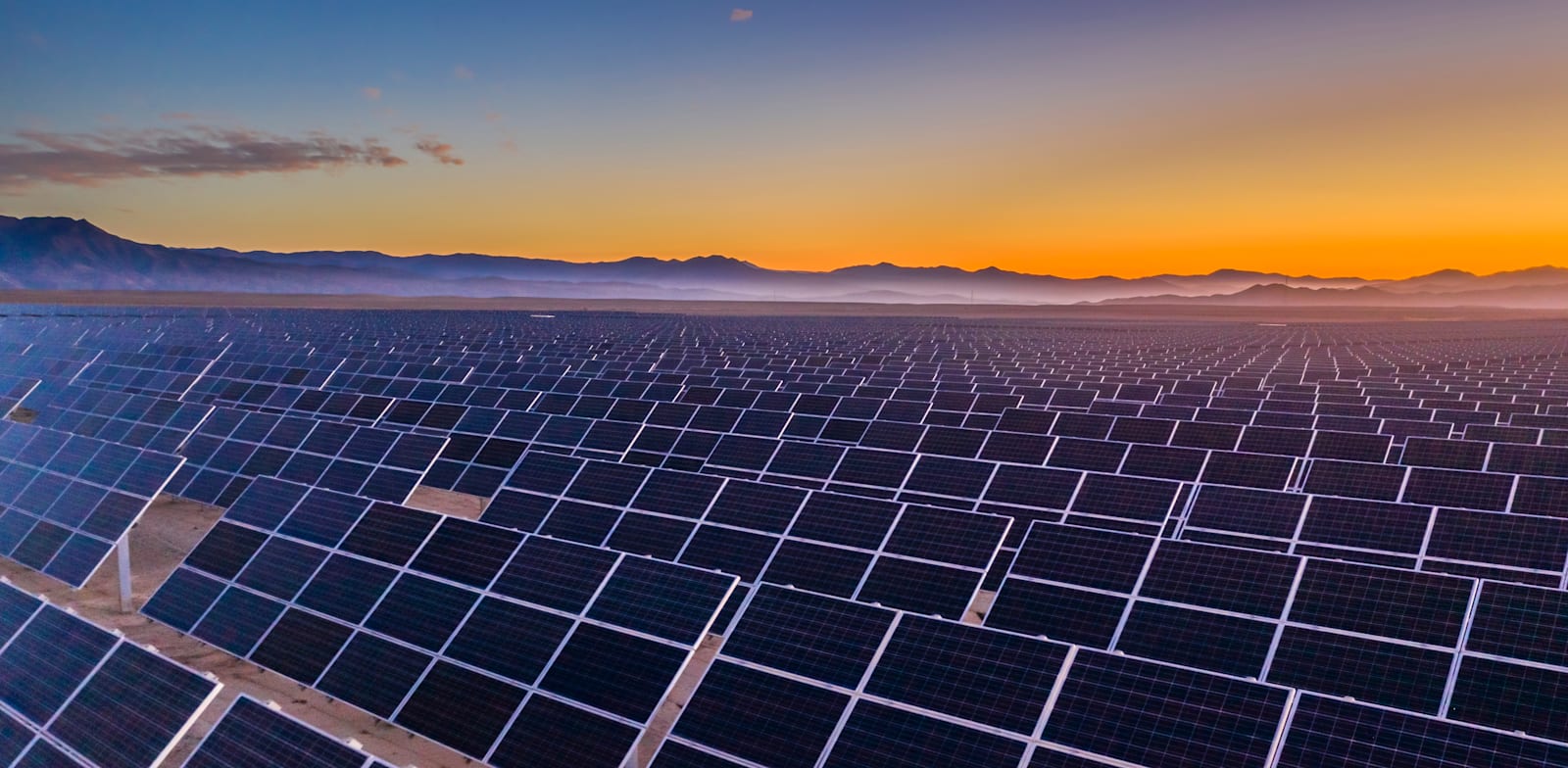
The annual report of the International Energy Agency (IEA) reveals that the increase in energy consumption in the world moderated in 2025 after the jump in 2024, but the one who led it the most is solar energy: 27% of the new energy production in the world comes from the sun, more than any other source by far. Natural gas comes in second place (17%), followed by oil (15%) and bioenergy (manure and biofuel), which is 13% of the increase in energy consumption in 2025. In terms of electricity, China is responsible for more growth in consumption than the rest of the world combined.
Against the background of the report, which is particularly flattering for solar energy, the Tel Aviv Cleantech Index jumped by over 3%, compared to a very slight increase in Tel Aviv 125. This benefited especially companies with operations in the US, which is leading the surge in solar (and in electricity in general), against the background of the tremendous demand for server farms. These include, for example, Nofer Energy which increased by about 10%, as well as Doral Energy , Enlight Energy andEnergics .
While the report deals with the year 2025, the shock experienced by the world energy market due to the blocking of the Strait of Hormuz, due to the war between the US and Israel and against Iran, is expected to lead to a further increase in the renewables market, when these generate electricity without any dependence on oil and gas from the Persian Gulf. Currently, the price of oil is about $95 per Brent barrel, due to the creaking in the negotiations between the US and Iran in Pakistan.
For the first time, renewable energy produces almost as much electricity as coal
The international demand for energy rose this year by 1.3%, similar to the average for the years 2013-2023, but this is a decrease compared to 2% in 2024, when server farms began to be built at a dizzying pace and demand more and more energy, a demand that manufacturers and infrastructure are now running to meet. This year, the increase was more moderate, according to the IEA, due to a mild summer (in most of the world), which required less heating resources, a decrease in the output of electricity and energy intensive industries and actions to save and optimize the use of energy.
The one who led the absolute increase in the use of energy is China, which increased its consumption by 3 exojoules, out of 9 exojoules of growth in the entire world. But relatively speaking, it is rather a slowdown in relation to the dramatic increase in energy consumption, with an increase of only 1.7% – more than the global average, but less than the relative increase in energy consumption in the US, with 2.1% this year, due to the boom in server farms: half of all the increase in demand for electricity, specifically in the US, comes from server farms alone. The region where the relative consumption increased most dramatically is precisely Africa, where consumption jumped by 2.9% this year, in light of the connection of new areas to electricity and economic growth. The only region in the world where a decrease in energy consumption was recorded is the European Union, where energy consumption has shrunk by a tenth of a percent in 2025.
A significant part of the energy consumption in the world, which was based on the direct burning of gas and oil for example, is gradually moving to electricity due to the transfer of the electrification of industry and transportation with electric vehicles. The use of electricity jumped by 3% this year, compared to 1.3% for all types of energy combined. In terms of electricity consumption, China is the absolute leader, with more than half of all new electricity consumption in the world and an increase of 5%. But throughout the developed world, a significant increase of 1.6% in electricity consumption was recorded. In the US, as mentioned, half of the increase was due to server farms only.
But the main story of 2025, is the surge in solar energy (often, combined with storage) as a cheap energy that can be deployed in a mass and relatively fast way. Solar electricity will produce 600 terawatt-hours more in the world than in 2024, thus reaching 2,700 terawatt-hours per year, or 8% of all electricity production in the world. China is leading here as well, but it is a global leap that also affects the USA, India and the Middle East (which also includes Israel). On the other hand, the world is getting rid of coal, this is mainly due to the transition of China (which consumes more coal than the whole world combined) towards solar and nuclear at the expense of traditional coal. This results in the fact that, for the first time, renewable energy produces about as much electricity as coal, which is still the largest single source of energy in the world, which drives China and India
For your attention: The Globes system strives for a diverse, relevant and respectful discourse in accordance with the code of ethics that appears in the trust report according to which we operate. Expressions of violence, racism, incitement or any other inappropriate discourse are filtered out automatically and will not be published on the site.
https://singnalsocial.com/story6371236/link-indexing-company
https://worldsocialindex.com/story6454292/indexing-backlink
https://socialwebnotes.com/story6512503/link-indexing-solution
https://socialmediatotal.com/story6425684/boost-backlinks
https://socialbraintech.com/story6360277/url-indexing
https://social-medialink.com/story6414402/link-indexing-company
https://mysocialname.com/story6443635/indexing-backlink
https://mediasocially.com/story6327758/link-indexing-solution
https://guideyoursocial.com/story6433391/boost-backlinks
https://agency-social.com/story6402650/url-indexing
https://companyspage.com/story6372216/link-indexing-company
https://mypresspage.com/story6465816/indexing-backlink
https://rankuppages.com/story6414129/link-indexing-solution
https://bookmarks-hit.com/story25476041/boost-backlinks
https://pr8bookmarks.com/story21481859/url-indexing
https://pr6bookmark.com/story21559908/indexing
https://adsbookmark.com/story21466054/link-indexing-company
https://yourbookmarklist.com/story21574312/indexing-backlink
https://bookmarking1.com/story21388978/link-indexing-solution
https://sb-bookmarking.com/story21470230/boost-backlinks
https://pr1bookmarks.com/story21898539/indexing
https://madbookmarks.com/story21391189/link-indexing-company
https://bookmarks4seo.com/story21390234/indexing-backlink
https://bookmarkblast.com/story21448967/link-indexing-solution
https://admiralbookmarks.com/story21435670/boost-backlinks