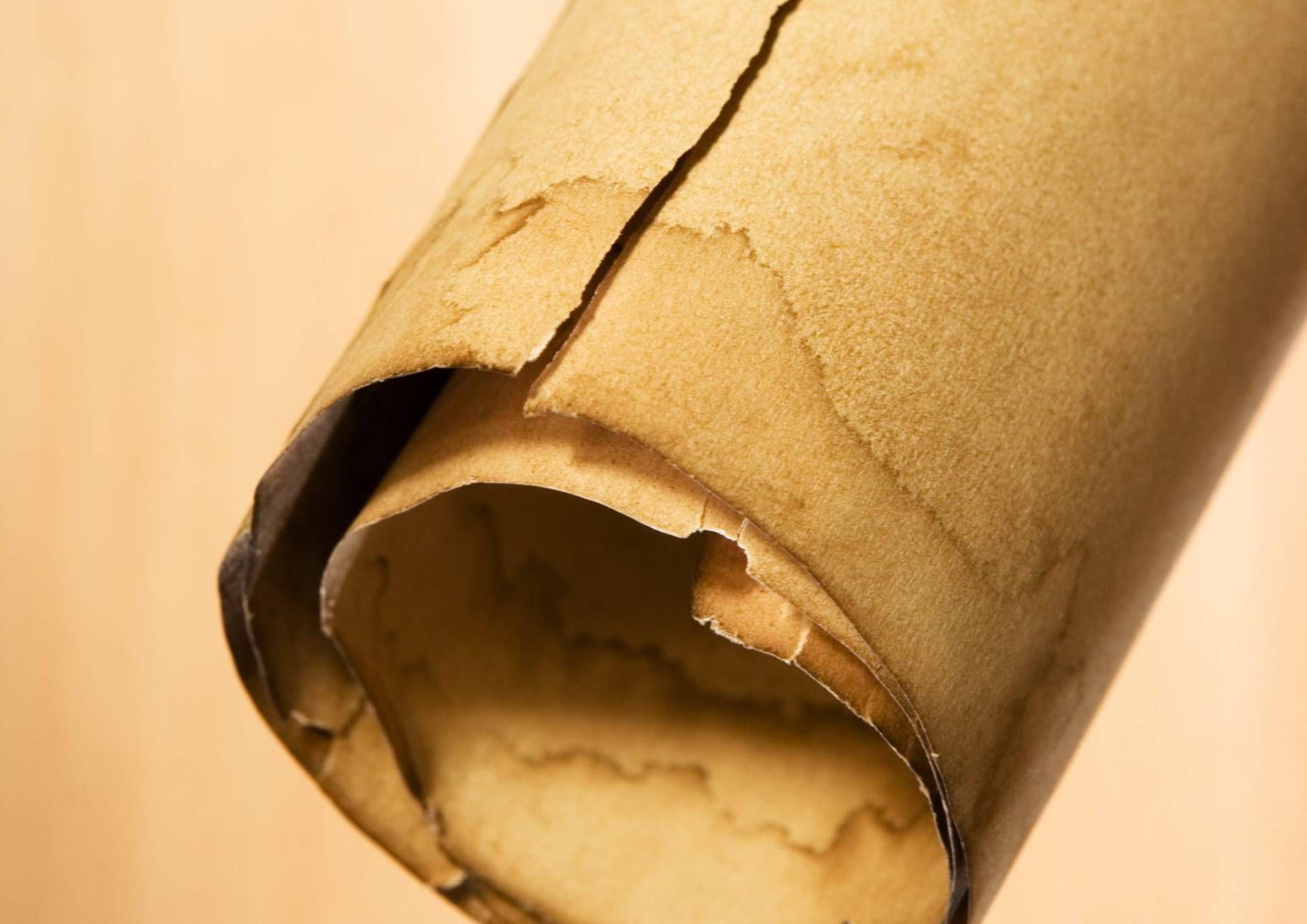
A fragment of Homer’s “Iliad” was found inside a Roman-era mummy in Egyptmarking a discovery defined by archaeologists as “unprecedented” in the history of the discipline. The discovery was made by the Oxyrhynchus archaeological mission of the Institute of Ancient Near Eastern Studies of the University of Barcelona during excavations at the Al Bahnasa site, identified with ancient Oxyrhynchus.
The papyrus with the fragment of the Homeric poem, datable to around 1,600 years agowas located within Tomb 65 of Sector 22, placed on the abdomen of a mummy as part of the embalming ritual. According to archaeologists, this is the first documented case in which a Greek literary text was intentionally integrated into the mummification process, while until now only papyri with magical or ritual content were known.
The discovery, as announced by the University of Barcelona, occurred during the campaign conducted between November and December 2025 by the team led by the Spanish archaeologist Núria Castellano. The subsequent study of the find, carried out between January and February 2026 by the restorer Margalida Munar, the papyrologist Leah Mascia and the philologist Ignasi-Xavier Adiego, made it possible to identify the text as belonging to the famous “Catalogue of ships” of Book II of the “Iliad”, the section that lists the Greek forces deployed for the Trojan War.
“It is not the first time that we find Greek papyrus included in mummification practices, but until now they were magical texts”, explained Professor Adiego, underlining how the presence of a literary text represents a completely new element in the Egyptian funerary context.
The site of Al Bahnasa, in central Egypt about 190 kilometers south of Cairo, along the branch of the Nile known as Bahr Yussef, thus confirms itself as one of the main centers of finds in the Greco-Roman world. The area has yielded a funerary complex with three limestone chambers and numerous burials, many of which were damaged by ancient looting.
The Oxyrhynchus archaeological mission of the University of Barcelona, active since 1992 and among the longest-running Spanish archaeological missions in Egypt, thus concludes a new excavation campaign characterized by finds of great historical and philological importance. (
by Paolo Martini
)
https://summitcountycourt.us/divorce-records
https://summitcountycourt.us/inmate-search
https://summitcountycourt.us/probate-records
https://sussexcountycourt.us
https://sussexcountycourt.us/arrest-records
https://sussexcountycourt.us/divorce-records
https://sussexcountycourt.us/inmate-search
https://sussexcountycourt.us/probate-records
https://thurstoncountycourt.us
https://thurstoncountycourt.us/arrest-records
https://thurstoncountycourt.us/divorce-records
https://thurstoncountycourt.us/inmate-search
https://thurstoncountycourt.us/probate-records
https://tippecanoecountycourt.us
https://tippecanoecountycourt.us/arrest-records
https://tippecanoecountycourt.us/divorce-records
https://tippecanoecountycourt.us/inmate-search
https://tippecanoecountycourt.us/probate-records
https://trumbullcountycourt.us
https://trumbullcountycourt.us/arrest-records
https://trumbullcountycourt.us/divorce-records
https://trumbullcountycourt.us/inmate-search
https://trumbullcountycourt.us/probate-records
https://tularecountycourt.us
https://tularecountycourt.us/arrest-records