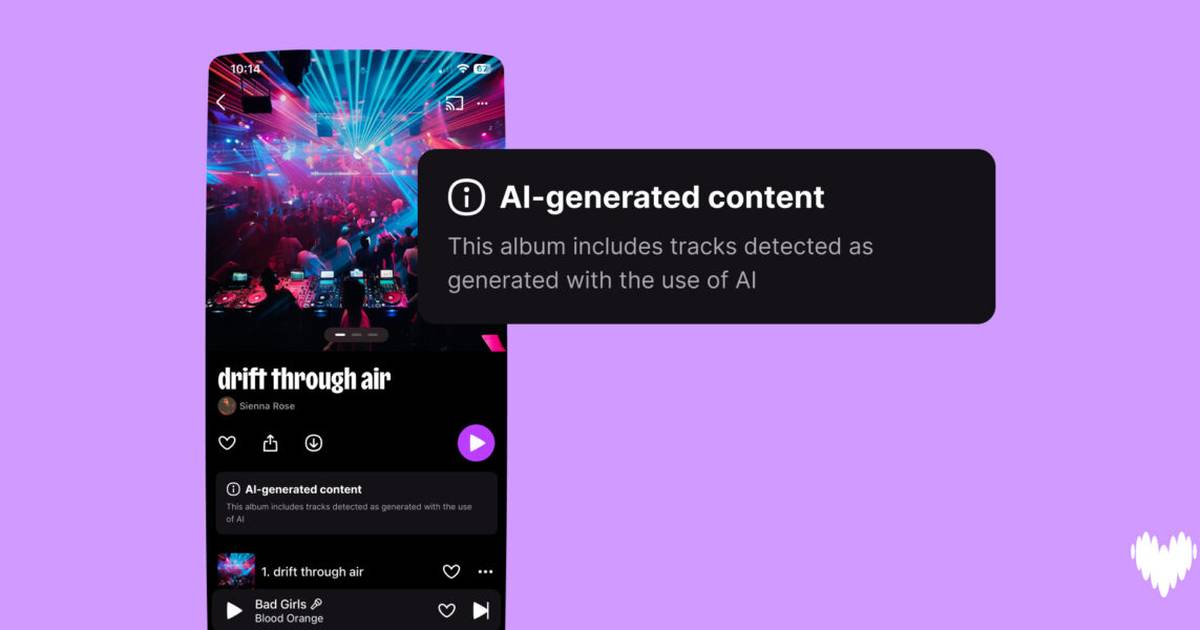
The French music streaming service Deezer has published astonishing data that reveal the extent of the penetration of artificial intelligence into the music industry. According to their numbers, almost 75,000 songs generated exclusively by artificial intelligence are uploaded to the platform every day, which makes up a staggering 44 percent of all new music content.. On a monthly basis, that’s a flood of more than two million synthetic songs.
The explosive growth of synthetic music
These figures indicate a dramatic acceleration of the trend. In January 2025, when Deezer just launched its detection tool, the platform recorded about ten thousand AI songs per day. By September of the same year, the number had tripled to 30,000, and in January of this year, it reached 60,000 per day. The current 75,000 songs per day shows that the growth is not slowing down, posing a huge challenge to the entire industry.
But, in spite ofč mass influx, it seems that human listeners are not overly interested in music created by machines. Deezer states that such content only accounts for between one and three percent of the total streams on the platform. What is even more important is the fact that the vast majority of these interceptions – as many as 85 percent – were discovered to be fake and eventually demonetized. It seems that the main goal of mass uploading of synthetic songs is an attempt to defraud and extract money from royalties funds with the help of bots, and not to win over an audience.
Deezer’s fight against the flood
As the only major platform that transparently publishes this data, Deezer has positioned itself as a leader in the fight against the negative consequences of AI. From June 2025, the service will actively mark all songs it determines to be completely generated by artificial intelligence. During the last year, more than 13.4 million such songs were tagged.
In addition to the labeling itself, Deezer also takes concrete steps. All detected AI songs are automatically removed from algorithmic recommendations and regular playlists so that they do not reach users. The latest measure is to stop storing versions of these songs in high (Hi-Res) quality, to reduce costs for content that almost no one listens to anyway.
“AI-generated music is far from a fringe phenomenon. As daily deliveries continue to grow, we hope the entire music ecosystem will join us in taking action to protect artists’ rights and promote transparency for fans,” said Alexis Lanternier, CEO of Deezer, in a statement. “Thanks to our technology and the proactive measures we put in place over a year ago, we have shown that it is possible to reduce AI-related fraud and payout dilution to a minimum.”
The audience doesn’t know the difference, but they want transparency
While the industry is struggling with this problem, the audience is often not even aware of what they are listening to. Research commissioned by Deezer showed that 97 percent of subjects in a blind test could not distinguish a song created by a human from one generated by AI.
Nevertheless, the attitudes are clear: 80 percent of people believe that music created exclusively by artificial intelligence should be clearly labeled. More than half of the respondents, 52 percent, do not want to see such songs on the music charts alongside human authors. While Deezer is leading the way with platform-level detection, other giants like Spotify and Apple Music are for now relying more on publishers and distributors to self-report their use of AI. In the meantime, the CISAC study warns that by 2028, creators’ income could be threatened by almost 25 percent, which could amount to as much as four billion euros.
https://waltoncountycourt.us/divorce-records
https://waltoncountycourt.us/inmate-search
https://waltoncountycourt.us/probate-records
https://washtenawcountycourt.us
https://washtenawcountycourt.us/arrest-records
https://washtenawcountycourt.us/divorce-records
https://washtenawcountycourt.us/inmate-search
https://washtenawcountycourt.us/probate-records
https://waukeshacountycourt.us
https://waukeshacountycourt.us/arrest-records
https://waukeshacountycourt.us/divorce-records
https://waukeshacountycourt.us/inmate-search
https://waukeshacountycourt.us/probate-records
https://webbcountycourt.us
https://webbcountycourt.us/arrest-records
https://webbcountycourt.us/divorce-records
https://webbcountycourt.us/inmate-search
https://webbcountycourt.us/probate-records
https://webercountycourt.us
https://webercountycourt.us/arrest-records
https://webercountycourt.us/divorce-records
https://webercountycourt.us/inmate-search
https://webercountycourt.us/probate-records
https://weldcountycourt.us
https://weldcountycourt.us/arrest-records
https://weldcountycourt.us/divorce-records