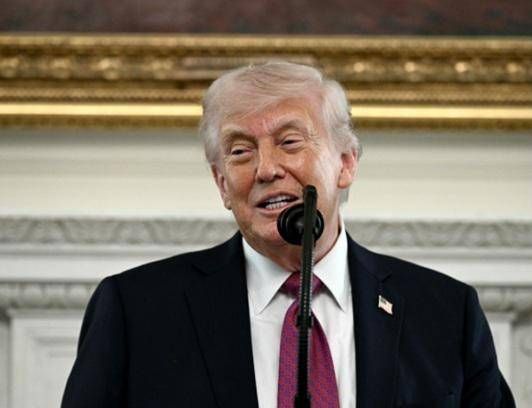
When Donald Trump lands in Beijing for his high-level meeting with President Xi Jinping in two weeks, it is very likely that he will do so with the Strait of Hormuz still closed. “Now they have to raise the white flag. That’s all they have to do: just say, ‘We surrender. We surrender,'” Trump said. His words this week demonstrated his intent to maintain a blockade of Iranian maritime traffic until Tehran gives in to his demands. “The block is brilliant, okay,” he told reporters at an event with Artemis II astronauts. Even today, leaving the White House, he reiterated: “They want to conclude an agreement, but I’m not satisfied with it.”
The shutdown is exactly what the president was trying to avoid when he postponed his trip to China six weeks ago. A factor that now significantly complicates everything, so much so that White House officials – as found by Adnkronos – are completely rethinking the American president’s approach. The goal remains to foster a rapprochement with China, although Xi has demanded – both publicly and privately – that the United States reopen the waterway through which China imports about a third of its oil and gas.
“The US blockade is a vivid reminder to Xi Jinping of China’s vulnerability. China imports around 11 million barrels of oil a day, and 90% of it travels by sea. Trump’s desired ultimate goal is freedom of navigation in the Strait of Hormuz; in the meantime, however, Trump is demonstrating to China that the US Navy can control its by far most important oil route at will,” says the conservative Washington-based international analyst, Rebecca Grant at Adnkronos. A blockade that Xi does not like at all: in recent days, the Chinese leader has explicitly asked for the reopening of the strait, declaring to Saudi Crown Prince Mohammed bin Salman, as reported by Chinese state media, that “it should remain open to normal navigation, which is in the common interest of the countries of the region and the international community”. Xi recently went further, warning that the world could return to the “law of the jungle,” although he made no specific reference to Iran or the Straits on that occasion.
Trump will arrive in China on May 14 for an intensive two-day visit, where the focus will be on reaching a trade deal and, to a lesser extent, on security issues such as Beijing’s pressure on Taiwan, China’s territorial claims in the South China Sea, China’s growing cyber activity against the United States and its expanding nuclear program. However, according to analysts, the real main issue will clearly be the economic repercussions of a war that China has made clear it considers unnecessary.
The White House press office, when asked by Adnkronos, did not directly address the issue of the possible impact of the current block on the next trip. However, a spokeswoman responded with a statement already sent to other media. “President Trump has a positive relationship with President Xi and looks forward to visiting China later this year. Thanks to the successful blockade of Iranian ports and the crippling effects of Operation Epic Fury, the United States maintains maximum leverage over the Iranian regime as negotiations continue,” spokeswoman Anna Kelly wrote, adding that the President has been clear that Iran will never possess a nuclear weapon and always keeps all options on the table.
Meanwhile, among international observers, there are those who are not necessarily convinced that Trump is not happy with the fact that the trip to China comes with the crisis on the Strait of Hormuz still unresolved. “The American president always tends to accentuate tensions during negotiating tables and the blockade of that area of the world could paradoxically give him leverage to negotiate on other unresolved issues between Washington and Beijing, given China’s strong dependence on oil from the Persian Gulf,” according to Davide Mamone, financial journalist of the Financial Times Specialist in New York. Grant also believes that the current situation is not entirely negative: “There is no doubt that the reopening of the Strait of Hormuz will be a request from Xi to Trump. We need to see what the American president will respond and what the Chinese leader could offer in exchange.”
In the next two weeks, China’s role in the conflict could prove crucial. Among Asian nations, it holds by far the largest oil reserves, so supply shortages are not yet a problem. However, with the price of oil suddenly rising above $110 a barrel, reaching some of the highest levels since the start of the war, the economic impact on the Chinese economy will be enormous, and most likely far greater than that of the tariffs imposed by the Trump administration. At the same time, China is, by a wide margin, the largest buyer of Iranian oil; for this reason, Washington is betting that the pressure exerted by Beijing could induce the Iranians to make concessions.
“On the other hand, however, Xi is well aware that the freezing of the strait is also hurting the American president very, very badly, especially with the mid-term elections approaching and with the price of petrol continuing to remain high in the United States. This makes Beijing potentially more aggressive in the talks scheduled in two weeks, because China knows it can have the upper hand in the medium term”, claims Mamone. Beijing played a crucial role in persuading Iran to agree to the first two-week ceasefire in April after Trump threatened to wipe Iranian civilization off the map. According to Iranian sources, the Chinese had asked Tehran to show more flexibility in cross-strait negotiations, warning that the ceasefire could represent the only opportunity to avert a catastrophe. Now that negotiations appear to be at a standstill once again, several officials and analysts believe that China may have an opportunity to steer the situation towards lasting peace or, at least, towards a path towards reopening that crucial waterway.
In addition to trade relations between the two countries, there is limited military cooperation. US intelligence agencies have assessed that China may have sent Iran a supply of missiles for the conflict, although two weeks ago Trump said he had communicated with Xi to halt any further assistance. So much so that, publicly, the president has downplayed the extent of the assistance provided by China to Iran. “I was a little surprised, since I have an excellent relationship with President Xi and I thought I had reached an understanding with him – he declared on CNBC recently last month, referring to the alleged Chinese supply to Iran – But that’s fine. It’s the very nature of war.” (by Iacopo Luzi)
https://betstro.co.com/no/no-deposit-bonus/
https://betstro.co.com/no/promo-code/
https://betstro.co.com/no/registration/
https://betstro.co.com/no/review/
https://betstro.co.com/no/welcome-bonus/
https://betstro.co.com/promo-code/
https://betstro.co.com/pt/app/
https://betstro.co.com/pt/bonuses/
https://betstro.co.com/pt/deposit/
https://betstro.co.com/pt/download/
https://betstro.co.com/pt/free-spins/
https://betstro.co.com/pt/login/
https://betstro.co.com/pt/no-deposit-bonus/
https://betstro.co.com/pt/promo-code/
https://betstro.co.com/pt/registration/
https://betstro.co.com/pt/review/
https://betstro.co.com/pt/welcome-bonus/
https://betstro.co.com/registration/
https://betstro.co.com/review/
https://betstro.co.com/sv/app/
https://betstro.co.com/sv/bonuses/
https://betstro.co.com/sv/deposit/
https://betstro.co.com/sv/download/
https://betstro.co.com/sv/free-spins/
https://betstro.co.com/sv/login/