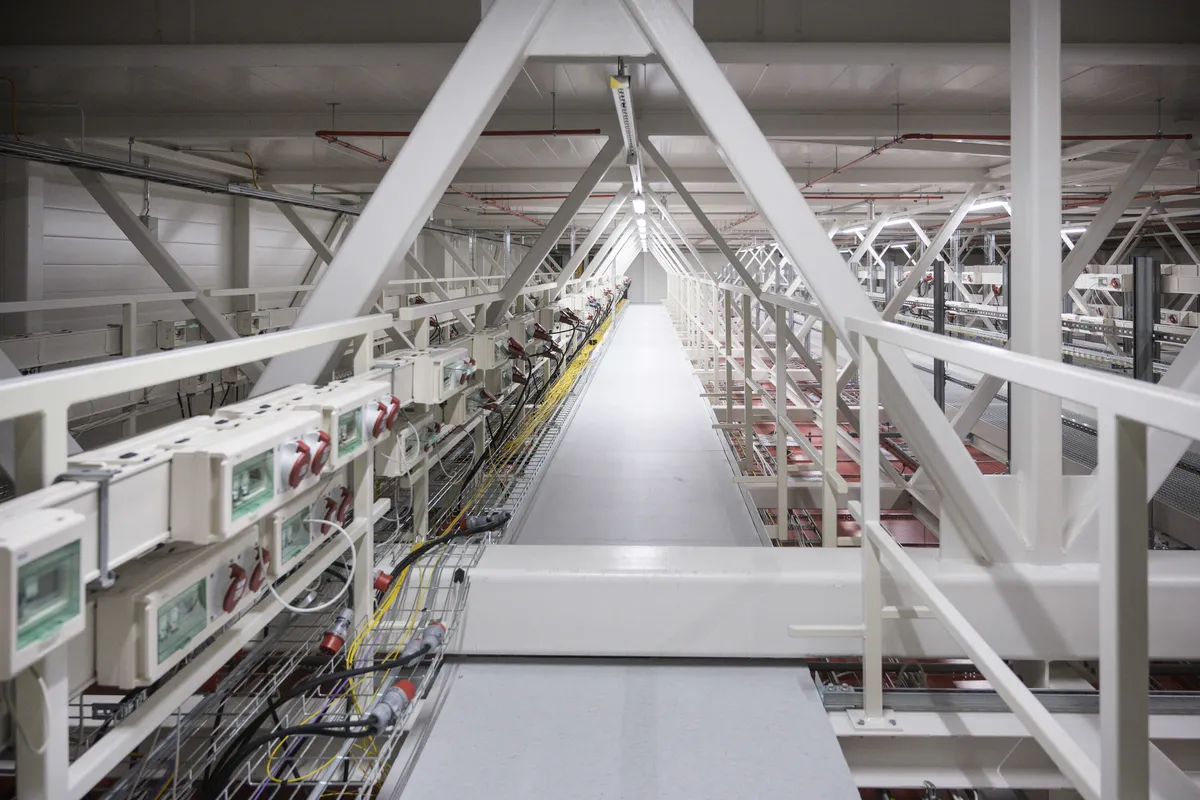
Will Finland run out of cheap electricity when the tech giants build their data centers here? This has been feared in Finland for a long time, and now the chorus of warnings has only grown.
Among other things, a member of the European Parliament Aura Salla, Outokumpu managing director Kati de Horst, by F-Secure founder Risto Siilasmaa and CEO of Kemianteollisuus ry Mikko Salo have warned about the effects of the data center boom on Finland.
According to EK statistics, ten data centers were completed in Finland alone last year. The amount is estimated to multiply in the coming years.
If all planned data centers were to come to fruition, they would use The waterfall according to about a quarter of the current electricity consumption by 2030. Now the share is eight percent. Of course, not all projects are realized, and on the other hand, the electricity production capacity is increasing all the time.
The Ministry of Labor and Economy (TEM) is responsible for implementing energy policy and ensuring energy supply in Finland.
Industry Council Tatu Pahkala TEM’s energy department says that the criticism is based on the concern of current operators about the sufficiency of affordable energy in the future.
“There is a bit of protection of our own stations in the criticism, which is also quite understandable. But of course we also have to enable new operators to enter the electricity market,” says Pahkala.
He emphasizes that it is also to the greatest extent in the interest of the data center operators coming to Finland that electricity remains affordable here in the future as well.
“When those who criticize data centers say that the centers come here because of cheap electricity, and then they predict that the price of electricity will rise because of these investments, then the logic in the criticism fails a little,” says Pahkala.
That is, if the strong increase in demand for electricity in the future leads to a strong rise in its price, not only consumers and traditional industry players will also suffer, but also the data center operators who have invested billions in Finland.
“It is in the best interest of the data center operators to ensure sufficient availability of electricity in the future,” says Pahkala.
“Data center operators should participate in the discussion”
According to Pahkala, when data center operators come to Finland, they usually make an agreement with electricity producers for the supply of electricity. However, TEM does not know the details of the agreements.
“They are commercial agreements in which the state is basically not involved at all,” says Pahkala.
Demands have also been put forward in the public, according to which, when data centers come to Finland, they should be required to agree with electricity producers to build additional capacity to meet their own electricity consumption. In this case, each new data center would increase the production capacity in Finland by the amount of its consumption.
Tatu Pahkala does not think the idea is impossible.
“Yes, this kind of thing can be considered. But it should basically apply to all investments that increase electricity consumption coming to Finland. We cannot treat data center investments differently from other investments,” says Pahkala.
He says that TEM will monitor very closely that the electricity production capacity will increase with the investments coming here.
“But in terms of the electrical system, there is nothing unusual about this compared to any industrial activity. Would we be discussing this if there were as many aluminum smelters coming here,” says Pahkala.
Data center investments have also been criticized for not employing significant numbers of people upon completion. Pahkala reminds that the same situation exists in many other investments based on the latest technology.
“If we are going to restrict some industrial activity here because its employment effect is smaller than someone else’s, then it is a matter of choosing political values.”
Besides, billion-dollar investments are not coming to Finland until the queue. Large investments are mostly data centers, and Finland also largely relies on them in its strategies.
Tatu Pahkala considers it problematic for the discussion that the big data center operators have remained silent on the matter.
“Data center operators should participate in this discussion and bring their own solutions with them. They have also been reluctant to consider utilizing their own resources in a way that would be flexible with regard to the electricity system. However, it is a common interest for everyone,” says Pahkala.
Ball for data centers.
Industry adviser Tatu Pahkala from TEM’s energy department hopes that data center operators participated more actively in the discussion about electricity sufficiency in the future. “They have also been reluctant to consider utilizing their own resources in a way that would be flexible in terms of the electricity system.”
PHOTO: Vesa Moilanen / TEM
The back-up system for windless weather proceeded in a frame rush
Finland’s electricity production relies increasingly on wind power. In this case, the risk is a situation similar to the beginning of the year, where consumption is high, but production has decreased due to windless weather.
TEM has been working on a project, the purpose of which is to ensure the supply of sufficient electrical energy to the Finnish market in similar situations.
According to Tatu Pahkala, the project progressed a bit in a framework tussle, in the decisions of which the government recorded that TEM prepares a support model to ensure sufficient energy availability and security of supply also in winter.
This support enables, among other things, the construction of gas turbines powered by biogas and the continued use of CHP plants using bioenergy for a longer period of time.
In the solution, backup power is sought with public money from private operators.
“The authority organizes an auction and based on that, the money is distributed to those investors who are able to offer electricity at the most competitive prices,” says Pahkala.
https://gamblezen.co.com/hu/free-spins/
https://gamblezen.co.com/hu/login/
https://gamblezen.co.com/hu/no-deposit-bonus/
https://gamblezen.co.com/hu/promo-code/
https://gamblezen.co.com/hu/registration/
https://gamblezen.co.com/hu/review/
https://gamblezen.co.com/hu/welcome-bonus/
https://gamblezen.co.com/it/
https://gamblezen.co.com/it/app/
https://gamblezen.co.com/it/deposit/
https://gamblezen.co.com/it/download/
https://gamblezen.co.com/it/free-spins/
https://gamblezen.co.com/it/login/
https://gamblezen.co.com/it/no-deposit-bonus/
https://gamblezen.co.com/it/promo-code/
https://gamblezen.co.com/it/registration/
https://gamblezen.co.com/it/review/
https://gamblezen.co.com/it/welcome-bonus/
https://gamblezen.co.com/login/
https://gamblezen.co.com/lt/
https://gamblezen.co.com/lt/app/
https://gamblezen.co.com/lt/deposit/
https://gamblezen.co.com/lt/download/
https://gamblezen.co.com/lt/free-spins/
https://gamblezen.co.com/lt/login/