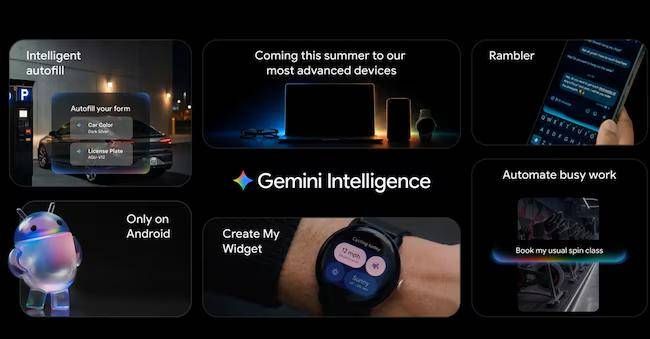
Ahead of the upcoming I/O conference, Google outlined the future of the mobile ecosystem by presenting Gemini Intelligence. This is a new umbrella brand intended to group together the most sophisticated artificial intelligence features, which the Mountain View giant intends to initially reserve for a selection of high-end devices, such as the Galaxy S26 series and the latest generation Pixels. The strategic objective is clear: to transform the smartphone from a simple reactive tool to a proactive entity, capable of navigating between applications and acting on the user’s behalf in an almost completely autonomous manner.
Technological evolution passes through a profound revision of task automation. Gemini will soon be able to operate over a much broader range of action, overcoming the current limitations that saw it confined to a few mobility and home delivery services. The most significant innovation is the integration of multimodality into operational processes: the system will be able to analyze screenshots and photographs to activate specific actions. A concrete example is the possibility of providing artificial intelligence with the image of a shopping list written by hand or in notes to see the products automatically added to the digital cart, provided you have hardware compatible with the new performance standards.
One of the pillars of this transformation is represented by Create My Widget, described as the first step towards the so-called generative user interface. The function allows you to create customized control tools starting from a simple textual description in natural language. Whether it’s a weather widget that highlights only the parameters relevant to a cyclist or a panel that suggests high-protein recipes on a weekly basis, AI takes care of the visual and functional programming of the element. This flexibility will not only concern smartphones, but will also extend to the Wear OS ecosystem, bringing the same customization directly to users’ wrists.
The integration of Gemini also becomes more widespread within the Chrome browser for Android, where a dedicated button will allow you to query the assistant on the contents of the web page being consulted. For users who have subscribed to the Pro or Ultra plans, an automatic navigation function will also be available for managing appointments and reservations. At the same time, Android’s automatic compilation system will become more intelligent, drawing, upon consent, from the data stored in Gmail and Google Photos to extrapolate useful information, such as the details of a document or the vehicle license plate. The release of these innovations will occur in waves over the course of the year, marking a decisive shift towards an increasingly less manual user experience.
https://bacalaosnarvaez.com
https://mywebsitefast.com
https://pravnifakultet.webcode011.com
https://b2b.ratro.in
https://quincemodels.com
https://sakinamedina.com
https://akachibrand.com
https://www.mangaluru.in
https://ariatorkan.com
https://1setmas.com
https://svnstone.com
https://missediesempress.com
https://amilcarmorgado.com
https://varnaecho-bg.com
https://jmhshares.net
https://www.ninalabus.it
https://selink.vn
https://truagrico.com
https://sabeel.com.au
https://homined.aehat.com
https://luztree.com.br
https://scooterswholesale.com.au
https://www.turismofundos.pt
https://www.taxi-selo.de
https://magazin.sevirox.ro