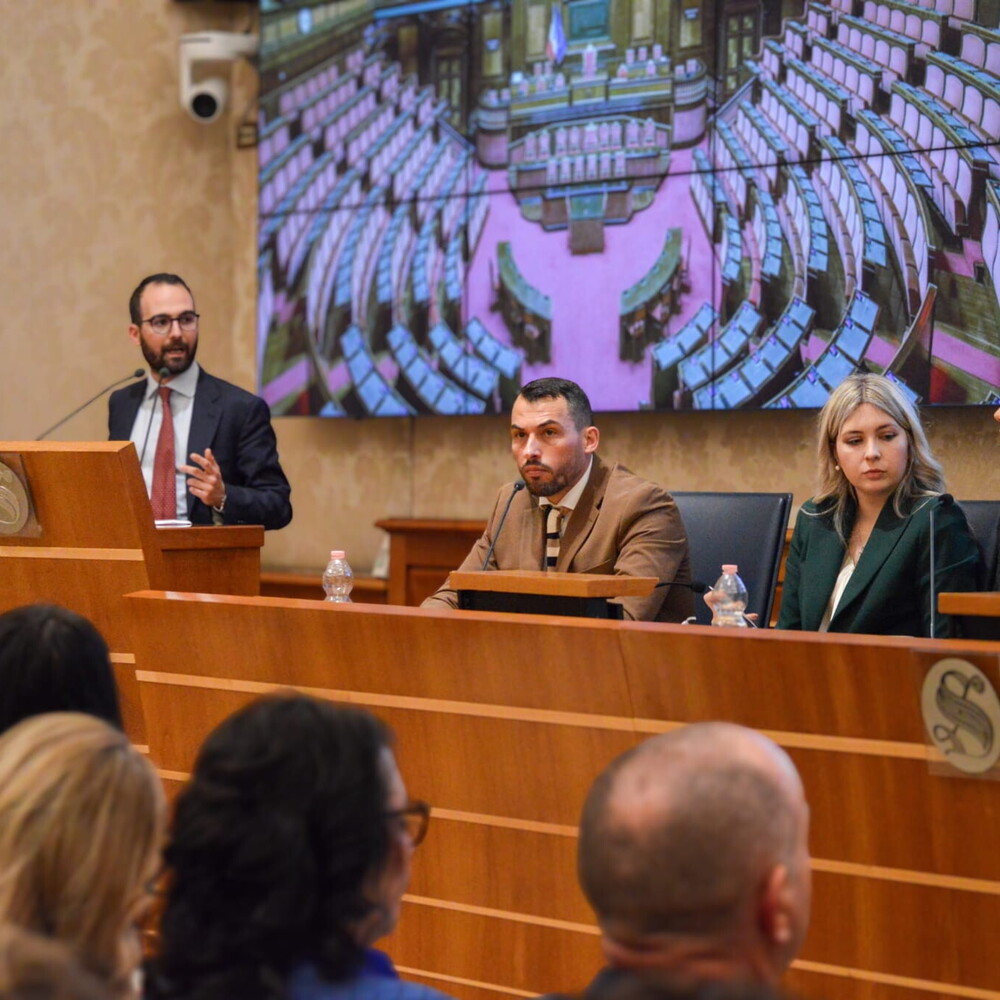
In contemporary public debate, the name of Bettino Craxi continues to evoke a season of profound institutional transformations and Italy’s strong international protagonism. Even after several decades, the figure of the former Prime Minister retains a particular relevance, fueling reflections on his role in the modernization of the country and on the legacy left to Italian public life. In this context, the presentation of the volume took place in the headquarters of the Senate of the Republic, at Palazzo Madama Hammamet remembers Bettinowritten by Salvatore Di Bartolo e Roberto Giuliano.
The event, promoted by the senator Salvatore Sallemideputy group leader in the Senate of the Brothers of Italy, saw a large and significant participation of the public, with the presence of representatives of the institutions, scholars, journalists and numerous young people who spoke to delve deeper into the historical and political role, but also the more personal events, of the former secretary of the Italian Socialist Party. The large turnout recorded in the room confirmed how the figure of Craxi still continues to arouse attention, curiosity and discussion in the Italian public panorama today.
During the presentation, the authors illustrated the research path that led to the creation of the volume, focusing in particular on the testimonies collected in Hammamet, the place where Craxi spent the last years of his life. Through stories, meetings and direct reconstructions, the book returns a more intimate image of the former socialist leader, highlighting the relationship established with the Tunisian community and the human context experienced during exile.
Ample space was also dedicated to reflection on the historical weight of Crax’s political season, from the years of the socialist government to the events that marked the end of the First Republic, themes that still continue to give rise to different interpretations today. Precisely this aspect animated a significant part of the debate between the speakers, who underlined the need to distinguish historical judgment from ideological opposition.
Among the most followed interventions was that of Senator Luca De Carlo, who proposed a reflection on the relationship between institutional memory and political current affairs, highlighting how the comparison with the past still represents a central element in the construction of contemporary political identity.
The participation of young people is also particularly significant Federico Scalisi, Ottavia Munari, Mattia Romano, Sara Gilardi e Paola Emilia Castelliwhose contributions have brought new sensitivities and perspectives to the discussion. Their presence highlighted how the new generations also show a growing interest in the political events that have marked Italian history in recent decades, in an attempt to understand the dynamics and fundamental passages of republican life.
The debate was moderated by Radio Radicale journalist Giuseppe Di Leo, who led the discussion with balance and professionalism.
More than a simple editorial initiative, the Roman event represented an important opportunity to study Craxi’s political and human legacy, confirming how his figure still continues to arouse attention and interest in the Italian public panorama today. During the meeting, some unpublished and particularly private aspects of the life of the former socialist leader were also explored in depth, themes addressed in the volume through direct testimonies and personal stories that provide a human portrait of Craxi that was little known to the general public until now.
https://schoolido.lu/user/fearburn8/
https://stackoverflow.qastan.be/?qa=user/growthrepair4
https://pikidi.com/seller/profile/storybrandy4
https://www.giveawayoftheday.com/forums/profile/1829254
http://www.qazaqpen-club.kz/en/user/hometennis3/
http://mindwellnessforum.com/user/fearground1
http://www.physicsgurus.com/user/lauralock4
https://askmotopros.com/user/nickeltwine7
http://csmouse.com/user/thumbparent1/
https://travelersqa.com/user/fearnerve1
http://uchkombinat.com.ua/user/summerparent1/
http://qa.doujiju.com/index.php?qa=user&qa_1=eracone8
https://to-portal.com/commaliquid0
http://bioimagingcore.be/q2a/user/nickelrise5
http://amur.1gb.ua/user/subwaywar7/
https://www.chordie.com/forum/profile.php?id=2518063
https://medibang.com/author/28207541/
http://jobs.emiogp.com/author/nickelliquid1/
https://onlinevetjobs.com/author/tiletruck3/
https://www.garagesale.es/author/spadewomen5/
https://etuitionking.net/forums/users/homescarf8/
https://nhadat24.org/author/spadestart0
https://servodriven.com/forums/users/growthstart5/
https://www.ludikarus.com/author/sizeburn2/
https://buyandsellhair.com/author/peakcone0/