There is now a debate in Brussels about whether nuclear power can be used as an energy source for data centers. At the heart of the dispute is whether nuclear power should be classified as sustainable in the future data center sustainability label.
Environmental organizations and some political actors have taken a cautious approach to the use of nuclear power as an energy source for data centers. They have emphasized the role of renewable energy and limiting energy consumption.
At the same time, Finland, Sweden, France and seven other countries have actively advocated the use of nuclear power as an energy source for data centers.
The countries demand the commission to recognize nuclear power in the sustainability label. They consider that the current approach violates the principle of technology neutrality by favoring only certain solutions.
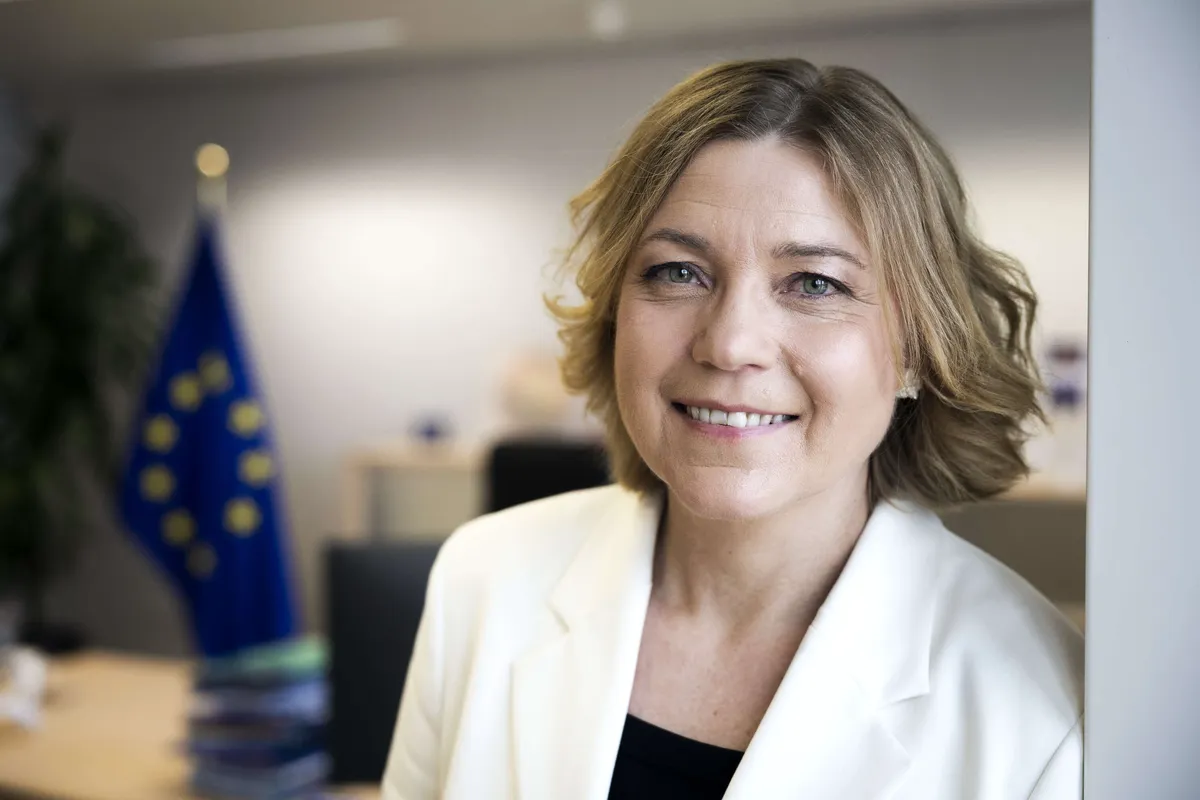
According to information from Kauppalehti, the vice president of the EU Commission Henna Virkkunen the cabinet tabled an important decision regarding nuclear power in data centers. The so-called ten-year rule, which was considered too short from an investment point of view, because it does not correspond to the real time span of large infrastructure investments, emerged as the main reason for the delay.
However, according to Kauppalehti, nuclear power will be allowed as an energy source for data centers in the future as well.
The delay in the decision meant that the EU’s broad package of technological sovereignty, announced on Wednesday, did not see an entry on nuclear power, although it was originally supposed to be included in the package.
According to information from Kauppalehti, the delegated act concerning energy solutions for data centers and nuclear power will probably be published in mid-July.
“Very promising”
Kauppalehti asked Henna Virkkus, the vice-chairman of the commission and the commissioner responsible for technological self-sufficiency, security and democracy, whether nuclear power can also be used in the future as an energy source for the sustainable data centers required by the commission.
Virkkunen replied that “the commission is very willing to test nuclear power and small modular reactors with data centers”.
According to Virkkunen, the commission already approved the strategy for small reactors related to nuclear power in November.
“We also intend to support the development of these small modular reactors. We really focused our strategy on these categories where we want to test these technologies, and data centers are one of them,” says Virkkunen.
The commissioner believes that combining nuclear power and data centers can be “very promising”.
Kapacity to be tripled
The energy consumption of data centers is increasing rapidly, which increases the pressure to find sustainable new energy solutions, as the electricity consumption of data centers is estimated to more than double by 2030.
Currently, data centers are already responsible for about 2.5 percent of the EU countries’ electricity consumption on average, but in the EU country Ireland, for example, data centers already account for more than 20 percent of the country’s electricity consumption.
According to Virkkunen, future data center investments require the use of the best possible technologies to ensure energy efficiency. In addition, member countries must pay attention to how new data centers are connected to energy networks and how energy efficient they are.
In the evaluation, network capacity and the most environmentally sustainable locations and types of data centers weigh in particular.
According to Virkkunen, a lot of attention has already been paid to the energy efficiency of data centers in Finland, but the decision-making power is partly divided among the municipalities, and therefore the placement of data centers and their effects will require cooperation between the state and municipalities in the future.
At the EU level, the goal is a significant increase in data center capacity.
“We have estimated that the capacity needs to be tripled,” says Virkkunen.
The rise in electricity prices and availability are central issues in data center projects. According to Virkkunen, in connection with investments, it is encouraged to negotiate energy solutions in such a way that the data centers could produce part of the energy they use themselves and the whole would be as efficient as possible.
In Finland, there are already good examples of, for example, the utilization of waste heat from data centers in district heating, and according to Virkkunen, we want to promote such solutions throughout the EU.
In the background of sustainable data center investments, there is concern about growing public opposition. Virkkunen gives an example from the United States, where data centers have aroused widespread opposition in some places due to concerns about energy availability and environmental impact.
In the EU, the goal is to avoid a similar development.
“We want investments in Europe to be made in a sustainable way,” says Virkkunen.
He reminds that data centers are needed for digitization, and they store and process data that is part of people’s everyday lives.
“Life without data centers would be like constantly using a cell phone in flight mode,” Virkkunen sums up.
THE FACTS
EU technological sovereignty package
Aims to strengthen Europe’s self-sufficiency in key digital technologies, especially semiconductors, artificial intelligence, cloud and open source code.
The goal is to reduce dependencies, increase competitiveness and ensure Europe’s technological independence.
The package has four main components:
- Chips Act 2.0 increases the EU’s semiconductor capacity and secures the computing power required by artificial intelligence.
- Cloud and AI Development Act expand cloud and data center capacity and promote the introduction of artificial intelligence.
- Open Source Strategy strengthens the open source ecosystem and its utilization.
- Digitalisation and AI in Energy roadmap combines digitalization and energy system sustainability.
https://www.garagesale.es/author/shapeturkey63/
https://etuitionking.net/forums/users/skymetal30/
https://ed.coop/forums/users/homelyric04/
https://www.ludikarus.com/author/hyenaoffer95/
https://nhadat24.org/author/piefridge94
https://www.giveawayoftheday.com/forums/profile/1856446
http://mindwellnessforum.com/user/potatomask83
https://forum.issabel.org/u/maracaoffer11
https://365d24h60m.com/forums/users/shapegum25/
https://www.demilked.com/author/condorlilac50/
https://gratisafhalen.be/author/robertmask41/
http://www.annunciogratis.net/author/sugartoilet03
https://moeamine.com/author/writerocean87/
https://platform.joinus4health.eu/forums/users/headmask67/
http://animationfixation.net/forums/user/resulttoilet31/
https://archeter.co.uk/user/profile/625271
https://socialisted.org/market/index.php?page=user&action=pub_profile&id=590596
https://stackoverflow.qastan.be/?qa=user/resultsearch25
https://doodleordie.com/profile/stargrade36
https://kitchenanswershub.com/user/fridgegame94
https://tvoyaskala.com/user/melodydigger82/
https://travelersqa.com/user/homegame69
https://500px.com/p/wichmannqbhmclamb
https://schoolido.lu/user/bettygrade24/
https://gamesgrom.com/user/melodymetal28/
https://pikidi.com/seller/profile/jawmask44