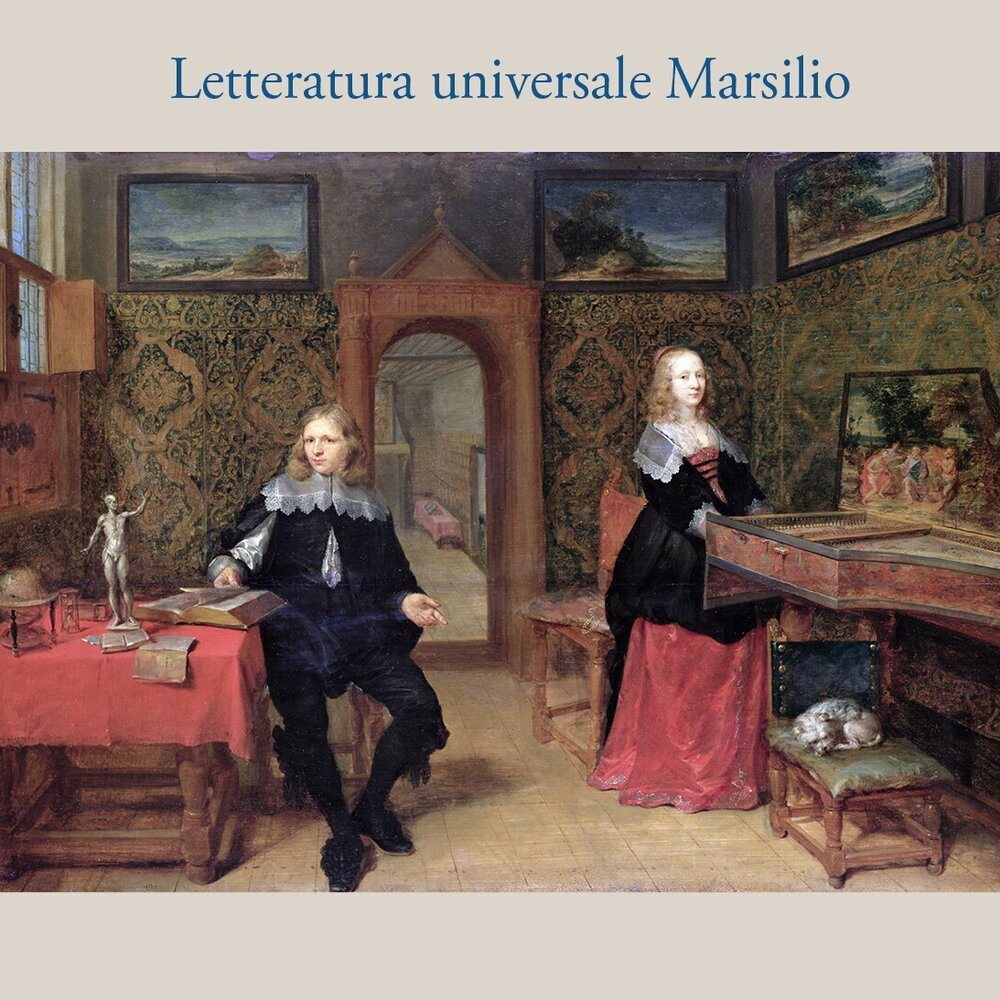
Few know, outside the small circle of professionals, that the great English poet John Milton published in 1669, two years after ‘Paradise Lost‘, a small and refined one Latin grammarreworking of the manual attributed to the authority of William Lily and since 1542 official text in English schools. The work was not successful, because the author had fallen into disgrace after the end of the Republic of Cromwelland by now the grammatical paradigm was changing, due to the emergence of the new perspectives opened by logic of the Lords of Port Royal. His manual was therefore soon forgotten and reprinted only for the sake of completeness within the collections of the author’s complete works.
Today it is rediscovered and presented to the public in Italian translation, accompanied by the first ever philological commentary, edited by Giulia Degano and with the introduction of Renato Onigainside the series of Universal Literature by the publisher Marsilioalways attentive to the valorization of rare and precious works.Under the auspices of Miltonhis grammar was intended to address “those (young or old) who wish to learn the Latin languagewithout more difficulty than is necessary; in particular the elderly, with a brief teaching and with their personal commitment”, remedying what was already in his time the still often repeated “general complaint, not without reasonin the education of young people, that a tenth of human life, often protracted, is spent in the study, even rather unsatisfactory, of Latin language”.
Overall, the elegant little volume is appreciated for the idea of a short but complete Latin grammarby rereading which you will be able to recall nostalgic high school memories and at the same time discover how Latin was studied in the seventeenth century, noting the changes over the centuries have led grammatical description to evolve with the history of linguistics.
The value of authorial examples
But above all, the value of the work lies in the hundreds of short author phrases used to illustrate the grammatical rules, the sources of which the commentary precisely identifies. This opens up a personal anthology of Latin literature. The prose examples demonstrate the prevalence of the republican Guidestylistic model but also supporter of moral and social values, starting from the affirmation of rationality, beauty, constancy and order as essence of human nature: an animal full of reason, which we call man “the animal full of reason that we call man” (Cic. leg. 1, 22, cit. on p. 116); He thinks that beauty, constancy, and order must be preserved in the plans and deeds “believes that it is necessary to maintain beauty, constancy and order in thoughts and actions” (Cic. off. 1, 14, ibid.). Second a typical Miltonian way of arguingwe also find the denunciation of evil, such as greed and betrayal: There is no duty so holy and solemn that avarice is not wont to violate it “There isn’t such a holy and solemn dutywhich greed is not accustomed to violate” (Cic. Quinct. 26, cit. on p. 148); The elders rightly did not think that he who had deceived his partner should be included in the number of good men “rightly so ancestors believed that those who had betrayed an ally should not be considered among honorable men” (Cic. Rosc. 116, cit. on p. 150).
Poetic examples between Virgil and Ovid
Even more interesting are the examples in poetry, which attest to the dominance of Virgil and Ovid. As the introduction reminds us, the ‘Paradise lost’also for the final choice to be divided into twelve books likeAeneidaims to emulate the epic style of Virgilio. Even in its grammar, the character of Aeneasforced to abandon his homeland with his family afterwards the fall of Troyventures into the darkness of the unknown, guided by the Fact: we are struck by dark places “we advance through dark places” (Verg. Aen. 2, 725, cit. p. 118), bringing to mind the figure of Adamwhich at the end of the poem by Milton leaves paradise together with Evaunder the guidance of Providenceand proceeds slowly into the new world, with wand’ring steps and slow “with uncertain and slow steps” (Par. Lost 12, 648). Immediately afterwards Virgiliowe find Ovid. Also in this case, the reference to Paradise lost it is imposed: and the cost is surrounded by a snake “unties the serpent with which she was girded” (Ov. met. 4, 510, cit. on p. 136), refers to the serpent used as a belt by the fury Tisiphonebut it reminds us of the transformation of Satan in serpent (Par. Lost 10, 504-521), modeled in turn on that of Cadmus in the fourth book of the ‘Metamorphoses’ (met. 4, 576-589).
The meaning of the work
In summary, this work of great erudition leads us to rediscover some lesser-known aspects ofMilton’s immense cultureand perhaps allows us to better understand one of the secrets of his poetic style, based on the strength of passions combined with the classicism of form. To fully appreciate the worldview of this great poet, we must also keep in mind his passion for Latin grammarthanks to whose profound knowledge he was able to make an extraordinary change in the renewal of the English language.
https://crazytime-italiait.com
https://crazytime-ititalia.com
https://crazy-time-italiait.com
https://crazy-timeitaly-it.com
https://crazytime-italy-italia.com
https://crazytime-it-italia.com
https://crazytimes-italia.com
https://crazytimes-italy-it.com
https://crazytimes-italy-italia.com
https://crazytimeitaliait.com
https://888-stars-uz.com
https://888-starsuz.com
https://888starsuz.com
https://888starsuzbekistan.com
https://888stars-uzbekistan.com
https://888-stars-uzbekistan.com
https://888starz-zerkalo1.com
https://888starz-bet-vhod.com
https://888-starz-uzbekistan.com
https://888-starz-uzbet.com