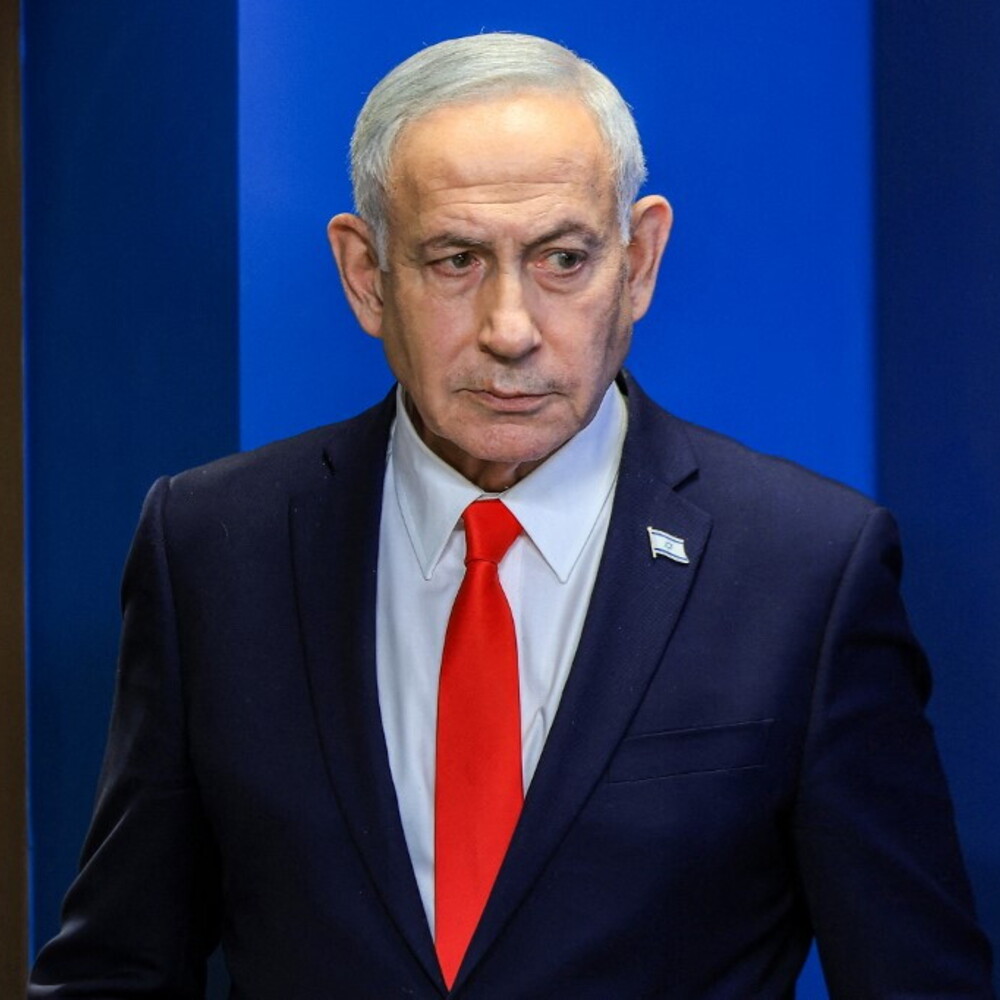
The signature of the Memorandum of intent Between United States e Iran was celebrated with triumphalist tones by both the American president Donald Trump than from the Iranian one Massoud Pezeshkianthere is a deafening silence in Israel: it is that of the prime minister Benjamin Netanyahuby his own designation Washington’s main ally, who today however has to swallow a very bitter pill.
For the leader of Tel Aviv it is one loud slap, made even more difficult to digest less than four months before elections crucial to his political survival. His opponents denounce ‘urbi et orbi’ his personal defeat, in his government the far right is seething with anger and incites him to continue and even in the armed forces there is some discontent. Not to mention the residents of the north, mostly still displaced, and the soldiers who continue to fall in Lebanon. The latest one died yesterday due to the explosion of a improvised device.
Tensions with the White House
Added to all this are the phone calls that are no longer friendly with Trump and the barbs publicly launched by the head of the White House: ranging from the invitation to “be more responsible” in Lebanon to the statement that Netanyahu “does what I want” to the furious “he doesn’t have a shred of common sense” after the bombing of Beirut last Sunday, shortly before the announcement of the agreement with Tehran.
Criticisms on the management of Lebanon
The tycoon also harshly criticized the indiscriminate bombing policy in the Land of the Cedars – “you cannot raze an apartment block every time someone from Hezbollah enters it” – and suggested that “if Israel is not able to resolve the issue (with Hezbollah), then Syria will do it” led by the new leader of Damascus, Ahmad al-Sharaa.
Relationship between Trump and Netanyahu
“He will have no choice, I am the one who decides everything, not him”, the US president said of Netanyahu ten days ago in an interview with the Financial Times. Not exactly the best electoral advertising for the prime minister, who has always insisted on the close personal relationship with him, the “best friend Israel has ever had in the White House”. The theme of Iranian nuclear power it certainly remains one of the main concerns for the prime minister, but the most pressing issue at the moment is Lebanon, a front included in the agreement between the USA and Iran but which Netanyahu already said on Monday evening that he does not intend to give up.
Israeli military strategy
Israeli troops will remain in the country and will maintain freedom of action to respond to threats, he said the day after the agreement was announced. It remains to be seen, beyond the declarations, how the situation will evolve. For now, the IDF has reduced, but not stopped, attacks against Hezbollah and the troops have been repositioned, but remain deployed in the ‘safe zone’, up to 10 kilometers inside Lebanese territory.
Uncertainty over negotiations
At this point, there is hope in Tel Aviv that the Memorandum of Understanding will not be implemented and that something will happen in the 60-day window that has opened for negotiations that will prevent a definitive agreement from being reached.
Political and electoral objectives
Netanyahu’s goal is to remain in Lebanon at least until the end of October-early November, when there will be elections in Israel and the mid-terms in the United States. After these electoral appointments, something could reopen. Until then, the IDF aims to maintain control of some strategic areas within the Cedar Country, such as the Ali Taher which dominates the Nabatieh area and the village of Kfar Tebnit. The same goes for the sea off the Lebanese coast: the IDF has drawn up a maritime security zone which remains inaccessible.
Dialogue Israel Lebanon
But it is an evolving scenario, on which the direct Israel-Lebanon negotiations that have been going on since April in Washington, with the mediation of the State Department, could have an impact. Ahead of the fifth round of talks, scheduled for next week, the Lebanese president yesterday Joseph Aoun he attempted to distance himself, underlining that “the Lebanese state is sovereign and for the first time we are the ones conducting the negotiations, no one negotiates for us”.
Location of Lebanon
“Lebanon’s path in the negotiations is independent,” he said, reiterating that “no external interference is allowed,” while saying he was “in favor of a ceasefire and any country that helps us, including Iran.” The decision to launch this direct line was harshly contested by Hezbollah, the Shiite group directly supported by the Islamic republic. The hope of Beirut, but also of the USA, is that the Lebanese front will cool down and find a political solution through direct negotiations with Israel and not as a consequence of the agreement with Iran.
Silence and negotiations underway
Netanyahu is silent for now but a source close to him has made it known that the Israeli government is carrying out “tough talks” with the United States, along with “difficult negotiations” regarding the future of the IDF presence in Lebanon, with the aim of maintaining the deployment of troops in the south.
https://talk.plesk.com/members/hitovi9.515344/#about
https://www.rehashclothes.com/rehakar279
https://experiment.com/users/rrehakar
https://hackaday.io/rehakar279?saved=true
https://www.ganjingworld.com/channel/1ikbbcqqpsu4V6MKaHJoKiSI515a0c?subTab=all&tab=about&subtabshowing=latest&q=
https://gravesales.com/author/rehakar279/
https://www.creative-tim.com/user-profile/rehakar279
https://www.metaculus.com/accounts/profile/303809/
https://findaspring.org/members/rehakar279/
https://www.rossoneriblog.com/author/rehakar279/
https://www.pebforum.com/members/rehakar279.254635/#about
https://inkbunny.net/rehakar279?&success=Profile+settings+saved.
https://profile.hatena.ne.jp/rehakar279/profile
https://forum.melanoma.org/user/rehakar279/profile/
https://forum.aceinna.com/user/rehakar279
https://www.shippingexplorer.net/en/user/rehakar279/302773
https://coderwall.com/Ivan%20Vorobyev
https://theamberpost.com/member/aleftina-petrova
https://my.usaflag.org/members/xekemax848/profile/
https://www.papercall.io/speakers/102019/speaker_talks/438849-fatboyscanrun
https://www.zubersoft.com/mobilesheets/forum/user-49244.html
https://www.brownbook.net/business/55220779/fatboyscanrun
https://www.kingmods.net/en/profile/hitovi9288
https://usedvape.com/profile/hitovi-hitovi/
https://www.checkli.com/hitovi9288#/a/process