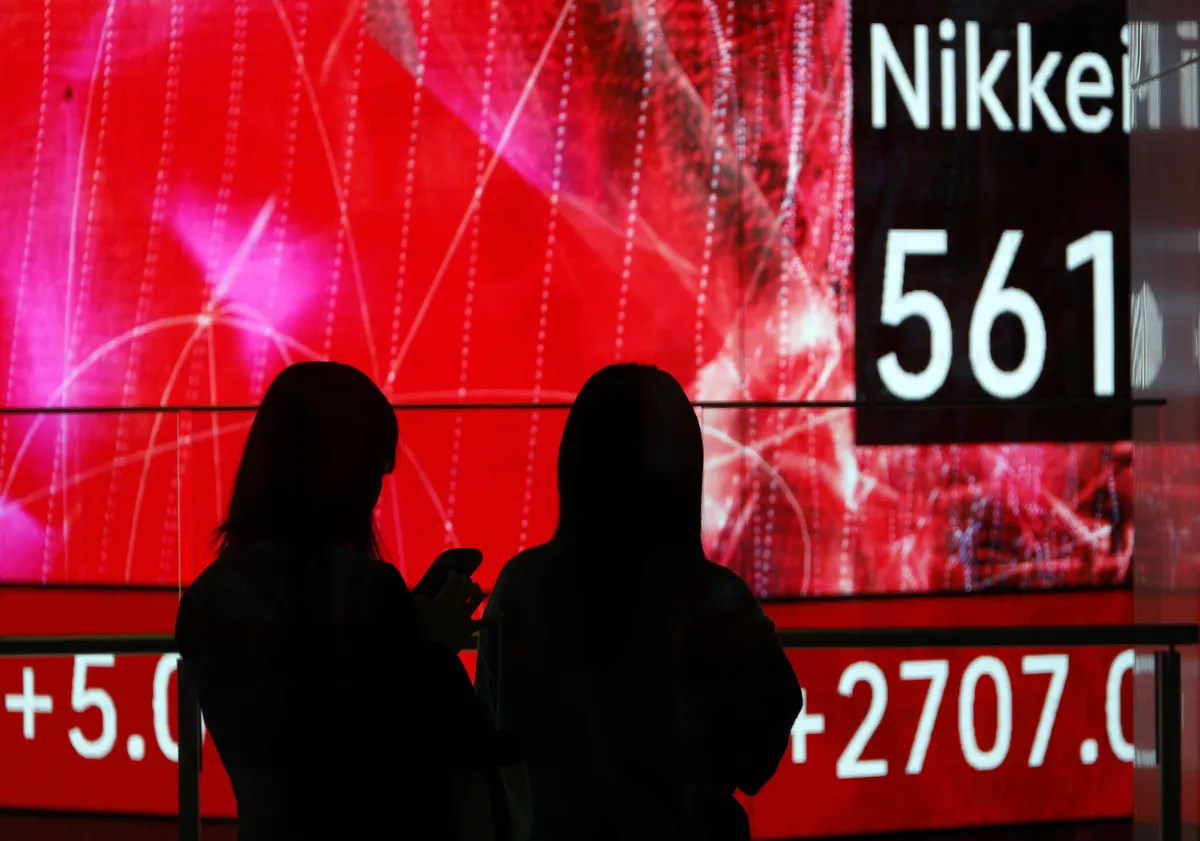
Japan sounds like a faraway corner of the world to the West, but right now something is happening there that could be a much bigger deal than what the US Federal Reserve does next on interest rates.
Since the bursting of the bubble of the 1990s, Japan has been quite an experimental laboratory. There was virtually no inflation in the country for a long time. The central bank has kept interest rates ultra-low and printed massive amounts of money.
With the shocks of the 2020s, the situation has changed. The corona crisis, Russia’s war of aggression against Ukraine and most recently the crisis in the Middle East have had a big impact on import-dependent Japan. Inflation has accelerated.
The Bank of Japan has started raising the key interest rate, which in June rose to one percent, the highest in more than 30 years.
This is a big structural change in one of the world’s largest economies.
Despite everything, the Japanese yen has continued to weaken. The yen already slipped to its lowest level in about 40 years, when the dollar fetched more than 162 yen.
Japan has been one of the biggest buyers of foreign assets – stocks and government bonds. The country is currently, for example, the largest foreign holder of US government bonds.
For decades, Japan has also been one of the world’s most important sources of cheap financing, and the yen is at the heart of the popular so-called carry trade investment strategy. With interest rates low in Japan, investors have borrowed cheaply in yen and bought high-yielding assets in other currencies. Now this investment strategy based on interest rate differences is at stake.
Japan’s tightening of monetary policy and currency interventions have not succeeded in halting the yen’s downward slide. The market is considering whether Japan will soon resort to tougher measures than before. If Japan has to defend the yen more aggressively, it could mean repatriating foreign investment.
According to the news company Bloomberg Japan possibly partially financed the yen support purchases it made earlier in the spring by unwinding its foreign investments in, for example, US government bonds.
The combined effect of Japan’s actions may weigh on world stock markets and cause upward pressure on other countries’ interest rates. If liquidity in the global market dries up, it will first be seen in the most liquid places, such as the S&P 500 index.
The end of Japan’s long line can have big effects on the financial markets of the whole world. A significant shift in global capital flows is potentially underway that will be felt everywhere, even if Japan is geographically distant.
کاربر soccerback1 – پرسش و پاسخ اداری و استخدامی
wedgecough1's Profile | Table Tennis at Phoenix Park
titlestock6 « Giveaway of the Day Forums
User guiltyroof8 – Mindwellnessforum Q&A
Issabel
CITIZEN Ana Digi Temp
My Humble Abode
123.Marketing
duststock6's Profile | VIRGINIA
in-voice
oiaedu.com
http://animationfixation.net/forums/user/guiltytub2/
radarhat5, Author at Forums | Webyog
Dustback1
israelkale4 » ""
metalslope6
titletub4
canadarail5 | Literary Forge
serrurierparis24fr
Assistance immédiate pour portes bloquées à Paris — serrurierparis24fr
Remplacement Scuris Aprs Tentative D Effraction Paris
1738783
Aide Experte De Serrurier Pour Portes Verrouilles
Dropbox
8Um38Zvsh8