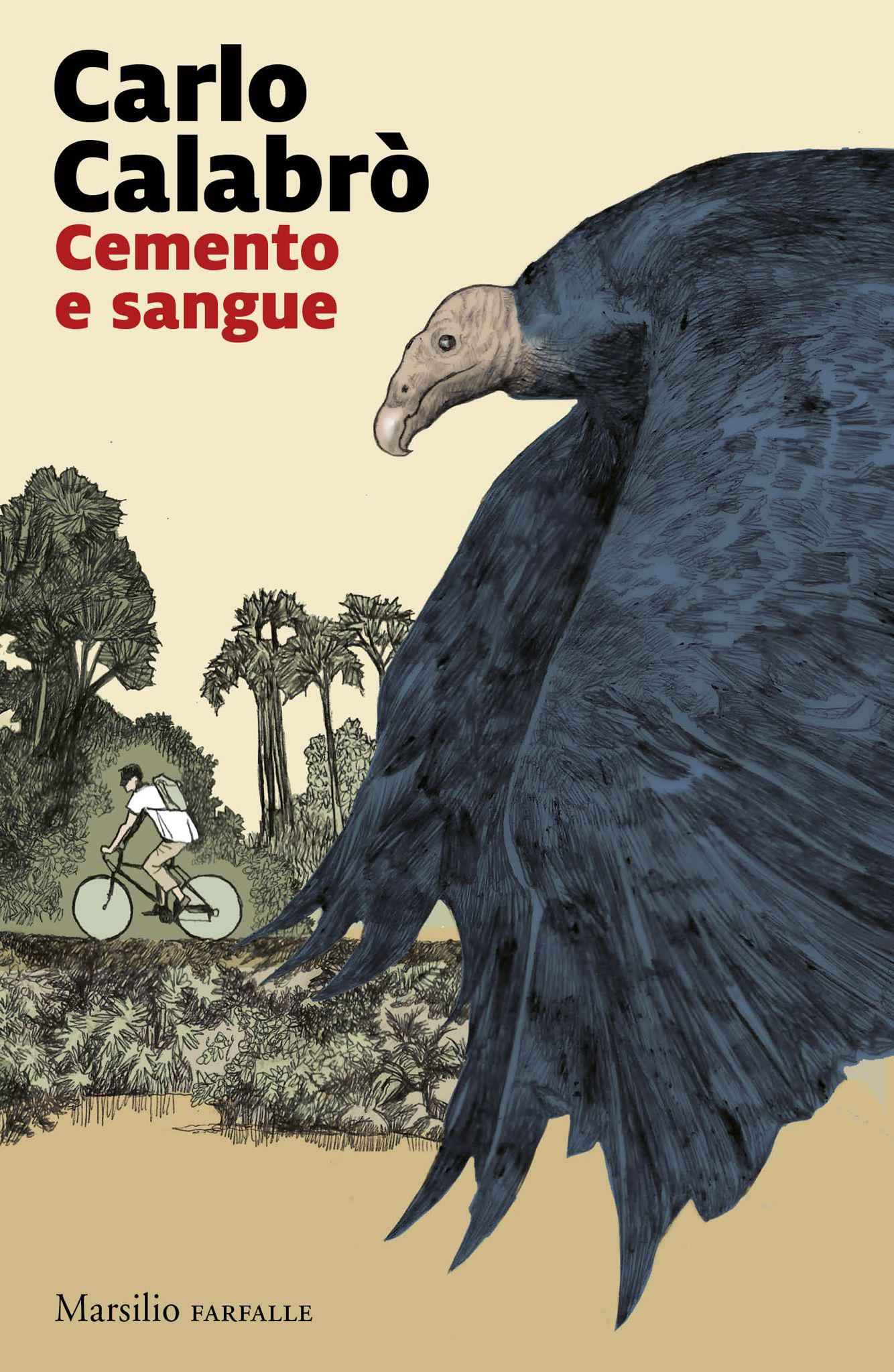
A body resurfaces from the black waters of Rio Pinheiros, in Sao Paulo. It is that of Flávio Bloch, eco-activist and friend of journalist Everton Barros. For the police it is a suicide, but Everton is not willing to accept such a hasty truth. “Cement and blood” begins from this premise, the new novel by Carlo Calabrò published by Marsilio in the Farfalle series (288 pages, 17 euros).
Set between the endless Brazilian metropolis and the Amazon, the book intertwines the codes of noir and political thriller with a reflection on contemporary power. In fact, the protagonist’s investigation leads well beyond the activist’s death, revealing a system in which politics, finance, real estate speculation, organized crime and information end up becoming confused.
Alongside the Bloch case, two other events unfold: the murder of the builder Leonard Zappavigna and the disappearance of the Swiss engineer Florian Kaufmann, involved in a network linking drug trafficking, economic interests and exploitation of the Amazon. The common thread is Donato Abreu, a rapidly rising neoliberal politician, reassuring face on television and promoter of an ambitious “social privatization” project, where philanthropy, construction and management of hardship become instruments of profit. Everton Barros conducts his investigation almost alone, supported by a few allies and two young ice cream makers who become detectives. The closer he gets to the truth, the more he discovers that every response generates new violence and that behind the individual crimes lies a machine of power capable of protecting itself.
With a fast pace and a strong narrative tension, “Cement and Blood” recalls the great tradition of the investigative thriller, but rereads it through the contradictions of today’s Brazil. The San Paolo described by Calabrò is a city that grows by devouring itself, where concrete covers rivers, responsibility and memory, while concepts such as urban regeneration, safety and sustainability are transformed into propaganda tools.
More than a backdrop, Brazil thus becomes the laboratory of the dynamics that run through many contemporary democracies: the spectacularization of politics, the increasingly close relationship between economic interests and institutions, the crisis of investigative journalism and the human cost of an idea of progress built on exclusion.
Carlo Calabrò, who lives in New York and works as a journalist for various newspapers, returns to the novel after “Meccanica di un addio” (Marsilio), a finalist in the Scerbanenco Opera Prima Award and welcomed by critics and readers. With “Cement and Blood” he signs a civil and literary noir that combines suspense and social analysis, placing at the center a very current question: is it still possible to tell the truth when power seems to have learned to transform it into spectacle? (by Paolo Martini)
Index.Php
jijovo5562's Profile
Isaac Henderson | CRC Network
Ashraful Mondal
Marca – 02hijri-date | Sifo
Cheesecake Secrets: Creamy Recipes Made Simple – News Round Podcast
Post by @alexanderkingsss
Motionless Button 29393
PankajRastogi
Volunteer Profile – AMPP
JohnKariuki
BandLab – Make Music Online
Paula Carlisle
Oliver Martin's | Portfolium
Real-time bonus tracking | Devfolio
RE: casino — Steemit
Https%3A%2F%2Fwww.Buzzsprout.Com%2F2307858%2Fepisodes%2F19424204 Cheesecake Secrets Creamy Recipes Made Simple.Mp3&Podcastid=6184058
What Defines the Best Thesis Writing Service in Thesis Writing?
TalkShoe – Free Podcast Platform | Best Podcast Hosting
PHP-Nuke Platinum 7.6.b.4v2 – Users Journal
https://myportal.utt.edu.tt/ICS/icsfs/01hijri-date.html?target=5a9d410c-0daa-4113-8bf3-9e5a81749f60
Why Your Likes Plateau — and the Levers That Actually Lift Them – Blog Around and About
How to Avoid Scams When Searching for a Custom Term Paper Writer
Mockplus
RezaulBhuiyan — Bio Sites