The talks in Doha ended without a breakthrough, and the issues that should have been resolved already remained in focus: the opening of the Strait of Hormuz, the release of billions of dollars and the regional tensions from Saudi Arabia and Lebanon to calls for revenge in Tehran
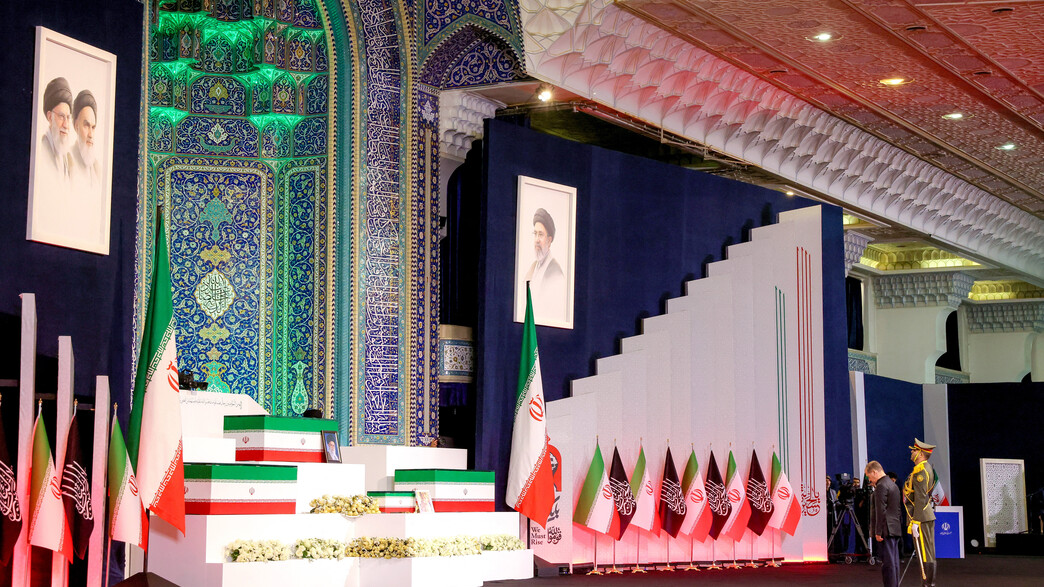
As the United States and Iran try to stabilize the interim agreement, Ali Khamenei’s funeral procession has become a show of force for the regime – with chants of “death to America”, posters of revenge against Israel and participants waving banners against Trump, but for now without Khamenei’s son, as reported in the New York Times. At the same time, according to Reuters, the round of indirect talks ended with no sign of a breakthrough, and focused rather on the issues that were supposed to be resolved already in the interim agreement: the opening of the Strait of Hormuz and the release of frozen Iranian funds.
According to the New York Times, there is also a security debate surrounding Mujtaba’s presence at the funeral ceremonies. The new Supreme Leader requested to attend his father’s burial ceremony at the Imam Reza Shrine in Mashhad on July 9. However, according to two members of the Revolutionary Guards and an official involved in the preparations for the funeral, security officials in Iran have so far rejected the idea – out of fear that Israel will try to assassinate him during the ceremony, or track his movements back to his hiding place.
Sources familiar with the negotiations told Reuters that for two days the parties mainly discussed the movement of ships in the Strait of Hormuz and the release of Iranian funds, in indirect talks mediated by Qatar and Pakistan. The nuclear issue did not come up at all, even though Trump said that “Iran’s nuclear decommissioning is progressing well,” and his deputy JD Vance made it clear that the issue would be discussed later. In Qatar, they reported “positive progress,” but neither side announced that the differences have been resolved. The next round is expected only after Ali Khamenei’s funeral and burial.
The Battle of Hormuz: not only the opening of the Strait, but who controls it
At the heart of the dispute is the Strait of Hormuz – one of the most important shipping and energy routes in the world. The initial agreement called for Iran and the United States to allow the resumption of ship traffic in the Strait, through which about a fifth of the world’s oil and liquid natural gas trade passed before the war. In practice, according to the report, traffic in the strait has only partially resumed, and the status of the shipping lane is still unclear.
Two senior Iranian sources told Reuters that Iran is determined to win international recognition for its control of the Strait – even if it is forced to do so by force. It was also reported that Tehran intends to start collecting transit fees from vessels from mid-August, after a period of free transit stipulated in the initial agreement.
This means that the dispute is not purely technical. For the United States and its allies, the question is how to ensure freedom of navigation in a strategic route. As far as Iran is concerned, it is a struggle for sovereignty and control. “Hormoz continues to reopen, but in a piecemeal, unpredictable and not entirely transparent way,” Vandana Hari, founder of an energy market analysis firm, told Reuters.
In recent days, several European countries have offered to help clear mines from the strait, but this move has also encountered difficulties. German Defense Minister Boris Pistorius said that he does not expect Germany to participate in the mission, partly due to Iran’s unwillingness to cooperate with other countries. At the same time, the Iranian Deputy Foreign Minister for Legal and International Affairs, Kazem Ahribabadi, warned Britain and France against a military presence in the Strait and said that “the Strait of Hormuz is not a stage for a demonstration of military power by extra-regional powers.”
The frozen money: Tehran’s test of confidence
Another issue that came up in Doha is the release of frozen Iranian funds. According to the reports, Iran is demanding guarantees for the release of 6 billion dollars, as part of the steps that should establish the interim agreement. For Tehran, this is a tangible test of American seriousness. As far as Washington is concerned, the release of funds is seen as part of a wider web of Iranian commitments.
That’s why even this section, seemingly economic, has become a political minefield. Iran wants an immediate result that it can present as an internal achievement after months of war, sanctions and regional pressure. The Americans, on the other hand, want to make sure that the economic relief will not be given without progress on the broader security issues.
Trump, between diplomacy and a military threat
In the background of the talks in Doha, in Washington, the debate continues regarding the continuation of the road with Iran. According to a report in the Wall Street Journal, Trump has held several discussions in recent days with the Secretary of Defense and the Chairman of the Joint Chiefs of Staff, in which the possibility of abandoning the diplomatic route and resuming full-scale attacks in order to “finish the job” came up.
According to the report, Trump has not yet made a final decision, and at this point he prefers to allow the negotiations to continue – even beyond the August 18 deadline. However, he still leaves on the table the possibility of targeted strikes in case Iran violates the memorandum of understanding. Thus a situation was created in which the talks in Doha are being conducted at the same time as a continuous American threat: an attempt to stabilize the Interim Agreement, but without renouncing military activity.
Lebanon and Saudi Arabia: the agreement is also being eroded outside the negotiation room
According to a report in the Lebanese newspaper al-Akhbar, which is affiliated with Hezbollah, the ceasefire in Lebanon also remains one of the points of contention between the parties. The Lebanese issue complicates the interim agreement because it connects the American-Iranian negotiations with the Israeli-Lebanese arena: Israeli withdrawal, Hezbollah’s status, and Washington’s ability to enforce the understandings on the ground.
At the same time, Saudi Arabia also became part of the picture. According to a report, Riyadh refused to allow the United States to use its bases and airspace as part of “Project Freedom”, an American operation designed to escort merchant ships in the Strait of Hormuz. In Saudi Arabia, they feared that the operation would reignite the war and expose the Gulf countries to another Iranian attack. The Saudi refusal forced the US administration to halt the operation shortly after it began, deepening tensions between Washington and Riyadh.
A funeral in Tehran: a show of strength and calls for revenge
The delay in the diplomatic schedule is also related to Khamenei’s funeral procession, which in recent days has become a show of political and regional power of the Iranian regime. According to the New York Times, during the morning chants of “death to America” and “God’s curse on Israel” were heard in the crowd, alongside banners calling for revenge. Some of the participants posed with anti-Trump posters – an image that illustrates the gap between the negotiation rooms in Doha and the political street in Tehran.
A long line of senior officials and foreign officials also came to the ceremonies. Among the reported participants: the prime minister of Armenia, the commander of the Pakistani army, representatives from Qatar, Iraq, China and Russia, as well as members of Hezbollah, the pro-Iranian militias in Iraq and Palestinian representatives. For Tehran, the funeral is not just a mourning event, but an attempt to present continuity, cohesion and deterrence – precisely at a time when negotiations with the United States are faltering.
Reuters reported that a senior Iranian commander warned the United States and Israel against any attack during the funeral period, saying that any threat or aggression would be met with a “severe response.” These warnings also fit into the message that Tehran is trying to convey: Iran is ready to continue the talks, but does not intend to be portrayed as having entered them from a position of weakness.
Interim agreement – no rules of the game
Thus, the disparities in Doha are not an isolated event. They reflect the erosion of the interim agreement from three directions at the same time: the battle for control of Hormuz, the political and security dispute in Washington regarding the continuation of the road with Iran, and the complex regional arrangement – from Saudi Arabia and Lebanon to the funeral procession in Tehran, which became a show of force and calls for revenge.
At this point, even if the talks continue, the temporary agreement is far from stable. The parties are still trying to manage the truce, but are having trouble agreeing on the rules that should keep it alive.
Universal City, TX Professional Lawn Care Services | UniversalCityLandscaping.us
Universal City, TX Professional Artificial Grass Installation Services | UniversalCityLandscaping.us
Universal City, TX Professional Dethatching Lawn Services | UniversalCityLandscaping.us
Universal City, TX Professional Fertilizing Lawn Services | UniversalCityLandscaping.us
Universal City, TX Professional Hydroseeding Services | UniversalCityLandscaping.us
Universal City, TX Professional Lawn Aeration Services | UniversalCityLandscaping.us
Universal City, TX Professional Lawn Edging Services | UniversalCityLandscaping.us
Universal City, TX Professional Lawn Grubs Control Services | UniversalCityLandscaping.us
Universal City, TX Professional Lawn Installation Services | UniversalCityLandscaping.us
Universal City, TX Professional Lawn Leveling Services | UniversalCityLandscaping.us
Universal City, TX Professional Lawn Mowing Services | UniversalCityLandscaping.us
Universal City, TX Professional Lawn Renovation Services | UniversalCityLandscaping.us
Universal City, TX Professional Lawn Seeding Services | UniversalCityLandscaping.us
Universal City, TX Professional Sod Installation Services | UniversalCityLandscaping.us
Universal City, TX Professional Weed Control Services | UniversalCityLandscaping.us
Universal City, TX Professional Yard Clean Up Services | UniversalCityLandscaping.us
Universal City, TX Professional Green Waste Disposal Services | UniversalCityLandscaping.us
Universal City, TX Professional Gutter Cleaning Services | UniversalCityLandscaping.us
Universal City, TX Professional Junk Removal Services | UniversalCityLandscaping.us
Universal City, TX Professional Leaf Removal Services | UniversalCityLandscaping.us
Universal City, TX Professional Tree Removal Services | UniversalCityLandscaping.us
Brushy Creek, TX Landscaping Services | BrushyCreekLandscaping.us
Brushy Creek, TX Professional Gardening Services | BrushyCreekLandscaping.us
Brushy Creek, TX Professional Brush Removal Services | BrushyCreekLandscaping.us
Brushy Creek, TX Professional Flower Bed Maintenance Services | BrushyCreekLandscaping.us