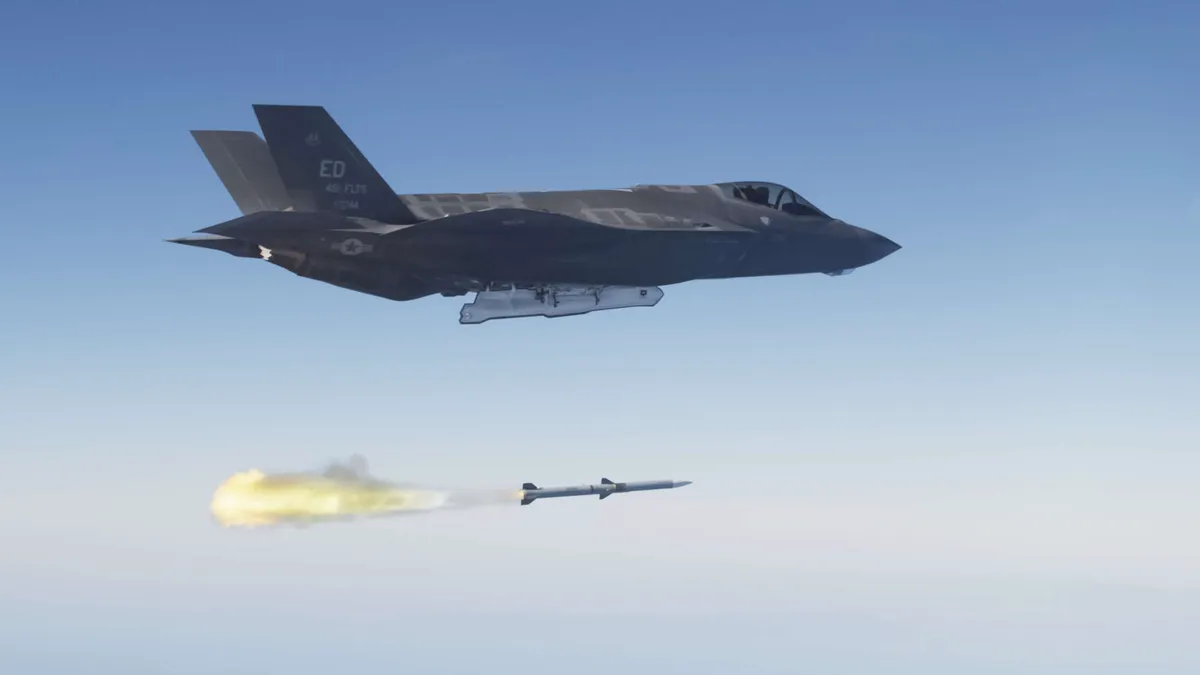
On Tuesday in Ankara, Finland will sign the agreement between the NATO countries and the United States Raytheonin with the joint preliminary investigation, the aim of which is to expand the production of AMRAAM air combat missiles in Europe. Finland will participate in the signing ceremony on Tuesday morning at the defense industry forum of the NATO meeting in Ankara.
In Ankara, a preliminary study will be agreed upon, which will assess the possibilities of increasing the production capacity of AMRAAM missiles in Europe and diversifying production outside the United States. In addition to Finland, Belgium, Canada, Germany, Norway, the Netherlands, Great Britain, the United States and the missile manufacturer Raytheon are involved in the project.
AMRAAM (Advanced Medium-Range Air-to-Air Missile) is a medium-range radar-seeking air combat missile that is widely part of the armament of NATO air forces. In Finland, the missile is used in Hornet fighters, and it will be a key part of the weapons system of the F-35 fighters that will be put into service as well.
Increasing European production has become an important goal in NATO, especially after the war in Ukraine. As a result of the war, missile stocks have been depleted significantly, which has emphasized the need to increase the capacity of the defense industry, speed up production and ensure the availability of critical weapon systems even in protracted crises.
For Finland, the project is significant above all from the point of view of security of supply and defense capability. Since Finland’s current Hornets and future F-35 fighters use AMRAAM missiles, their availability is a key part of the Air Force’s performance. Expanding production to Europe could shorten delivery times and reduce dependence on US production lines.
From the point of view of Europe, the project supports the goal of NATO and the EU to strengthen the defense industrial base and increase strategic self-sufficiency.
Although it is only a preliminary investigation phase, the project can open the way for significant investments in European missile production in the coming years.
Withdraw AlaWin | Fast Cash Out & Time
alawin-aus.com
Apk
App
Bonus
Casino
Deposit
Download
Faq
Legal
Login
Mirror
Mobile
Payments
Problems
Promocode
Review
Slots
Support
Withdraw
alawin-ireland.com
Apk
App
Bonus
Casino