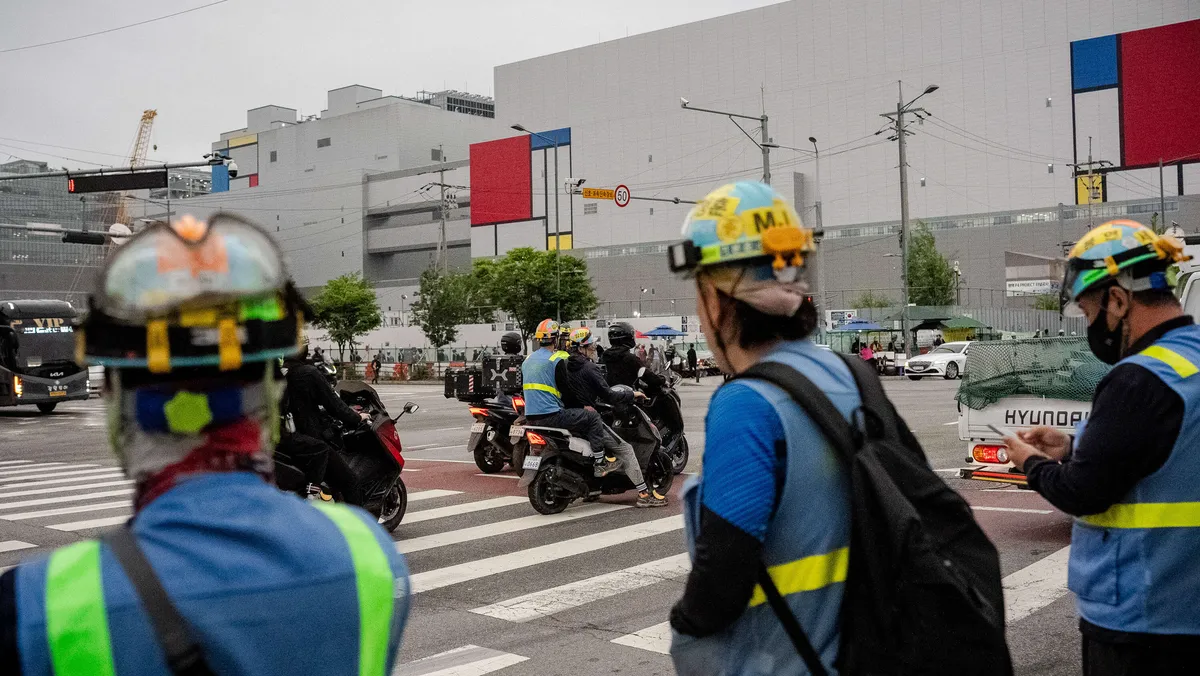
In South Korea, the welfare state was not understood. According to South Koreans, Finland cares too much about employees.
“Finnish sick leave sounds great for employees, but aren’t they bad for the state’s economic growth and the company?” my korean friend asked me.
The question encapsulates the world of thought of Korean working life. You won’t miss work because of a minor or major flu. Working days may last 12 hours six times a week. At the end of the working day, after nine o’clock in the evening, there is some time to choose between dinner, the gym or television. A four-hour night’s sleep at night and the same continues in the morning.
South Korea’s economy has grown very fast. The country’s general index Kospi has almost tripled in three years. Today’s success and prosperity is largely built on a few very rich chaebol family conglomerates such as Samsung and SK Group.
Despite the success, employee well-being is still a taboo in the country. The mere talk of forming unions and workers’ rights is quickly labeled communist in capitalist South Korea. Because of the countries’ history, anything that can be considered pro-North Korea is avoided.
However, the work culture is deadly. Last year, the popular bagel chain London Bagel Museumin the employee died to a heart attack caused by work-related stress. The employee was responsible for the opening of the chain’s new restaurant. Before his death, he had done 80-hour work weeks and, for example, a work shift that lasted 21 hours straight. The employee was 26 years old when he died.
Likewise, the corporate culture of the country’s leading companies, such as Samsung and SK Group, has been criticized from long working hours. In 2024, the companies ordered their managers to a six-day work week. And since bosses have a long day, so do employees. South Korea’s hierarchical society does not allow workers to leave the workplace until their supervisors have finished their work day.
How long can the situation continue to be sustainable? Kospi has already plummeted from its early summer peak. Chaebol family companies recover from financial setbacks much faster than overworked employees recover from health setbacks.
Still, South Korea has managed to achieve something that many can only dream of. Will we ever be able to catch up to similar growth in Finland? However, it’s nice that in Finland you can stay home and be sick if you’re sick.
Casinò Spinania: Slot e Giochi Online
Deposito Spinania: Deposito minimo Spinania
Download Spinania Casino: Scarica e Installa
FAQ Spinania Casino: Domande Frequenti
Legalità e Sicurezza di Spinania Casino
Accedi a Spinania: Login Sicuro e Facile!
Mirror Spinania: Link alternativo Spinania
Versione mobile Spinania: Gioca e Vinci!
Metodi di pagamento Spinania | Deposito e Prelievo
Problemi tecnici Spinania | Errore login Spinania
Codice bonus Spinania – Promo code
Recensione Spinania Casino: Valutazione Completa
Slot Spinania: Emozioni ai Rulli!
Supporto Spinania: Servizio clienti Spinania
Prelievo Spinania: Tempi di Prelievo Veloci
Spinania Casino: Top Zábava v ČR 🎲
Stáhnout apk Spinania pro Android zdarma
Stáhněte si aplikaci Spinania Casino
Bonus Spinania & Vstupní Bonus Free Spiny
Spinania online kasino & kasino hry Spinania
Vklad Spinania: Jak vložit a minimální vklad
Stáhnout Spinania: Instalovat Herní Ráj 🎲
Spinania Casino FAQ – Jak Funguje Spinania?
Spinania legální ČR, licence a bezpečnost
Přihlášení Spinania: Login k Vaší Hře