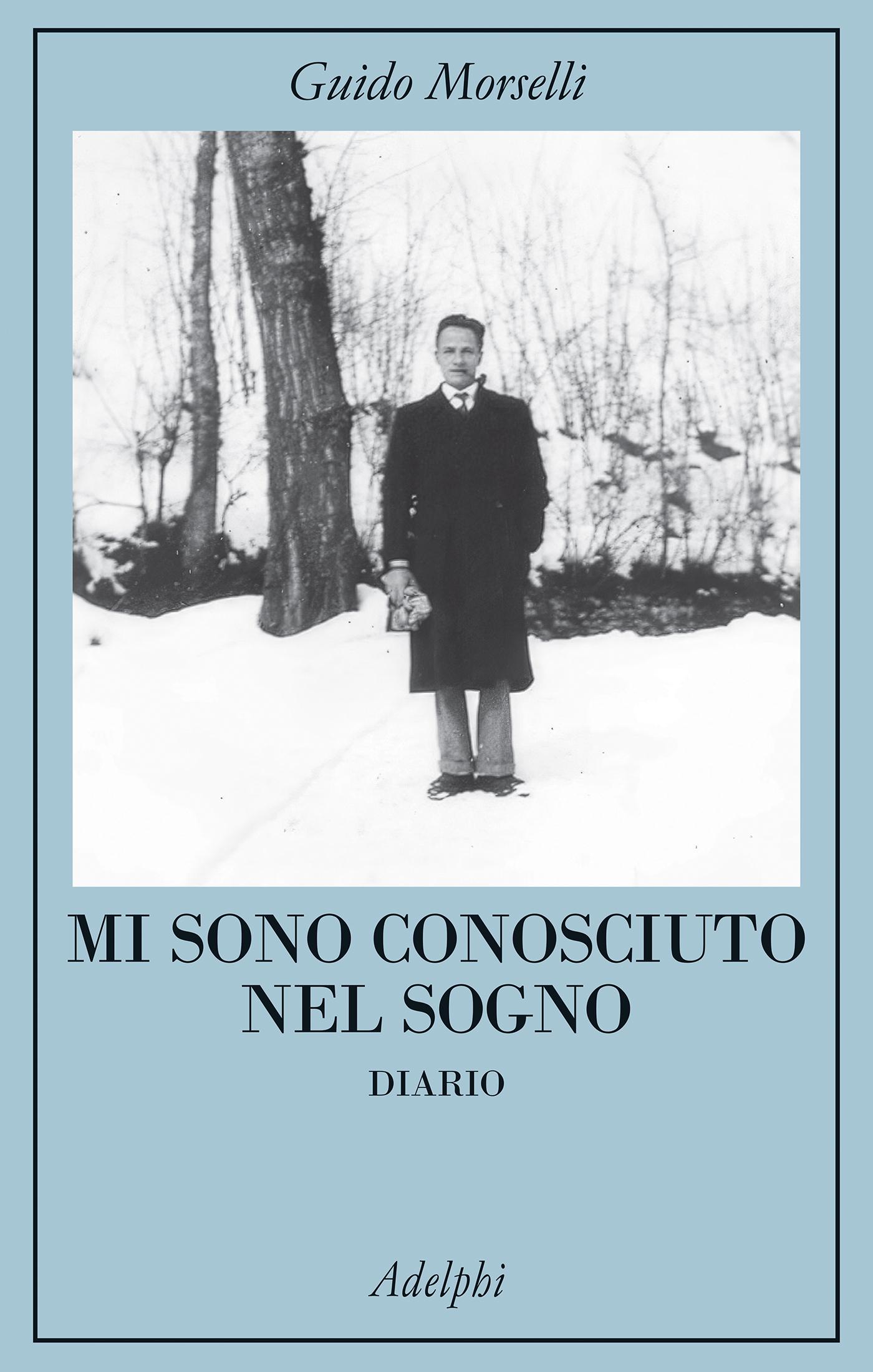
A long journey into the mind and life of Guido Morselli, through over thirty years of notes, reflections, readings, meetings and dreams. It is “I met in the dream”, the writer’s diary re-proposed by Adelphi (442 pages, 26 euros) in a new expanded edition, edited by Valentina Fortichiari, with a preface by Giuseppe Pontiggia. Morselli, born in 1912 and who committed suicide on 31 July 1973, began keeping the diary in 1938 and continued to do so until almost the end of his life. The pages collect extremely varied material, in which the author records daily events but above all questions himself, using readings, meetings and personal circumstances as tools to test his ideas. “The things that have existed and the events that have happened are not shadows that we leave behind”, writes Morselli, reflecting on the relationship between memory and time. The past, in his perspective, does not coincide with what has disappeared, but constitutes a dimension that is still present, capable of continuing to act on the individual.
The diary thus also becomes a sort of writing laboratory. Morselli returns to his own works, develops intuitions and gives voice to the characters of his novels. It is one of the aspects that make these pages particularly significant for understanding his literary journey: the writer does not limit himself to telling what he experiences, but continually reworks experiences, images and thoughts, transforming them into narrative matter. As Giuseppe Pontiggia observes in the preface, Morselli “relives scenes already described, integrates them with a visionary memory, learns retrospective details, converses with the characters”. The diary therefore allows us to enter into the creative mechanism of an author who for a long time remained on the margins of the Italian literary panorama and who would have achieved full editorial success, especially after his death.
His reflections on literature and, in particular, on the crisis of the novel also emerge between the pages. Morselli developed original theoretical positions, often ahead of the debate of his time, with an intellectual freedom that also contributed to his condition of isolation. At the center of his conception of spiritual life he places the need for choice and fidelity: “A choice, and fidelity to what one has chosen”. A principle that Morselli applies to love, to the relationship with places and things, but also to knowledge and his own intellectual activity. Finally, the pages dedicated to dreams and the most intimate dimension of the author are particularly precious. It is precisely in the comparison with himself that, according to Pontiggia, one of Morselli’s most intense faces emerges: that of a writer capable of looking at himself with a gaze that is both visionary and analytical. The new edition of “I met in the dream” significantly expands the selection that originally appeared in 1988 and adds an important interpretative element with the final essay by Valentina Fortichiari. The volume thus allows us to reread the diary not only as a biographical document, but as an integral part of the writer’s work and as testimony to a lifelong intellectual research. Morselli’s works were published by Adelphi between 1974 and 2002. (by Paolo Martini)