Cutting back on caffeine rarely means cutting back on the habit. People still want the mug in hand at nine at night, the smell in the kitchen, the ritual of pressing a button and waiting. What they don’t want is the heart flutter at midnight or the 3 a.m. ceiling stare.
That’s where decaf pods come in, and where a lot of people get disappointed. Badly chosen decaf tastes thin, flat, or oddly bitter, and the person who tried it once often concludes that all decaf is like that. It isn’t, but the differences between pods are real and worth understanding before you commit to a box of a hundred.
Decaf Is Low-Caffeine, Not Caffeine-Free
Decaffeination strips out roughly 97 percent of the caffeine, not all of it. A decaf pod typically carries somewhere between 2 and 5 milligrams, against 90 to 200 milligrams in a regular cup.
For most people that residual trace is irrelevant to sleep. If you’re unusually sensitive, or you’re reducing caffeine on medical advice for blood pressure or an anxiety disorder, that number is worth raising with your doctor rather than assuming zero.
It also explains why switching to decaf in the evening works so well as a compromise. You keep the ritual and the warmth, and you shed almost all of the stimulant.
Format First: Capsules and Pods Are Not the Same Thing
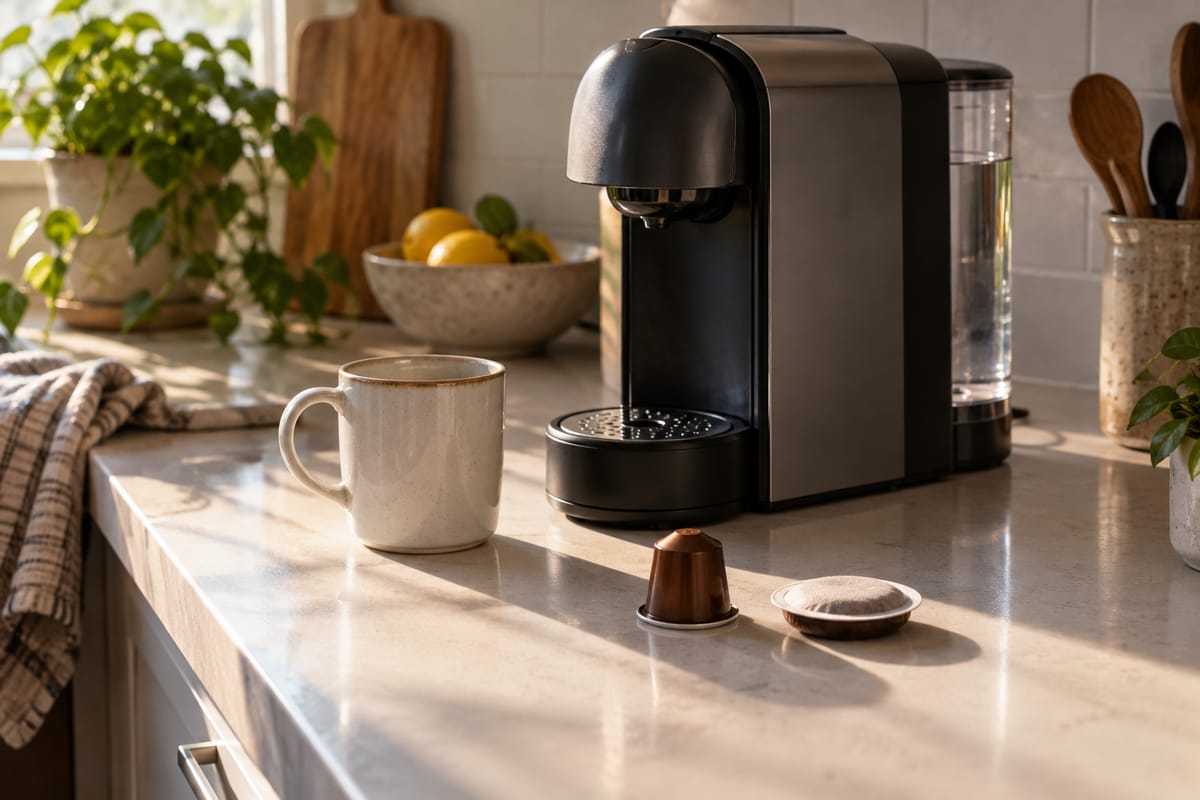
The single most common mistake is buying the wrong shape. Hard capsules and soft pods are entirely different formats, and machines built for one will not handle the other.
A Senseo machine takes soft pods, flat discs of coffee wrapped in filter paper. Nespresso and Dolce Gusto take hard capsules, and those two aren’t interchangeable with each other either, because the capsule sizes differ. K-Cups are their own standard again, fitting Keurig 1.0 and 2.0 brewers.
Check the system printed on the packaging against your machine model before anything else. Flavor notes, roast level and count-per-box are all irrelevant if the thing won’t seat properly in the holder.
Roast Level Does the Heavy Lifting
Decaffeination pulls out some flavor compounds along with the caffeine. Done carelessly, it leaves behind a cup that tastes hollow or faintly bitter. Roast choice is the most reliable way to compensate.
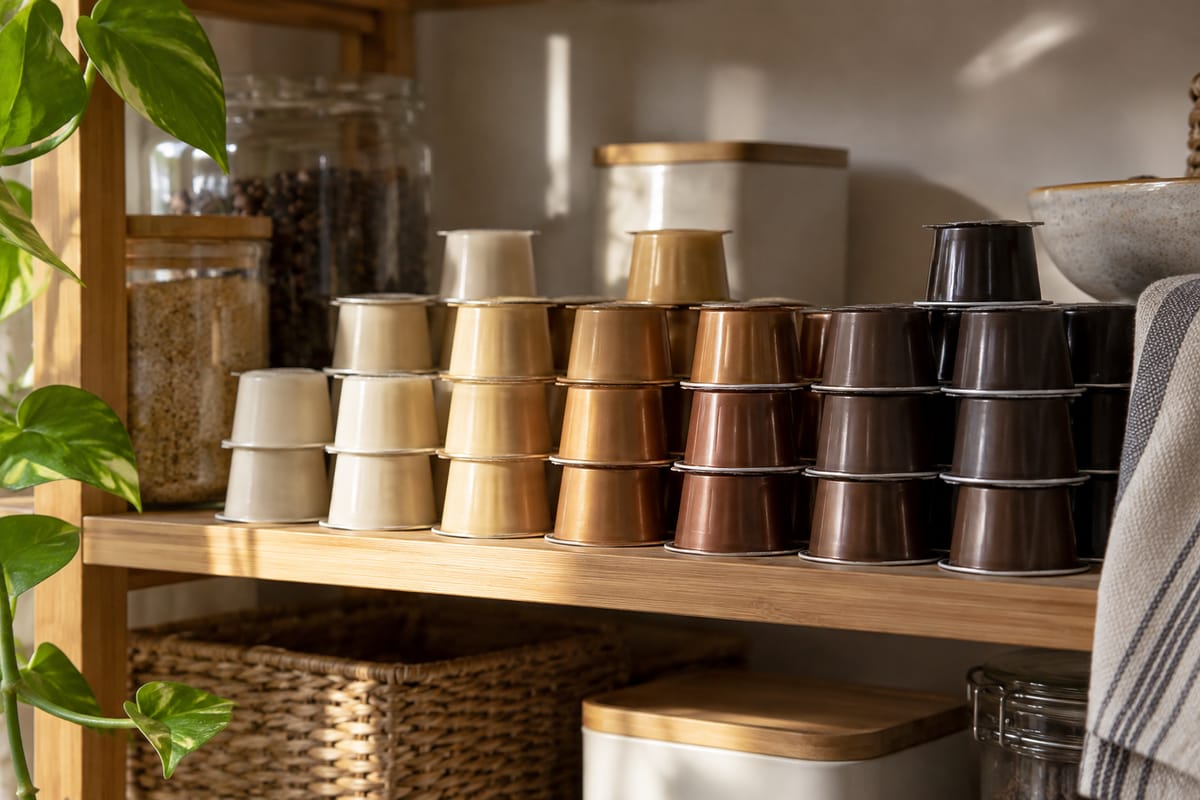
Light roasts keep more of the origin character but read as thin in decaf form. Medium roasts tend to be the safe landing spot, balancing body against smoothness, and they’re where most of the better pods sit: medium blends built from South American and African Arabica, house blends carrying toffee and cocoa notes, full-bodied profiles with dried-fruit aromas. Dark roasts give you smoke and depth if that’s your preference.
A useful rule: if you drink medium roast regular coffee, go one notch darker in decaf to land in roughly the same place.
The Decaffeination Method Matters Too
Not every brand tells you how the caffeine came out, but when they do, it’s informative. Supercritical CO2 decaffeination uses carbon dioxide under pressure to pull caffeine selectively, with no solvents and no heat damage, and it preserves flavor compounds unusually well.
Solvent methods using methylene chloride are also widespread and FDA-approved under strict residue limits, applied either directly to the green beans or to the soaking water.
One thing CO2 processing doesn’t do is lower acidity. The pH stays around 5.0, the same as regular coffee, so decaf is not automatically a gentler cup for a sensitive stomach.
Pod Build Quality, Seals and Recyclability
Pod construction shows up in your mug. The frequent complaint with cheaper pods is a poor seal: grounds escaping into the cup, or small leaks that make the brew inconsistent from one pod to the next. Consistency is the whole point of a single-serve system, and a pod that brews unevenly defeats it.
This is also the stage where the differences stop being abstract and start being about specific boxes on a shelf, and comparing the best decaf K cups side by side tells you more about seal quality and grounds-in-the-cup complaints than any spec sheet will.
Recyclability is worth a look if your municipality supports it. Many pods now use recyclable plastic, aluminum or plant-based material, and several brands market that heavily. The catch is local: your collection program has to accept them. Some areas have composting or mail-back schemes instead. Verify before you buy a case on the strength of a recycling symbol.
K-Cup Pack Size, Cost and Shelf Life
Per-pod pricing for decaf K-Cups varies widely depending on sourcing and brand positioning, with mass-market names sitting at the lower end and premium, heritage roasters priced higher.
Work out your actual consumption before buying bulk. Three cups a day burns through a 100-pod box in about three weeks. Smaller boxes of 40 to 60 pods make more sense if you’re testing a new brand or drink decaf only occasionally.
Pods hold their flavor for 12 to 18 months stored cool, dry and out of sunlight. Buying a year’s supply is fine in theory, but the last pods in the stack will taste noticeably tired. Decant opened boxes into an airtight container to slow staling.
Things worth checking on the box before you commit:
- The system name, matched against your machine
- Roast level, and whether the beans are stated as 100 percent Arabica
- Count per box against your weekly usage
- Sourcing claims, certifications and any kosher or sustainability marks
- Storage instructions and a best-before date
Getting More Out of the Pod You Bought
Most Keurig brewers default to 8 ounces per pod, which is a sensible starting point. Drop to 6 ounces for a more concentrated, fuller cup. Push to 10 or 12 and the result gets milder, which suits some medium-roast blends and ruins lighter ones.
Robust medium roasts with real body tend to survive the larger volumes. Lighter decaf pods are best left at the standard setting.
And if you have nothing but a kettle and a mug, keep an instant decaf in the cupboard as backup. Roughly a quarter of coffee drinkers rank that no-machine convenience above everything else, and on the night your brewer decides to flash an error light, that 9 p.m. ritual still happens.