Monetary policy|The key interest rate has remained flat at two percent since June.
European the central bank (EKP) decided on Thursday to keep its key interest rate unchanged, as expected.
The council, which decides on monetary policy, justifies its decision by the fact that the increase in consumer prices, i.e. inflation, has recently remained around two percent.
“The economy has continued to grow despite the challenging global environment. The stable labor market, solid balance sheets of the private sector and the ECB Council’s previous interest rate cuts are still important sources of the economy’s sustainability,” the council says in its statement.
However, the council also points out that the economic outlook is still uncertain, especially due to international trade disputes and geopolitical tensions.
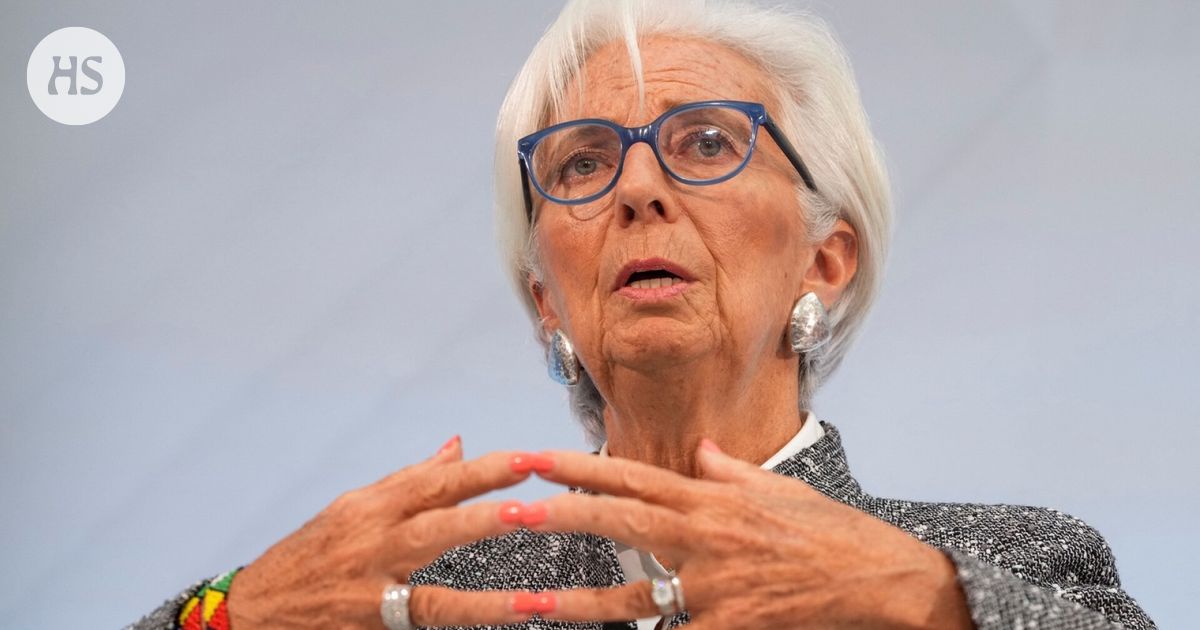
“Inflation prospects are still more uncertain than usual due to unstable international trade policy. A stronger euro may slow down inflation more than expected”, CEO Christine Lagarde said at a press conference.
He did not give any hint about the next interest rate decisions. Instead, he reiterated that decisions are made meeting by meeting and always based on the latest available information.
The next monetary policy meeting will be in December, when the Council will also have at its disposal the economic forecast prepared by ECB economists.
The previous one once the central bank cut the key interest rate in June. In July and September, it kept the policy rate unchanged at 2.00 percent.
The inflation rate in the euro area was 2.2 percent in September. It has remained around two percent since spring. According to the central bank’s price stability objective, inflation must be two percent in the medium term.
Financial markets consider it unlikely that the ECB will cut its key interest rate again this year.
European Based on preliminary data published on Thursday by Eurostat, the Union’s statistical authority, the euro area economy grew by 0.2 percent from the previous quarter and 1.3 percent from a year ago in July–September.
“The service sector continued to grow, boosted by strong tourism and especially the pick-up in digital services,” CEO Lagarde said.
According to surveys, the pick-up reflects the fact that many companies have stepped up their efforts to renew IT technology and integrate artificial intelligence into their operations.
“At the same time, industrial production was held back by higher tariffs, further increased uncertainty and a stronger euro.”
The Finnish economy shrank by 0.1 percent from the previous quarter and by 0.9 percent from the same time last year.