Fierce diplomacy to help Ukraine continued on Wednesday as EU foreign ministers held an informal video conference on Ukraine’s peace talks and Russia’s war of aggression.
In addition to the foreign ministers of the EU countries, the foreign minister of Ukraine also participated in the meeting Andri Sybiha.
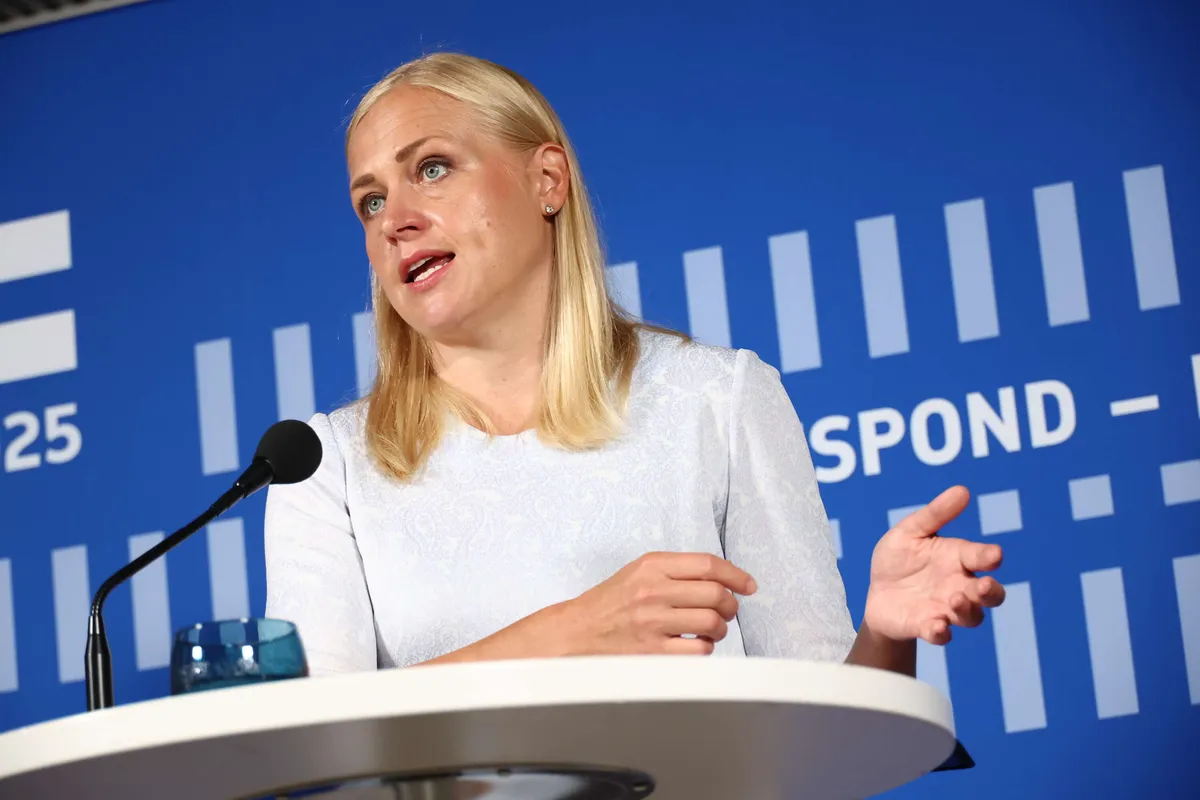
The foreign minister who represented Finland at the meeting Elina Valtonen (kok) said in his press conference after the meeting that the EU’s most urgent task is to resolve the issue of Russia’s frozen funds that could be used to help Ukraine.
The foreign minister also heard a proposal on limiting the Russian armed forces.
According to the minister, it is reasonable that restrictions are also imposed on Russia, if one wants to impose restrictions on the armed forces of Ukraine.
“It is reasonable that if requirements or restrictions regarding the size of the defense forces are placed on the victim, at least similar requirements should also be shown to the attacker,” Valtonen said.
The foreign minister justified the demand by referring to the first draft of the peace agreement prepared by Russia and the United States, which contained a demand for reducing the size of the Ukrainian armed forces.
Valtonen reminded that Russia started the war.
“This kind of way of thinking is unlikely to be cheered in Moscow, but there is certainly widespread international support for this. This could be linked more broadly to such an arms control system also for Russia. Russia has historically been a threat to its neighboring countries and not the other way around.”
The Foreign Minister assesses the realism of the proposal by stating that Russia can be persuaded to this and other demands, but only if it has no other options.
Valtonen also emphasized that Russia must comply with international law, organize free elections and recognize human rights also in its own country.
Reserves on ice
Valtonen believed that a solution to Russia’s frozen funds will be found in December.
If no agreement can be found on the frozen funds, then, according to Valtonen, a backup plan can be implemented. Otherwise, Ukraine may collapse economically and militarily in the next few months.
Ukraine has warned that its funds will run out in the first months of next year.
The proposal to use frozen Russian funds for a war compensation loan to Ukraine has repeatedly met with Belgian opposition, although the Commission has held close negotiations with Belgium and tried to convince it of the legal sustainability of the arrangement.
Most of the funds frozen by the Russian central bank are kept in Belgium Euroclear-in the financial institution’s accounts.
Prime Minister of Belgium Bart De Wever remains concerned about Russian retaliation and potential legal liability if funds frozen from Russia were used to support Ukraine.
If no agreement can be reached on the frozen funds, then Politico could be an alternative according to sources a temporary loan that would keep Ukraine afloat while negotiations continue, although the longer-term solution is still to use frozen Russian funds.
On Wednesday, Valtonen did not comment on what the EU’s contingency plan could be in practice. In the past, the joint debt of the EU member states or the direct support of individual member states to Ukraine have been presented as alternatives.
According to Politico’s sources, Ukraine could be asked to pay back a temporary loan to the EU after it gets access to the war reparations loan.
Ukraine’s financing decision is to be approved at the summit of EU countries held on December 18 at the latest.