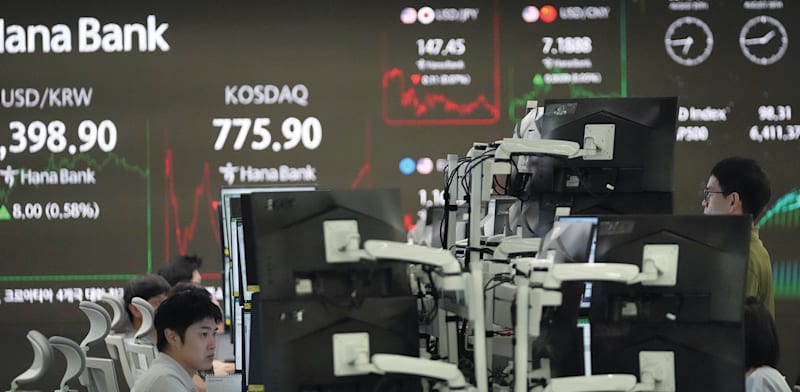
Retail investors in South Korea have long been known as lovers of risk and trends, and it seems that the local Securities Authority has decided to address the issue after the discovery that households in the country have become one of the factors influencing US meme stocks, mostly quantum or alternative food stocks. This not only endangers the stability of the Korean economy, but also makes the capital market in New York more volatile and subject to speculative trading.
Starting in mid-December, independent investors in Korea will be forced to take a one-hour online course before investing in products such as leveraged ETFs or stock options, while those who want to purchase derivative products abroad will also have to go through a three-hour trading simulation program. This, after it became clear that the direct investment from retail investors in leveraged stocks and ETFs is breaking records. purchased by Koreans may cross the 30 billion dollar mark this year, an all-time high since the count began in 2011. For comparison, in all of 2024 the figure was only 10 billion dollars.
The total number of US stocks held by Korean investors now stands at a record $170 billion – twice as much as at the beginning of the year. The Koreans own a fifth of the market value of the quantum share IonQ, which jumped 91% between the beginning of September and the peak in mid-October, until it began to fall; The trading volume of the stock in Korea was infinitely higher than that of regular big tech stocks like Amazon, Google or Microsoft. The Korean investors also showed their strength during the month of October, when they purchased 239 million dollars of shares in Biond Meat, which jumped at once by about 600%, until it quickly fell again afterwards.
Don’t have an apartment? You can buy a leveraged fund
The demand in Korea for leveraged ETFs based on shares is particularly high. An investment manager at the Acadian company, Evan Lamont even called this investment strategy a “stock market in the style of the squid game”, a metaphor for the high stakes that investors take under high pressure and in the war for economic survival in the country. “The local real estate bubble makes it difficult for many Koreans to purchase their own apartment, similar to the situation in Israel – and on the other hand, they are very risk-averse and have a great fondness for technology,” says Shahar Cohen, founder of the Lucid Capital hedge fund. “Robinhood-style home trading applications led them to attack stocks, leveraged ETFs and inverse ETFs in the fields of quantum and nuclear energy.” The risk in leveraged products is particularly high: ETFs “Leveraged ones go up at a much higher rate than the stocks they follow, while inverse ETFs go up when a certain index goes down, similar to shorting a stock.”
The local Korean capital market achieved a phenomenal return – the local Kospi index rose 65% since the beginning of the year, compared to 19% in the Nasdaq and 15% in the S&P500. However, when converted to Korean won, the S&P rose by over 300%, which pushed Korean investors to the US.
For your attention: The Globes system strives for a diverse, relevant and respectful discourse in accordance with the code of ethics that appears in the trust report according to which we operate. Expressions of violence, racism, incitement or any other inappropriate discourse are filtered out automatically and will not be published on the site.