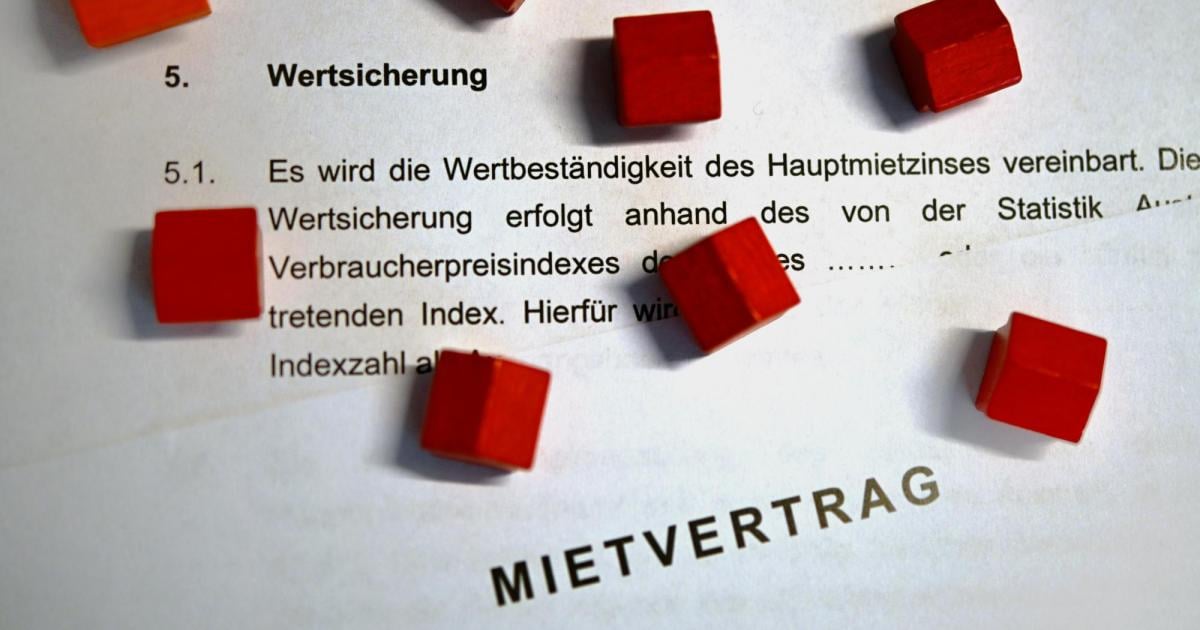
This was recently Rent package the federal government, consisting of the new Rental Value Assurance Act and the Rent control for guideline and category rents decided by the building committee.
The rent cap establishes a calculation model for contractual value protection. The aim is to ensure that future inflation peaks do not hit the residential rental market unabated.
It’s specifically about one Cap on value protection for existing and newly concluded residential rental agreements: The upcoming increases in the statutory guidelines and category amounts as well as the appropriate rental rates will be capped at one percent for 2026 and two percent for 2027. This particularly affects old apartments and municipal buildings. In the future, guideline values and category amounts may only be adjusted for inflation once a year on April 1st.
From 2028, the system will switch to a uniform adjustment to inflation developments: from April 1, 2028, the cap will only be relevant if an increase is above three percent. If inflation rises by more than three percent, only half of the excess share may be passed on to the tenant. These innovations then apply not only to category and guideline rents, but also to free market rents, with the exception of rented single- and two-family houses.
New fixed-term rental agreements
There are changes in the limitation of rental agreements. The previously applicable minimum period of three years will be increased to five years, valid for all extensions and new rentals from 2026. However, there are exceptions for small private landlords, i.e. for landlords who are not entrepreneurs within the meaning of the Consumer Protection Act.