Vietnam leads the world in per capita consumption of instant noodles, about 81 servings per year, higher than South Korea and Thailand.
The high average consumption level has made Vietnam one of the most special instant noodle markets in the world. Accordingly, on average every 4-5 days, Vietnamese people eat one meal of instant noodles. Although the population size is not among the largest, the high frequency of use makes instant noodles a familiar part of the daily meals of many families, from urban to rural areas.
In terms of total consumption, Vietnam’s position is different. Data Demand Rankings of the World Instant Noodles Association shows that in 2024, Vietnamese people will consume about 8.14 billion servings of instant noodles, ranking fourth globally, after China (including Hong Kong), Indonesia and India. Of which, India surpasses Vietnam with about 8.32 billion thanks to its large population, although per capita consumption is significantly lower.
The difference between the per capita ranking and the total volume clearly reflects the characteristics of the Vietnamese market. Instead of relying on a large population, this market is shaped by consumers’ high level of attachment to instant noodle products, thereby playing an important role in the strategies of global manufacturers.
Besides scale, WINA also recognizes the unique consumption characteristics of the Vietnamese market. Spicy and sour shrimp flavor is currently the most popular type. Consumers tend to prefer chewy noodles and often add onions, lemons, and chili when cooking. In addition to noodles made from wheat flour, Vietnam also popularizes products using pho noodles made from rice – a factor that WINA considers rare compared to many other instant noodle markets.
From an economic perspective, instant noodles is still one of the large-scale and highly competitive consumer food industries in Vietnam. The market currently has about 50 businesses participating in production and business, with brands ranging from popular to high-end segments. The three largest manufacturers are Vina Acecook, Masan Consumer and Asia Foods, accounting for about 70% of the market share or revenue of the entire industry.
Leading the market is Vina Acecook, owning familiar brands such as Hao Hao, De Nhat and Modern. This business once recorded revenue from instant noodles of about 10,000-12,000 billion VND per year, thereby being in the group of large consumer food companies in Vietnam. Masan Consumer, with the brands Omachi and Kokomi, said that the convenience food industry – of which instant noodles account for a major proportion, has brought in more than VND 8,600 billion in revenue in recent years. Asia Foods and Uniben are also large manufacturers, contributing to the fierce competition of the market.
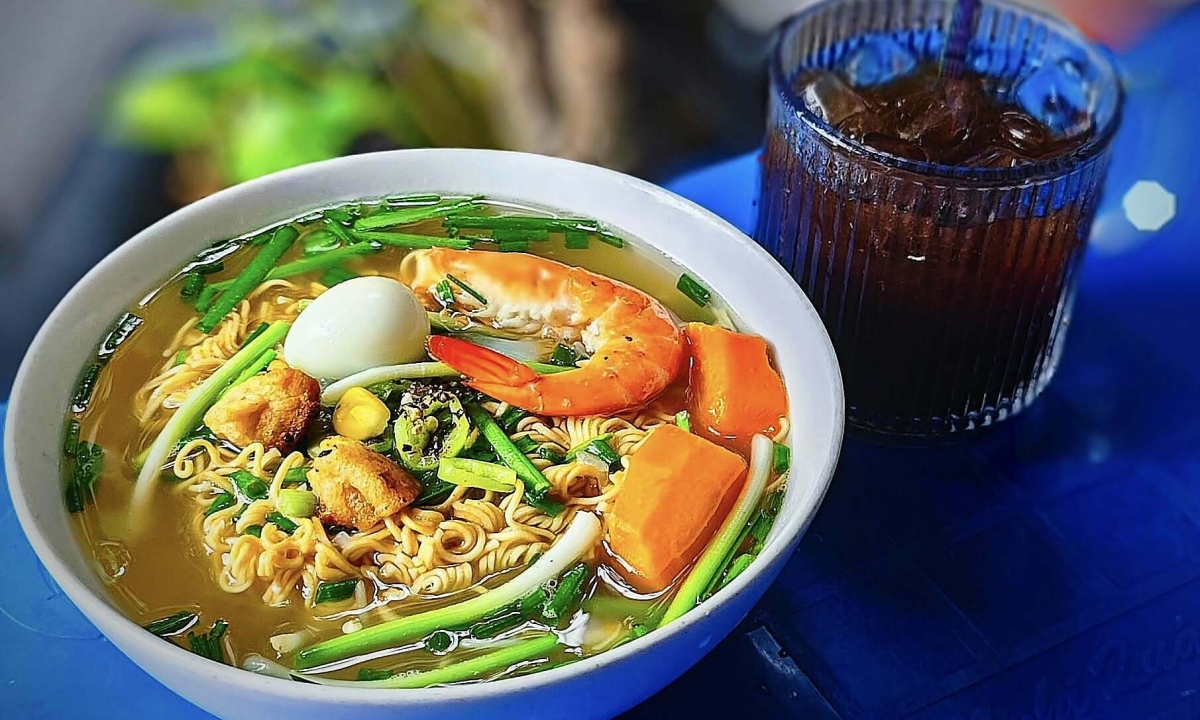
On average, Vietnamese people eat a bowl of noodles every 4-5 days. Image: Ha Mai
According to experts, the high consumption of instant noodles in Vietnam comes from convenience, reasonable prices and a wide distribution system. However, as people’s income improves and food choices become more diverse, the total demand for instant noodles tends to flatten or decrease slightly. Faced with this context, businesses are turning to upgrade quality, diversify flavors and improve nutritional factors to maintain the appeal of their products.
WINA believes that, in the short term, Vietnam is likely to maintain its position as the country consuming the most instant noodles in the world in terms of per capita, and continue to be one of the key markets of the global instant noodle industry, although the total growth rate is no longer as high as in the previous period.