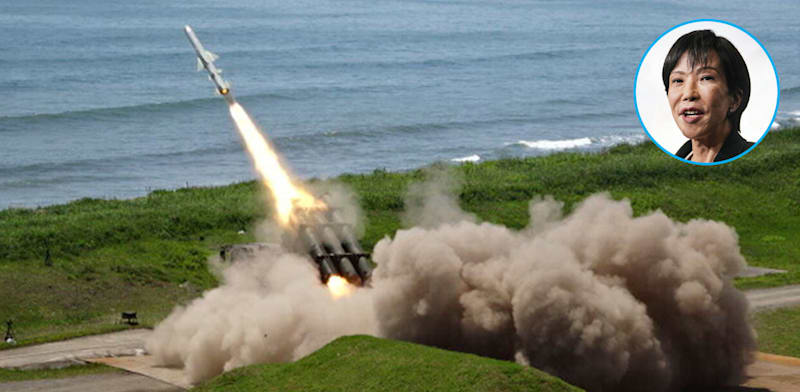
The Japanese government approved an unprecedented defense budget at the end of the week, amounting to more than 9 trillion yen (about 58 billion dollars) for the coming year. The purpose of the budget is to strengthen Japan’s defense and attack capabilities, mainly through cruise missiles and unmanned systems, against the background of the increase in regional tensions, especially against China.
The draft budget for fiscal year 2026, which will open in April, is higher – compared to the previous year, and it is the fourth year of the five-year plan in which Japan undertakes to double the scope of defense spending to 2% of its GDP.
The move comes against the backdrop of the worsening strategic confrontation with China. Japanese Prime Minister Sana Takaichi said in November that her military might intervene in the event of a Chinese military move against Taiwan, the self-governing island that Beijing is demanding annexation. Its government even pledged to meet the 2% target already in March, two years earlier than planned, among other things under American pressure to increase security cooperation between the countries.
In recent years, Japan has been expanding its long-range attack capabilities, an unusual step in relation to the doctrine it adopted after World War II, which focused on self-defense only. The security strategy approved in 2022 defined China as the country’s main strategic challenge, and called for a more active role for the defense forces within the military alliance with the US.
According to the plan, more than 970 billion yen (about 6.2 billion dollars) will be allocated to strengthen the long-range missile system. Among other things, locally produced upgraded Type-12 missiles will be purchased, with a range of about 1,000 km, at a cost of 177 billion yen (about 1.13 billion dollars). The first batteries will be deployed in Kumamoto Prefecture as early as March, a year earlier than originally planned.
Escalating relations with Beijing
At the same time, Japan is investing in the expansion of drone arrays, underwater vessels and unmanned aerial vehicles for coastal defense, among other things due to a lack of military personnel and the aging of the population. About 100 billion yen ($640 million) will be directed to the development of a broad air-sea defense system called SHIELD, which will enter service in 2028. For rapid deployment, Japan is expected to initially rely on imports, mainly from Turkey and Israel.
The publication of the budget occurs at the same time as the escalation of relations with Beijing, after Takaichi’s statement about Taiwan. In the past month, tensions have increased following Chinese aircraft carrier exercises near the southwestern islands of Japan, during which Tokyo protested a “radar lock” carried out by Chinese aircraft on Japanese aircraft, a step considered to be a possible preparation for launching missiles.
The Japanese Ministry of Defense will establish a dedicated unit that will study China’s military capabilities and deployment in the Pacific Ocean. Earlier this year, two Chinese aircraft carriers were seen operating simultaneously near Iwo Jima for the first time, a move that increased Tokyo’s concern about the expansion of Chinese military activity beyond the disputed areas in the East China Sea. The Chinese Foreign Ministry claimed that the Takaichi government “significantly accelerated the pace of armaments”, and warned that Japan “is moving away from the peaceful development path it has been declaring for years”.
Japan is simultaneously working to strengthen the local defense industry through joint development projects with friendly countries and expanding arms exports. In 2026, it will invest more than 160 billion yen (more than a billion dollars) in the development of a new fighter plane in cooperation with the United Kingdom and Italy, which is intended to enter service in 2035, alongside the development of unmanned aerial vehicles that will operate alongside it.
At the same time, last summer Australia chose the manufacturer Mitsubishi to upgrade the Mogami model frigates, a move that was seen as a significant incentive for the Japanese industry. About 10 billion yen ($64 million) will be allocated to support defense exports and the industrial supply chain.
The budget requires parliamentary approval by March, as part of a total budget of 122.3 trillion yen ($784 billion). After the implementation of the five-year plan, the defense budget is expected to be about 10 trillion yen ($64 billion), which will place Japan in third place in the world in terms of military spending, after the United States and China. According to the Japanese Ministry of Finance, the 2% goal of GDP will be reached on time.
The Japanese government plans to finance the expansion through tax increases, including corporate tax and tobacco tax, as well as an income tax increase starting in 2027. However, many experts believe that it remains doubtful whether you will be able to continue increasing the budget in the following years as well.
Dr. Alon Levkowitz, Head of the Department of Asian Studies at Bar Ilan University, tells Globes that “the Japanese cabinet’s decision to approve 58 billion dollars for the Japanese defense budget is another step in changing Japanese security policy. This change began during the Shinzo Abe administration.” According to him, Japan believes that “the increase in military threats from China and North Korea are not adequately responded to by the US. The Japanese government has decided to make a change in security policy so that it will allow Japan to build deterrence capabilities in the face of regional threats.”
“The US sees it positively”
Dr. Lebkowitz believes that “this does not mean that Japan is returning to its militaristic past, but it is intended to allow Japan to build a deterrence system and response capabilities in the face of the threats facing it. In the past, Japan avoided acquiring military attack capabilities that would allow it to deal with missile threats, in the naval arena and more. Now Japan is expanding its arsenal of capabilities to attack North Korea’s missile launchers, the means of attacking submarines from China, and other capabilities that will allow it to face military threats in the region. The policy change also includes strengthening the cyber system against China and North Korea.
“The US views positively the change in Japan’s security policy. Especially the increase in its defense budget, which will lead to an increase in Japanese procurement in the US,” explains Dr. Lebkowitz. “The Israeli military and cyber industry also have the potential to increase Japanese military procurement from Israel. Changing Japan’s security policy will lead to militant statements from China and North Korea, and even to an increase in the defense budget in South Korea.”
For your attention: The Globes system strives for a diverse, relevant and respectful discourse in accordance with the code of ethics that appears in the trust report according to which we operate. Expressions of violence, racism, incitement or any other inappropriate discourse are filtered out automatically and will not be published on the site.