After the United States hijacked the president of Venezuela Nicolás Maduron President of the United States Donald Trump has shifted its focus to Venezuela’s oil reserves. Trump quoth According to CNN over the weekend that the United States will take control of Venezuela’s oil reserves. Trump also invited US oil companies to help rebuild Venezuela’s oil sector.
Venezuela has the world’s largest oil reserves: about 303 billion barrels of crude oil, which corresponds to about a fifth of the world’s crude oil capacity. According to Bloomberg However, Venezuela’s production only accounts for about one percent of the world’s oil production. Most of Venezuela’s oil exports go to China.
According to CNN Venezuela’s national oil company, PDVSA, has not had its oil pipelines updated in 50 years, and the price tag for upgrading this infrastructure to peak-year production capacity would be $58 billion.
The American think tank Council on Foreign Relations (CRF) analyzed in the summer of 2024 that Venezuela led by Nicolás Maduro is a so-called petrostate, loosely translated as an oil state, where power is concentrated in a corrupt administration that is highly dependent on the income from oil sales. According to the think tank, oil exports accounted for about 58 percent of Venezuela’s state income in 2024.
The curse and blessing of oil
Venezuela’s economy has been dependent on oil since the 1920s, when the first significant deposits were found in the country. Oil wealth has taken the country’s economy on a roller coaster, where peaks have been followed by big dips. Oil has been both a blessing and a curse. Oil reserves have unilateralized the structure of the country’s economy and made it vulnerable to energy price fluctuations.
According to the CRF, soon after the discovery of oil, Venezuela jumped to become the world’s second largest oil producer, right after the United States. Three major oil companies, Gulf, Royal Dutch Shell and Standard Oil, controlled as much as 98 percent of Venezuela’s oil sector in the mid-1930s.
In 1943, the Venezuelan government enacted a law that forced foreign oil companies to give half of their profits to Venezuela.
Venezuela’s government was democratized in 1958, and the country was about to establish a cooperative organization of oil-producing countries, Opecia, in 1960. The country also founded its own oil company, the Venezuelan Petroleum Corporation, and raised the oil tax to 65 percent for foreign companies.
The energy crisis of the 1970s quadrupled the price of oil and made Venezuela one of the richest countries in the Americas by per capita income. The president of a country in the middle of the biggest boom Carlos Andrés Pérez decided to nationalize the oil industry in 1976.
According to CNN, the United States did not react significantly to the nationalization of oil holdings because Venezuela was an important partner and counterweight to communist Cuba.
The state’s own oil company Petróleos de Venezuela (PDVSA) was allowed to cooperate with foreign oil companies as long as PDVSA owned more than 60 percent of the joint ventures. PDVSA also paid US oil companies $1 billion as compensation for the nationalization.
The 80s oil hangover and the rise of Chavez
Oil prices began to fall in the 1980s, which hit the Venezuelan economy like a punch. Inflation accelerated to high levels and at the same time the country’s administration had to wrestle with the large debts it had acquired by buying foreign oil refineries.
In 1989, the Venezuelan government announced an economic austerity program as part of a loan from the International Monetary Fund. The austerity program caused unrest in the country, and in 1992 an officer Hugo Chavez became famous by attempting a coup.
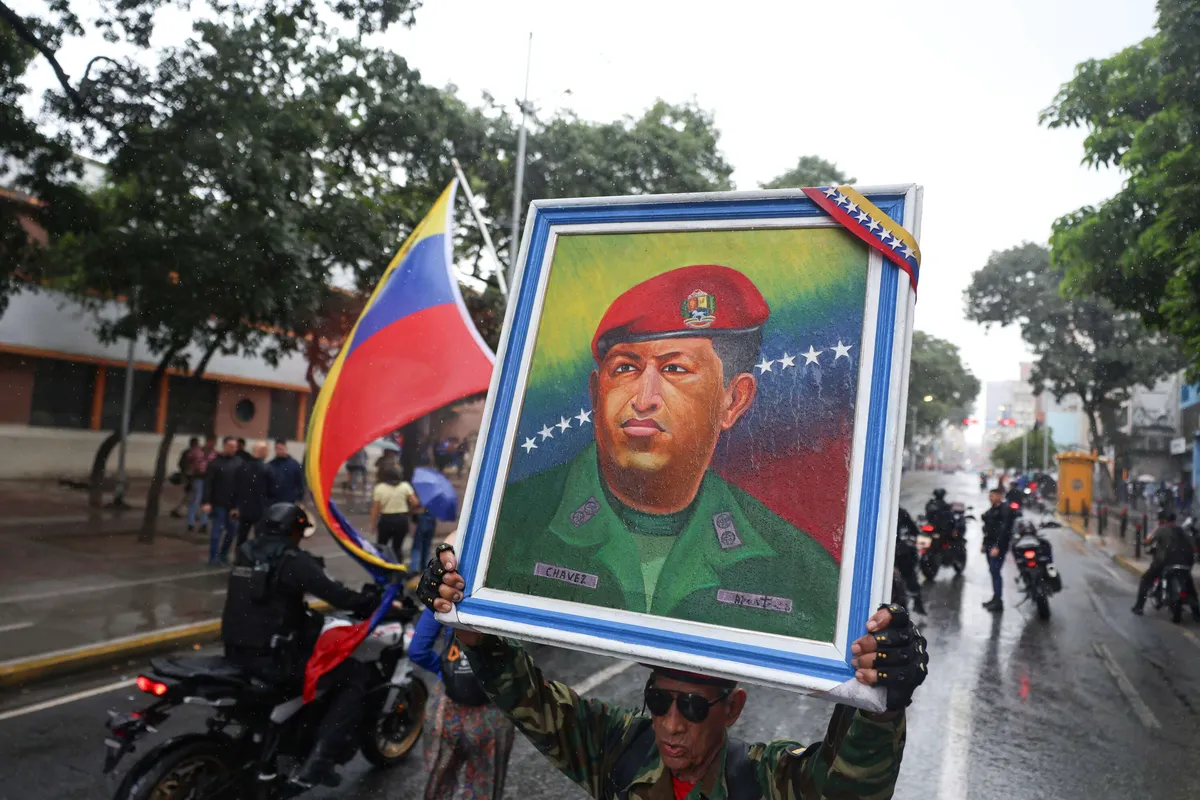
Chávez finally came to power through the 1998 elections. Chávez said his mission is to help the poverty and inequality of Venezuelans with the country’s abundant oil resources. During his reign, however, the amount of oil production began to decline. PDVSA’s strikes in 2002–2003 led to mass layoffs, which deprived the company of a lot of technological know-how. Chávez also offered oil to Cuba in exchange for political support.
Under Chávez, Venezuela was heading towards authoritarianism. During his era, Venezuela also nationalized several foreign holdings in Venezuela, including of foreign companieslike those of the United States ConocoPhillipsin and Exxon Mobilinoil projects.
The Maduro era and US sanctions
After Chávez died in 2013, Maduro came to power. Under Maduro, Venezuela became a dictatorship. The price of oil began to fall again in 2014 and soon the first administration of Donald Trump of the United States began to impose extensive sanctions on Venezuela.
Trump imposed sanctions and restrictions on, among other things, PDVSA’s oil exports, which contributed to the collapse of Venezuela’s economy in 2019 and 2020. The Joe Biden administration kept the sanctions in place. Biden sought to negotiate with Venezuela on the lifting of sanctions against the restoration of democratic rule. During Trump’s second term, negotiations stalled and Maduro was captured by the US administration on January 3, 2026.
It remains unclear how Trump plans to manage Venezuela’s massive oil reserves and whether US troops on Venezuelan soil will be needed for this. Trump has not ruled out this option either.
Sources used in the story: Council on Foreign Relations (CFR), CNN, Bloomberg.
THE FACTS
The price of oil is already low
According to Bloomberg’s sources, the US strikes on Venezuela on Saturday would not have damaged the country’s oil infrastructure. However, it is unclear how quickly US oil companies would be able to invest in Venezuela and increase the country’s oil production.
The international energy organization IEA estimated in December that global oil production will exceed demand by about 3.8 million barrels per day in 2026.
On Monday afternoon at 15:00, the price of Brent crude oil rose by about 0.9 percent to just over 61 dollars per barrel.