Yesterday Saturday was the day of destiny for Venezuela. With its operation, the United States removed the president who ruled the country autocratically Nicholas Maduron. He is now awaiting trial in the United States.
President Donald Trump and the US foreign policy leader held a press conference on Saturday evening Finnish time. It left the impression that the United States has not thought very carefully about how Venezuela’s administration will be implemented in the future.
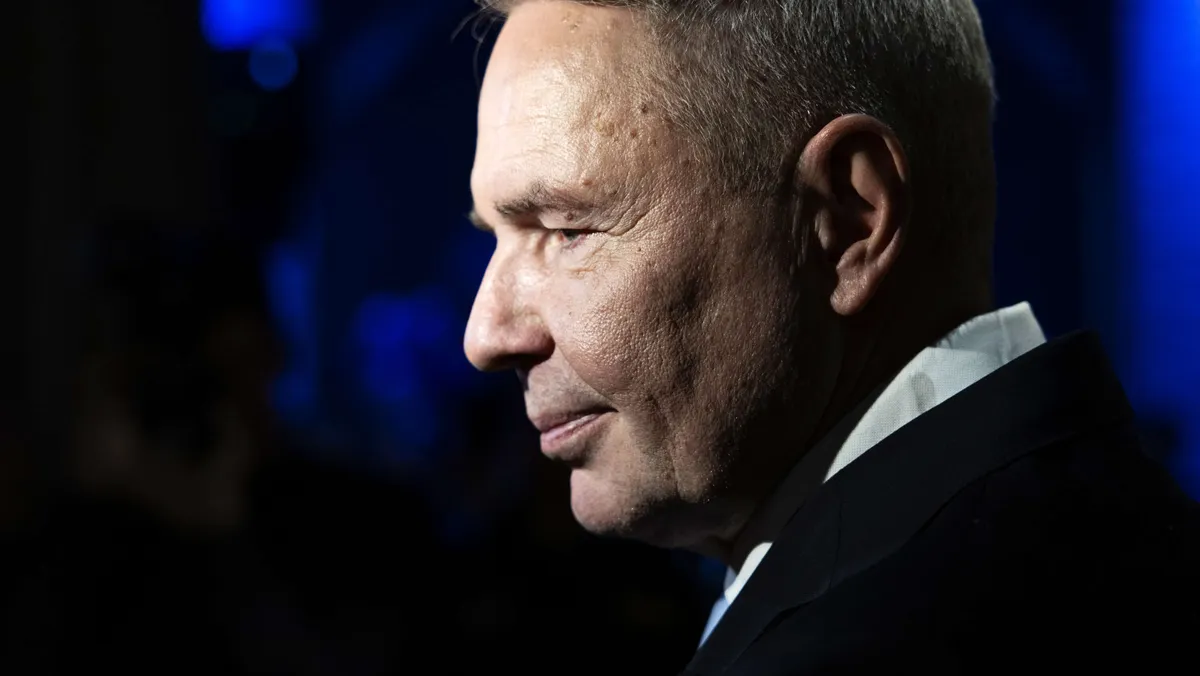
Such an observation was also made by the former foreign minister of Finland Pekka Haavisto (green), who was left to think about how difficult it would be to govern another country with support from the outside. From history, he remembered the difficulties faced by the United States in both Iraq and Afghanistan.
According to Donald Trump, the United States will take control of Venezuela until a legitimate government is established. On the other hand, Trump implied that the Vice President of Venezuela Delcy Rodriguezwho has been cooperative in the face of necessity, could stay in power.
An unequivocal statement on legality from Guterres
From the EU and Finland, the actions of the USA have been commented on in rather careful terms. It took Finland’s foreign policy leadership until yesterday evening to go public when the foreign minister Elina Valtonen stated his position at 19. The President of the Republic Alexander Stubb has only commented on the events in Venezuela today.
The EU has determined that Maduro lacks legitimacy and flagged a peaceful transition in Venezuela. In addition, emphasis has been placed on compliance with the principles of international law and the UN Charter, and restraint has been demanded. A completely similar message came, for example, from Sweden’s foreign minister and Finland’s foreign minister Valtos. Stubb skied the same slopes in his own statement today.
Weighted words.
The President of the Republic, Alexander Stubb, came out today, Sunday, with his statement on Venezuela.
PHOTO: Elle Laitila
Pekka Haavisto has attracted the attention of, among others, the Secretary General of the UN António Guterresin to the statement that the attack does not respect international law.
Haavisto believes that the legality of the USA’s actions will speak for itself in the coming weeks, just as much as how Venezuela is governed.
How’s Greenland?
Haavisto sees a couple of interests in Europe when forming positions on the actions of the USA.
One has to do with how the USA relates to Greenland.
“Could the United States act actively in relation to Greenland in a similar way, use military force or a military threat? This is probably in the back of the mind in some way, above all in Denmark,” Haavisto reflects.
On the other hand, he also seems to believe that the Danes, Greenlanders, and Americans are able to agree with each other on how to protect the interests of the United States in Greenland.
Another key issue for Europe is the dependence of Europe and Ukraine on US support and its continuation in Ukraine. Haavisto states that the events in Venezuela came at a difficult point in terms of promoting peace in Ukraine, when the main attention in the USA turns elsewhere.
A reminder about the Finnish Security Council campaign
In general, Haavisto sums up that the new kind of US foreign policy contains risks for Europe and the US, as well as for Ukraine, which cannot even be predicted yet.
Should Europe have condemned the actions of the USA in Venezuela more clearly, or does Europe’s reactions, which are a bit roundabout, show how dependent Europe is on the USA?
“It probably shows dependence perhaps in relation to trade and the process in Ukraine, which is ongoing, as well as Europe’s previous positions in relation to the legitimacy of Maduro’s power,” says Haavisto, referring to the positions communicated from the EU about Maduro’s lack of legitimacy.
Why did it take Finland so long to take a stand on Venezuela? Haavisto formulates that if you want to understand the difficulty of taking a stand, it must be the fact that there was no accurate information about the events in Venezuela before last night’s press conference by Trump and this administration.
“I can imagine how demanding the decision-making situation is in formulating a position when the details are missing. But of course I also expected a legality position that came from the direction of the UN Secretary General. It stated exactly the legality problems of such an operation.”
In practice, Haavisto would have hoped that Finland’s foreign policy leadership would at least refer to the UN Secretary General’s statement on the legality problems of the US’s activities.
“When Finland is campaigning for membership of the UN Security Council at the same time, it is also worth looking at this situation from that point of view. So this will probably raise a discussion about legality in many countries, and it is good for Finland to be among those who are also thinking about the legality of this operation.”
According to Haavisto’s assessment, the slowness of taking a position is also influenced by the fact that Europe is dependent on the USA in many ways, above all in the Ukraine issue.
“The United States is a key provider of support and intelligence support to Ukraine. In this sense, with regard to Ukraine, we are completely dependent on what position the United States ends up in.”
Did Finland’s position change?
When Haavisto is asked whether the US operation in Venezuela will change Finland’s security policy situation, he states that this is the case from the point of view of what kind of activities the major powers accept in their own immediate surroundings and what kind of measures they are ready for.
“After such an operational measure by the USA in Venezuela, their [USA:n] it is, of course, very difficult to criticize if China or Russia in their own neighborhood act on the same principles or use the same kind of pressure that is now being exerted on Venezuela. In this sense, this is a good reminder of what kind of year we have woken up to in 2026.”
On the other hand, it is also possible to argue that the USA is blocking China and Russia with its own activities in Venezuela.
“This is of course one point of view and the same can be thought of, for example, Russia’s relations with Cuba, does this increase the degree of difficulty for Russia to act according to its wishes in Latin America. Surely this effect also exists. But now the next few days will show what kind of positions China and Russia give on the situation and what kind of discussion takes place in the UN Security Council, where Russia and China are permanent members.”
“It happened in good order”
The USA has used as a pretext for its operation in Venezuela, among other things, that a lot of drugs would come from the country to the United States, and that the USA would once again get access to the previously nationalized oil resources in the country.
Pekka Haavisto says that he looked into the history of Venezuela’s oil industry and states that the country’s oil was already nationalized in 1976.
“If I have understood correctly, it happened in a good order. It was not an illegal operation, but it had been negotiated with the companies. This of course raises the question of how the property would be transferred back to the international companies,” says Haavisto.
In the 2000s, Maduro’s left-wing populist predecessor Hugo Chavezin period, the nationalization of oil progressed even further. At the same time, the role of China and Russia in Venezuela’s oil industry has grown.
Haavisto considers oil to be a big reason why the USA is ousting Maduro. On the other hand, it is difficult to verify the US drug charges against Venezuela.
Why does the US need Venezuelan oil and its control?
“This is perhaps not so much about Venezuela, but about the US’s attempt to control neighboring countries or Latin American countries with strong measures,” Haavisto answers.
In Haavisto’s opinion, with its activities in Venezuela, the USA also leaves a strong message to, for example, Cuba and Latin American countries about how the current US administration can act in an extreme situation.
Do you think it’s possible that Cuba could be targeted with the same type of activity as Venezuela is now?
“You can probably imagine that the United States will take care of one challenge at a time and is now trying to somehow stabilize the situation in Venezuela from its own perspective. It is unlikely that the United States will be able to open many front lines at once. It remains to be seen how the stabilization of Venezuela will take place and whether there will be an actual US presence in the country. Or is it just that Venezuela will be threatened with new military measures if it does not act as the United States requires.”
The return of the Monroe Doctrine
Trump has considered that the attack on Venezuela represents the “Donroe Doctrine”. With this, he refers to the traditional Monroe Doctrine, based on which the United States has previously dominated the geopolitics of the American continents. This doctrine has now officially, even at the strategic level, made a comeback.
Trump is bringing back the Monroe Doctrine.
COURTESY: ZumaWire / MVPHOTOS
Haavisto compares Monroe’s teaching about Russia’s neighboring regions to the term “near abroad” that has a nasty echo.
“This of course raises concerns about whether the great powers will be allowed stronger control over the politics of their neighboring countries as part of this new US regime and whether this is a principle that will also be allowed for Russia and China,” Haavisto says.
“This raises concerns about the era of a new kind of power politics, where the similar actions of other great powers are looked down upon,” he continues.
The former foreign minister practically refers to how Russia could act, for example, in the case of Ukraine and China in Taiwan.
Haavisto does not believe that the US would have informed China or Russia about its operation in Venezuela in advance – after all, the matter had not been communicated to the US Congress either.
Instead, Haavisto ponders why, for example, Venezuela’s air defense seemed to freeze when the US invaded the country. In other words, the question is whether part of the Venezuelan military was involved in Maduro’s capture.