The Israeli defense industries continue to flourish, partly through creative agreements that transfer knowledge – and integrate foreign companies into the production of the systems. The same technologies have been proven on the battlefields, including in Israel, while in Thailand, on the other hand, they express reluctance with the performance in the moments of truth of a Chinese battle tank, and in the USA they invest billions of dollars in general in maintenance deals. All this and more in the weekly defense industries corner of Globes.
India purchases cannons developed by Elbit
The Indian Army has signed a contract for 29.3 billion rupees (about 35 million dollars) with the local Niva company for the supply of a long-range rocket launch system (MRL), reports the Defense Post website. The Indian project is based on Elbit’s well-known PULS system. The system provides a comprehensive solution, which is capable of launching unguided rockets, precision weapons and also missiles at different ranges – up to a maximum of 300 km.
This is the result of an agreement that Niva signed with Elbit in August, to build the system in India. The large public defense company was one of the first Israeli players who, a few years ago, adapted their activities to Prime Minister Narendra Modi’s Make in India vision. Elbit’s relationship with Niva is interesting because it includes not only production, but also supply to international customers. In the Indian case, according to a New Indian Express report, the supplies will be received within about 12 months.
This deal by India took place while diversifying its artillery capabilities. Just recently, the country carried out the first test of rockets guided to a range of about 120 km, called the locally produced Pinaka. It was reported from New Delhi that during the first launch, the rocket successfully carried out all the required tests, until it hit the target. This is one of several significant projects currently being conducted by the DRDO, the defense research and development body of the Indian government (the counterpart of the Defense Ministry and SBT), which often cooperates with Israel.
Criticism in Thailand of the Chinese battle tank
Tank crews in Thailand are severely criticizing the Chinese VT-4 battle tank, the Defense Blog website reports. According to them, the tank suffers from mechanical problems and design deficiencies, which are reflected in exercises and operational activity both once and during prolonged activity. One of the notable defects concerns the cannon, where the barrel does not show durability during prolonged use. Along with this, the electronic systems and the engine tend to break down frequently.
As far as the tank’s protection systems are concerned, according to the Thais’ position – the side protection of VT-4 does not meet the level that is reflected in modern battle tanks in the world. On the other hand, there are also advantages in the tank made in China, and they include a high-quality fire control system, but this does not make up for the needs that are not met, due to the systematic failures.
This situation is particularly embarrassing for Beijing, because the Thais see older tanks in their possession, whether American or Ukrainian, as more reliable. According to the report, some of the Thai officers recommended focusing on the American Paton model tanks for extended missions, due to their stable performance and relatively simple maintenance.
The US presents: a deal in billions, for maintenance
The Pentagon often closes deals with companies such as Boeing, recently signing a contract with the giant for $2.7 billion. The amount itself is far from unprecedented, but the contract actually is: a contract worth billions for the maintenance of Apache helicopters, which will allow their continued use. The contract is intended to deal with issues such as software fixes and concern for supply chains, which will allow the squadrons to continue operating the worn out combat helicopters.
On the Bulgarian military website it was explained that for Boeing, the sale of maintenance services is much more profitable than the sale of new platforms. Building a new helicopter is a task with significantly lower profit margins than selling maintenance. An essential part of Boeing’s advantage in the Apache aspect is that the platform has no open digital architecture. This means that every update or upgrade needs a response from the American giant.
In general, the Pentagon currently requires open architecture in new contracts, but this is not the case with Apache, because it would require the creation of an entirely new avionics system. Beyond that, the integration of new sensors will require rewriting the software. In conclusion, if a country that operates Apache tries to independently change the plane’s systems, Boeing can refuse to provide it with services.
Israel no longer uses the Patriot, the US is buying more missiles for it
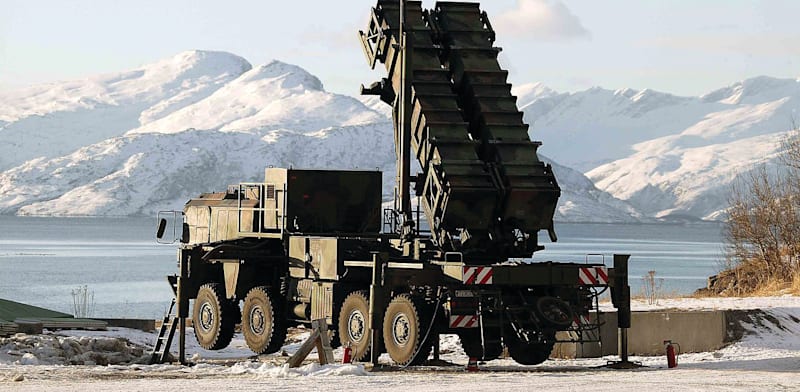
The arms giant Lockheed Martin received from the Pentagon a contract designed to increase the production rate of Patriot’s PAC-3 MSE interceptors to more than 2,000 interceptors per year. “We will create unprecedented capacity for the production of PAC-3 MSE, and deliver them quickly that our allies demand, while providing value to our shareholders,” said Jim Tycklet, chairman and president of Lockheed Martin, after the signing. The contract includes a seven-year process during which the process will be carried out.
The deal is not expected to affect Israel, due to the decision about a year and a half ago to say goodbye to the old Patriot batteries. The reason for this lies in Rafael’s David Slingshot system, which, within the framework of the Israeli multi-layered defense system, is focused on intercepting advanced threats in the short and medium term.
While Israel refrained from upgrading the Patriot batteries, it moved forward with the David slingshot, with its first operational interception already carried out in May 2023. This interception system is an Israeli product very close to the level of the PAC-3, the most advanced interceptor of the Patriot series. However, in the world of armaments economics, it is significantly cheaper: while each PAC-3 interceptor is valued at approximately $6 million, intercepting a David slingshot costs the State of Israel approximately $700,000.
For your attention: The Globes system strives for a diverse, relevant and respectful discourse in accordance with the code of ethics that appears in the trust report according to which we operate. Expressions of violence, racism, incitement or any other inappropriate discourse are filtered out automatically and will not be published on the site.