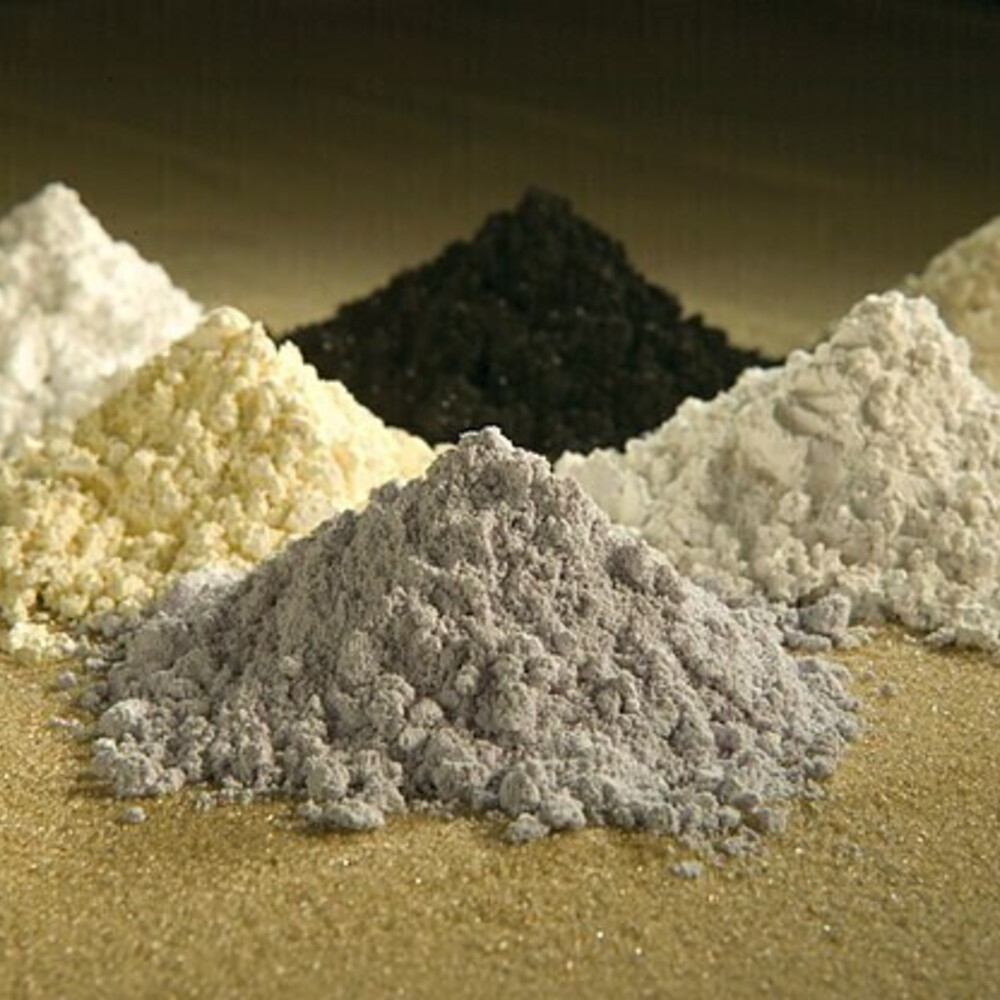
Higher and more volatile pricesgreater difficulty in finding, risks concentrated on rare earths e titanium. This is the scenario that awaits the Italian industry in the next five years according to the project CASCADEresearch financed by the Ministry of University and Research as part of the THROUGH PNRR and conducted by the inter-university group Re4It (University of Bologna, University of Bergamo, University of L’Aquila and Polytechnic of Milan) in collaboration with the Confindustria Study Center.
The study was presented today on the occasion of the “Critical raw materials and resilience of supply chains” event which was held at the headquarters of Confindustria. The analysis focuses on four critical raw materials – aluminium, copper, titanium and rare earths – central to the ecological and digital transition and to European strategic autonomy.
The horizon is that of the great transformations underway: economic securitygeopolitical competition, industrial reshoring and the global race for green and digital technologies. The evaluation, based on a Delphi study involving 45 experts, indicates a progressive tightening of access conditions.
Rare earths and titanium are the most exposed materials
Although the increase and volatility of prices represent a critical issue across all materialsthe tensions the deeper ones concern rare earths – which emerge as the material with the most systemic risk profile – and titanium. The causes are structural, not cyclical: growth in global demand, strong geographical concentration of supply, geopolitical tensions, difficulty in replacing materials. Environmental requirements are not perceived as the main aggravating factor, but they contribute to making the regulatory framework more complex.
Impacts on strategic supply chains
The impacts will be particularly intense in sectors with high technology and strategic value: aerospace and defense (titanium and aluminium), electrification and electronics (copper), magnets and advanced technologies (rare earths). The critical issues will spread along the entire value chain, from the extraction phases to the finished products, with amplified effects on the integrated supply chains.
Il Critical Raw Materials Act of 2024 represents a step forward in the European strategy for reducing dependencies, but according to CASCADE it has significant limitations: aggregate and non-differentiated objectives for individual raw materials, financial resources not consistent with the capital intensive nature of investments in extraction and transformation, deadline of 2030 too close and potentially distorting in the selection of projects.
Strategies at European level
The most effective response is the coordination of policies at European level. The risk on critical raw materials is structural and requires a multi-level approach that integrates industrial policy, trade policy and international cooperation. Among the priority levers: innovation in processes recyclingdevelopment of alternative materials, absence of import duties, strengthening of domestic refining capacity.
Otherwise, the outputs of the circular economy and European mining are sold to Asian operators who refine them and resell them to Europe as finished components, nullifying investments in circularity and expanding existing dependencies. However, significant barriers remain: technological difficulties in recovery, complexity in replacement, bargaining power of large users and possible counterproductive policies.
The theme of sustainability appears ambivalent: compliance with ESG criteria improves the environmental profile of supply chains, but does not automatically reduce supply risks. Only in the case of rare earths do recycling and the circular economy show a clear synergy between sustainability and resilience.
We therefore need careful coordination between environmental objectives and economic security, which is now at the center of the European debate. The strengthening of partnerships with resource-rich countries, also in the framework of cooperation with Africa, is indicated as a strategic lever to combine security of supplies, sustainable local development and stability of economic relations.
Strategies at the Italian level
At a national level, CASCADE proposes a “vertical” approach: mapping by supply chain of uncovered or undersized phases, evaluation of the creation or integration of operators, incentives for reshoring and co-development, greater diffusion of financial hedging among SMEs to manage price volatility.
The conclusion is clear: in a context marked by global competition over resources, geopolitical fragmentation and acceleration of green and digital transitions, critical raw materials represent a question of industrial safety. Policies must be coordinated, integrated and monitored with an adequate number of structured key performance indicators. The resilience of Italian and European supply chains will be played out over the next five years.
“Critical raw materials are at the center of a global competition that intertwines economic security, energy transition and industrial autonomy – he commented Lucia AleottiVice President for the Confindustria Study Center. – The evidence from the CASCADE project indicates that the tensions on supplies are not cyclical, but structural. For a manufacturing country like Italy it means strengthening European coordination, starting with the effective implementation of the Critical Raw Materials Act, and intervening with targeted supply chain policies. Investments in refining, recycling and innovation are needed, together with tools that help SMEs in particular to manage price volatility and supply risks. The resilience of supply chains is a strategic priority for the competitiveness of the production system.”