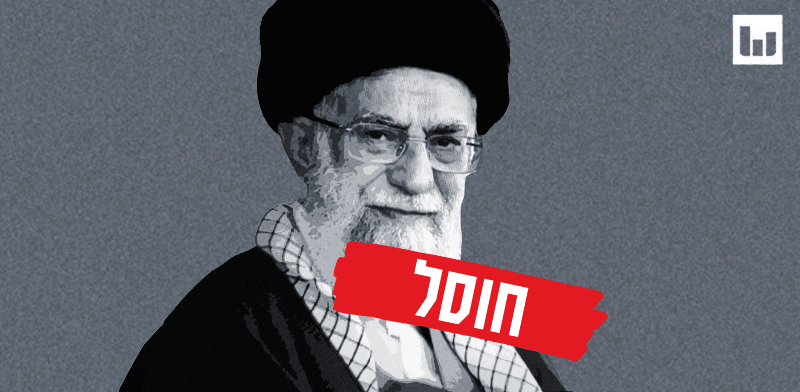
Hapur fell: the supreme leader of the Islamic Republic, Ayatollah Seyed Ali Khamenei, was killed in the Israeli-American attack on Iranian soil. Much will be said about the impressive military operation and the tense moments of decision at the top of the decision-making ranks, but now it seems that the most important question is: what now? How will reality change following the historical elimination?
Below we will try, with the help of experts, to extract the current situation – and try to understand, through the fog of uncertainty, where we are headed.
How will Iran change following the assassination?
“Without a doubt, an era has ended in the history of the Islamic Republic and of Iran in general – and a new era has begun,” says Prof. Meir Litbek, head of the Alliance Center for Iranian Studies at Tel Aviv University. “We can talk about two possible scenarios. The first and more likely is that the next supreme leader will be a continuation of Khamenei and that it will not be someone revolutionary.
“The second scenario is that someone like Sadat in Egypt, who broke with Nasser’s policies, will come as a surprise. It is possible that someone will come who will understand that in light of the challenges he and the regime are facing, there is no choice but to be more pragmatic, maybe even reach a compromise with the Americans, in order to save what can be saved.”
According to Litbek, this is pragmatism that may be expressed not only externally, but also internally – for example on the economic level: “Khomeini had no cure for Iran’s economic situation and his economic policy was disastrous. He had an obsession that Iran would provide for its own food needs, so they insisted on growing wheat which they could not grow because it consumes large amounts of water.
“Will the next supreme leader cancel this foolish policy? If so, it will also require changes in foreign policy, because the wheat will have to be imported from somewhere. The regime must make changes or it will collapse, even if not within a year or two. Khamenei did not understand this, he was too conservative and rigid, and his age may also have contributed to this.”
According to Prof. Simon Wolfgang Fox, a researcher of Islam in the Department of Middle East and South Asia at the Hebrew University, “Khomeini has been consistent over the years in his anti-Western and anti-Israel positions, from his time as president, out of a deep distrust of the West. This affected all the political agreements to which Iran was a party – including the nuclear agreement. When Trump withdrew from the nuclear agreement in 2018, Khamenei felt Because this proves that the United States is not a factor that can be trusted.”
Will the elimination lead to the collapse of the regime?
According to Fox, “Although the airstrikes themselves damaged the Revolutionary Guards and their capabilities, without bringing forces on the ground, the repression mechanisms designed to eliminate any sign of resistance are not expected to disappear. The Basij – the repression arm of the Revolutionary Guards – do not need advanced combat measures to maintain their control. As can be seen already, the regime is working to suppress the spontaneous outbursts of joy after Khamenei’s death.”
Litbek also believes that “at first glance, it does not seem that the elimination of Khamenei will lead to the overthrow of the regime. The Iranian regime is not built on one person but on institutions, and the Iranians have established a very branched network of institutions: the Revolutionary Guards, intelligence organizations and other control bodies. Therefore, it is not enough to eliminate the leader.
“We eliminated Nasrallah – Hezbollah is gone? We eliminated five Hamas leaders – Hamas is gone? The very fact that in Iran an acting council was appointed in less than 24 hours proves that the system is functioning, so it is not what will bring down the regime.”
Who is nominated to succeed Khamenei?
“There are really no designated heirs,” says Litbek, “and this is surprising: they knew that his life was in danger, there was even an article in the New York Times that he had prepared a list of heirs, but now it seems that it is not certain that this happened. In a very rare move, a council of three people was appointed, which can indicate that there is no agreed heir. At the time, they talked about President Raisi, who seemed to be the perfect candidate, even though he was a failure as president, but he was killed and dropped out of the race.
“There were rumors that Khamenei intended to appoint his son, who is close to the Revolutionary Guards, but it might not look good because it reminds of a royal dynasty. It is also possible that they will put a very old cleric as a puppet of the Revolutionary Guards to manage things behind the scenes.”
Also according to Fox, “As of now, the identity of the successor is a complete black box. We do not know who will take the position, and if it will be a more moderate figure or not. At this point, everything is speculation.”
How will the successor be chosen?
Although the Supreme Leader is, well, “Supreme”, formally the person who stands at the head of the Islamic Republic of Iran is a body called the “Council of Experts”. The council consists of 88 clerics who are elected by the citizens of Iran in elections held once every eight years, with the last elections being held in March 2024.
According to the constitution, the council is responsible for choosing the supreme leader, overseeing his actions, appointing his successor and even removing him if necessary. Now that the position of supreme leader has suddenly become vacant, the Secretary General of Iran’s National Security Council, Ali Larijani, said that Iran will establish a temporary leadership council to fill the place of leader Ali Khamenei, until a replacement is chosen.
The temporary leadership council will be chaired by President Masoud Pazkhian, the president of the judiciary and one of the members of the Council of Guardians of the Constitution (bodies we will talk about later). According to the publications, the council “will be in charge of managing affairs temporarily” until the Iranian Council of Experts convenes and elects a new leader.
And when is the council of experts expected to meet? “It is likely that the council will not be included during the war,” says Litbek. Also according to Fox’s method, because “it is unlikely that the Council of Experts will be able to convene soon, in view of the heavy bombings by Israel and the United States. This temporary structure is not yet functioning properly and still does not actually hold full authority.”
What does the supreme leader do?
But even in routine the Council of Experts is not active in everyday political life. Therefore, the “supreme leader”, the Ayatollah, is the one who centralizes the power of government. The supreme leader – who from 1989 until now has been Seyed Ali Khamenei – sets the foreign and domestic policy, serves as the commander of the armed forces, appoints the commanders of the Iranian army, the Revolutionary Guards, the Quds Force, the emergency command (Khatem al-Anbia’) and the heads of the judiciary, the radio, television and press networks – and he is the only one authorized to declare war.
After the Supreme Leader, the most senior official in the Islamic Republic is the President of Iran, elected by the citizens once every four years. Since July 2024, Masoud Pazkhian, who according to reports was also on the Israeli-American target, has served in the position. The president appoints the members of the government, supervises them, coordinates the government’s activities and decides on the government bills to be presented to the parliament.
The Iranian parliament, known as the Majlis, consists of 290 legislators who are also elected by the citizens for a four-year term. The Majles is responsible for passing laws, approving government ministers, approving the budget and approving international treaties.
The supervision of the Majles is done by the Council of Guardians of the Constitution. The council consists of 12 jurists: half of them are religious members appointed by the supreme leader and half of them are non-religious jurists chosen by the Majles from a list submitted by the head of the judiciary (who is himself appointed by the supreme leader).
The council interprets the constitution, and can reject laws passed by the parliament, on the grounds that they contradict the constitution or the religious laws (Sharia). Since the 1990s, the council has also been working to disqualify candidates for parliamentary elections.
In the event of a dispute between the Majles and the Council of Guardians of the Constitution, the “Iranian Council for Securing the Interest of the Regime” may come into action. The Council is a 48-member committee (consisting of 35 designated appointments and another 13 members who serve on it by virtue of their position) which has a dual role: to serve as an advisory body to the Supreme Leader and to settle differences of opinion between the Majles and the Council of Guardians of the Constitution.
For your attention: The Globes system strives for a diverse, relevant and respectful discourse in accordance with the code of ethics that appears in the trust report according to which we operate. Expressions of violence, racism, incitement or any other inappropriate discourse are filtered out automatically and will not be published on the site.