A bronze statue has been buzzing here in Delhi lately.
British architect Edwin Lutyensin could decorate the courtyard of the official residence of the President of India for decades. Lutyens was a historically significant figure as he designed many of New Delhi’s most famous buildings during British rule.
Now the post has been removed and replaced by the first governor of independent India C.Rajagopalachari breeds
The reason for the removal of the bronze head sculpture was said to be that India wants to leave the symbols of slavery behind.
In addition to verticals, names have been changed here in India. Last week it was announced that the name of the state of Kerala is to be changed to Keralam.
English names are often a holdover from British rule, and Keralam is seen as a more authentic name.
India already has a long tradition of changing names. The most famous are, for example, the former capital Calcutta, which was named Kolkata. Or the financial capital Bombay, which became Mumbai, and Madras, which was renamed Chennai.
In addition to cities, streets, railway stations and market areas have been renamed in recent years.
Perhaps changing the names will give the people a chance to make a final farewell to their colonial masters. The effort to erase the traces of colonialism is connected to the desire to strengthen the nation and its identity.
The colonial past left many symbols and structures in India that still remind us of foreign rule and subjugation.
Towards a brave new world order
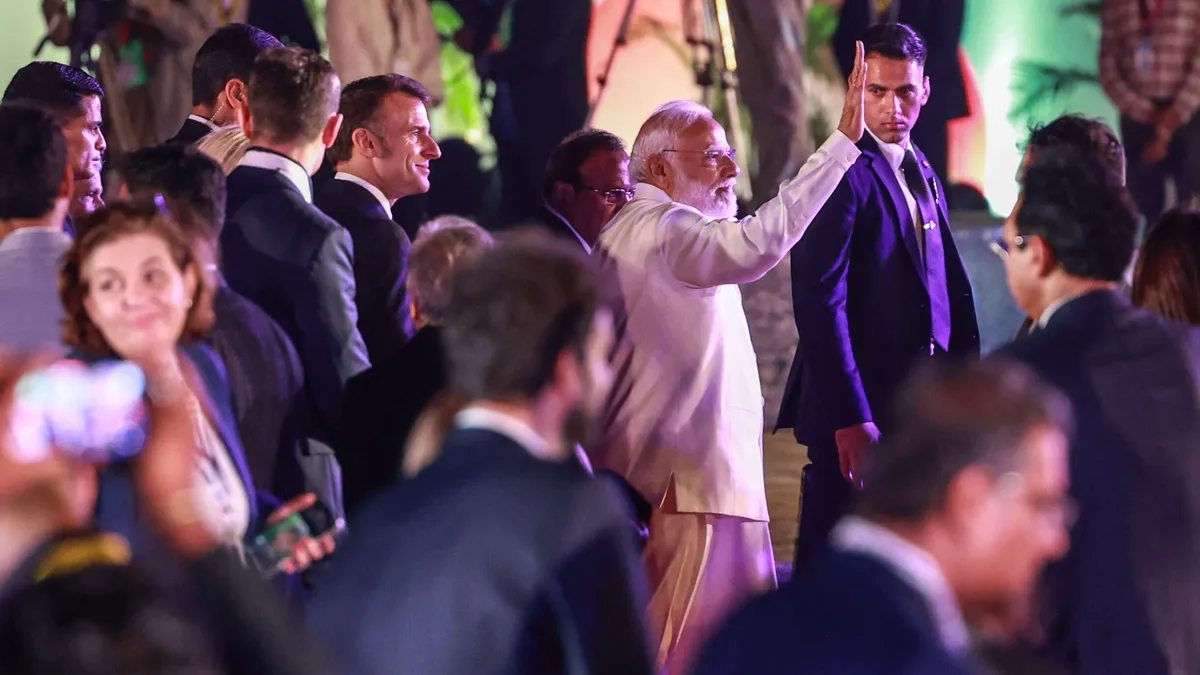
The city of 25 million inhabitants has also just recovered from last month’s AI summit, which brought several world leaders and hundreds of thousands of participants to the city.
The heads smiled widely in the pictures and praised India’s AI expertise.
The townspeople, on the other hand, were stuck in terrible traffic jams and faced internet outages.
However, there is a completely different agenda behind the technology hype.
India has always felt that it is in the position of an underdog compared to Western countries, and in recent years it has needed various displays of strength.
All kinds of meetings are part of these displays of power, especially when busloads of the world’s key decision-makers arrive in the country.
Now India wants to be a nation that defines itself without the legacy of an outside power, and to become the world’s third power alongside the USA and China, and the spokesperson of the global south.