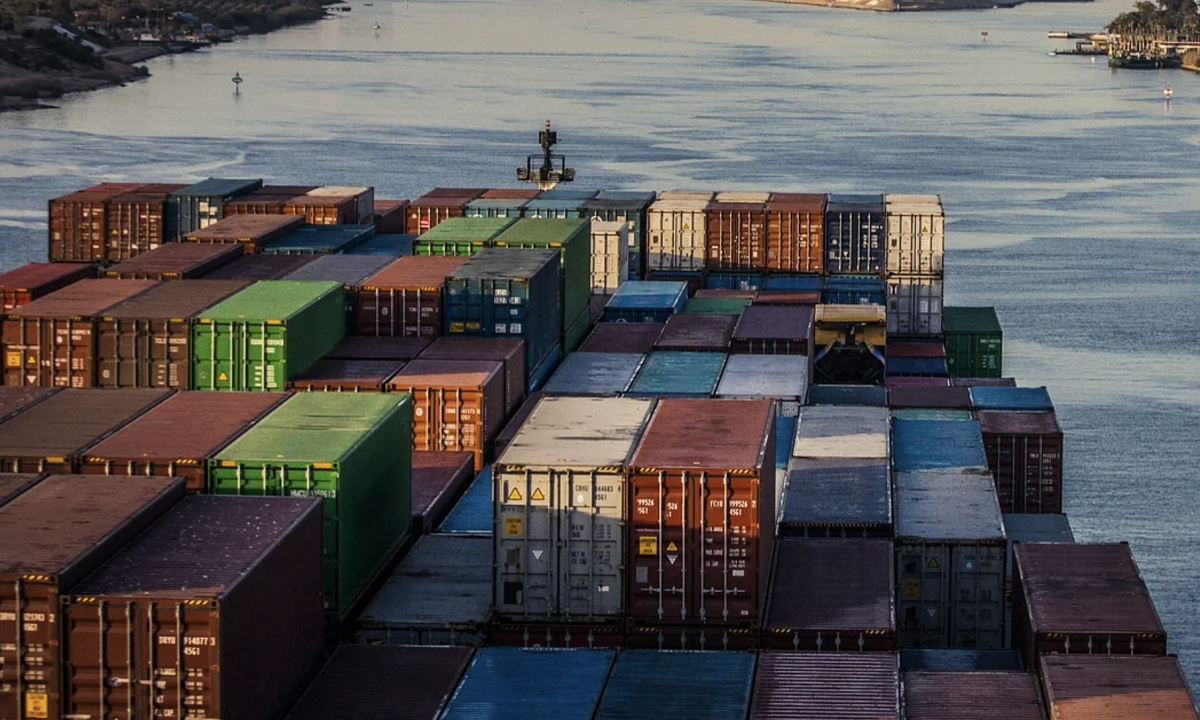
Cargo ships simultaneously changed direction to avoid the Middle East conflict, causing shipping costs, insurance and surcharges to skyrocket, pushing Vietnamese businesses into a desperate situation.
At a conference on the impact of the Middle East conflict held in Ho Chi Minh City on the morning of March 21, Mr. Dao Trong Khoa, Chairman of the Vietnam Logistics Services Business Association (VLA), identified this area as a “strategic bottleneck” of the global supply chain, where about 25% of crude oil transported by sea and many essential goods are transshipped.
According to him, disruptions in important maritime routes forced many large shipping companies such as MSC and Maersk to change their routes. Many routes have to go around the Cape of Good Hope (South Africa), making transportation time 2-3 times longer.
Extending the journey causes costs to increase in many layers. Sea freight rates increased by 54-72%, war risk insurance increased by 2-4 times; The cost of insurance for a ship can be up to 1 million USD and it is difficult to find a provider. In addition, some shipping lines apply provisions to end the journey at a safe port, unload goods early and transfer the incurred costs to the shipper, with an average of about 800 USD per adjustment.
Mr. Khoa believes that this shock does not lie in a single factor but in the combination of many layers of costs at the same time, from transportation, insurance to extra fees arising outside the contract.
Shipping companies diverted ships around the Cape of Good Hope after air strikes on Iran. Image: RTÉ
The impact from transportation quickly spread to energy and price levels. Gasoline prices have increased by about 18%, DO oil prices have increased by 15%. Meanwhile, fuel accounts for 30-40% of transport costs, causing maritime transport costs to increase by about 15%, waterway costs by 18% and road transport costs by 10-30%.
VLA’s survey from March 3 to 11 showed that 89% of businesses were affected from moderate to severe, mainly due to unpredictable cost increases, unstable delivery times and risks of not ensuring commitments with partners.
From a management perspective, a representative of the Ho Chi Minh City Department of Industry and Trade said that domestic gasoline prices have increased sharply in the past half month. At the operating period on March 19, the price of RON 95 gasoline exceeded 30,000 VND per liter, about 60% higher than at the end of February, thereby putting direct pressure on the costs of the economy. The petroleum and gas group accounts for about 7.4% of the city’s CPI basket, so the spillover impact is significant.
On the macro level, Mr. Pham Binh An, Deputy Director of the Ho Chi Minh City Institute for Development Studies, said that the development of the Middle East conflict is still unpredictable. If prolonged, this will be an unfavorable scenario for the global and Vietnamese economies.
In Ho Chi Minh City, the growth target of over 10% in 2026 is still maintained, but the indicators are less positive when exports are forecast to decrease to 5-6%, industrial production slows down while input costs increase.
The impact is most evident in industries that depend on imported supplies. Mr. Dinh Van Hieu, Chairman of the Ho Chi Minh City Liquefied Gas Business Association, said two main supply sources from the Middle East have been temporarily suspended. Businesses must consider the option of importing from the US with a shipping time of up to 45 days. Transportation costs increased by 50-70%, at times many times higher than before. “It’s not just the price, it’s whether the goods can be delivered or not,” he said.
Meanwhile, the textile industry is under pressure from both input and output. Mr. Pham Van Viet, Chairman of the Board of Directors of Viet Thang Jean Company, said that raw material costs increased by 8-18%, shipping costs increased by 4,000-5,000 USD per container, while purchasing power in major markets decreased.
Businesses are forced to split orders, limit air transport and promote market diversification, although the US and EU still account for 55-60% of export turnover.
In other fields such as packaging and agriculture, cost pressure also increases when raw material prices fluctuate with oil prices, while demand recovers slowly.
Ho Chi Minh City Business Association (HUBA) signed a cooperation agreement with Ho Chi Minh City Commercial Arbitration Association on the morning of March 21. Image: Hoang Chuong
According to assessments at the conference, Ho Chi Minh City’s export growth may be lower than expectations at the beginning of the year in the context of rising costs and weakening international markets.
In this context, associations recommend businesses review contract terms, especially force majeure and insurance clauses, and renegotiate international delivery conditions (Incoterm) to clearly define responsibilities in situations where war risks arise.
Businesses also need to be flexible in transportation plans, diversify routes and modes, regularly update surcharges and increase coordination with partners. At the same time, promoting digital transformation, real-time operational monitoring and moving towards green transportation are considered long-term solutions to optimize costs.
From the perspective of supporting businesses to respond to risks, at the program, HUBA signed a cooperation agreement with the Ho Chi Minh City Commercial Arbitration Council to help businesses better prepare legally in the context of an increasingly complex business environment.
Accordingly, experts from the Council will participate in consulting, updating policies and supporting the handling of arising disputes, contributing to ensuring stable operations for businesses.
“The Middle East crisis not only increases costs but also forces the global supply chain to restructure towards more flexibility,” Mr. Khoa said.
In the context of many unpredictable variables, businesses are forced to maintain production, hold orders and continuously adjust to adapt to increasingly widespread shocks in the global supply chain.