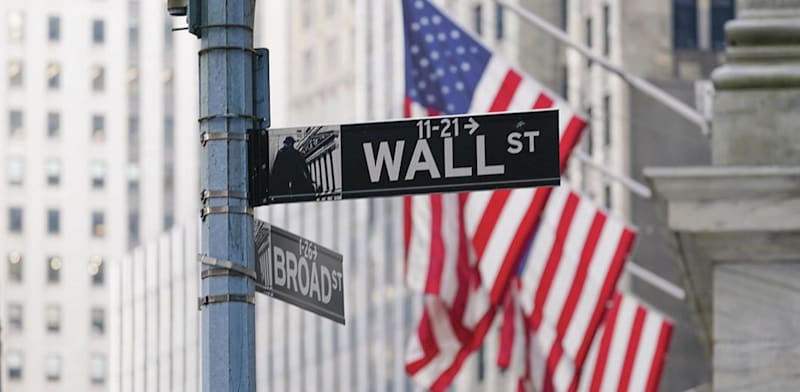
Trade overview: current reports, trends, indices, stock prices, bonds, foreign exchange and commodities and analyst recommendations
16:00
The gains on Wall Street are moderating. The Nasdaq is now up about 0.7%, while the S&P 500 and the Dow Jones are both up about 0.5%.
Michael Kanterwitz, chief investment strategist at the investment bank Piper Sandler, told CNBC today that “we continue to see the stock market as an oil-driven, one-variable market.” Oil and interest rates are what drive the stock market, and as of now, I think the markets are priced according to current conditions.
Katerwitz added: “I’m less worried about the economy. I think the American economy can definitely handle oil in the $90-$100 range. I’m a little more worried about interest rates and the fears of persistent inflation, which will weigh on the stock market multipliers.”
At the same time as the stock market, the American debt market is also recording a considerable recovery now. The ten-year government bond yield drops by approximately 5 basis points to 4.34%, while the two-year government bond yield decreases by approximately 4 basis points to 3.89%.
15:35
The stock market in New York opens the day with decent price increases, following the reports that the US has delivered to Iran a 15-point plan to end the conflict between the two countries. The S&P 500 index jumps by about 1%, the Nasdaq climbs by about 1.3% and the Dow Jones adds about 1.1% to its value.
At the same time, oil prices drop by a sharp rate of between 5% and 6%. Brent crude is now trading just below the $100 per barrel mark, while US crude is trading around $88.
15:14
stock Tower Semiconductor Increases in the preliminary trading by about 7% and if it opens like this, you will complete a jump of over 50% from the beginning of the month. which deals in technological solutions and production platforms for analog chips, and Nuvoton Technology Corporation (Nuvoton), a leading semiconductor solutions provider, announced today (Wed) that Nuvoton Technology Corporation Japan (NTCJ), which is a wholly owned subsidiary of Nuvoton, together with Tower Partners Semiconductor Co., Ltd. (TPSCo signed a framework agreement for a strategic change and reorganization of TPSCo’s business setup
TPSCo is a Japanese corporation. Tower owns 51% of the company’s shares, and NTCJ owns the remaining 49% of the company’s shares. TPSCo provides processing and assembly services for chips and owns two factories – one 300mm located in Ozu, Japan and the other 200mm in Tonami, Japan.
Under this agreement, and upon completion of the transaction, Tower will receive full ownership of the 300 mm plant and its business activities, and the 200 mm facility will remain owned by TPSCo which will become a wholly owned subsidiary of NTCJ and in return, upon completion of the transaction, NTCJ will pay an amount of 25 million dollars to Tower. The companies will work in full cooperation in order to ensure continuous operational and business continuity. In addition, each of the parties will provide the other party with production services and additional services, with the aim of allowing each company to continue its business activities independently.
The restructuring agreement is designed to allow each of the companies to operate optimally in accordance with its long-term business strategy, while improving the operational focus and strengthening the engines of growth and competitive advantage. This, against the background of the changes in the global semiconductor industry and in accordance with the demands of the customers and the markets in which each company operates. The agreement is expected to enter into force on April 1, 2027 after completing the terms of the transaction and receiving required regulatory approvals.
10:43
In line with the global trend, the European stock markets also opened with sharp increases – Paris and Frankfurt by 1.5% and London by 1%.
08:20
stock Tower Semiconductor Not stopping and rose again yesterday on Wall Street by about 5% and another 3% in late trading. The main reason is that together with the partner Coherent, the two revealed this week a breakthrough that may significantly upgrade the performance of AI data centers. Instead of normal electrical communication between processors (through wires and silicon), they propose to use light, through optical fibers, to transmit information at a much higher speed.
But there is also another side: Tower’s stock has already jumped strongly, about 450% from the low in April and about 40% just since the beginning of the month, it is possible that a large part of the good news is already priced and there is a risk of “sell the news” or a correction.
07:00
After another day of increases in oil prices was recorded last night, in the late evening there was a change – and its price plunged. The change came a few minutes after a publication in Bloomberg according to which US President Donald Trump hinted that Iran offered a “gift” as a gesture of goodwill as part of the talks to end the conflict that lasted for about 25 days and shook the global markets, this at the same time as the continued reinforcement of American forces in the region.
Oil prices that were traded up to that time at about $104 plunged, and currently the price of a barrel of Brent stands at $95.6, a 4.6% drop, and the price of a barrel of American oil stands at $88.5 – a drop of about 4%.
Trump did not specify what that gift was, but noted that it was of “huge value” related to the flow of energy through the Strait of Hormuz. According to reports, a Thai ship even passed through the strait on Tuesday – a possible sign of some ease in transit.
According to him, active talks are taking place led by senior emissaries, including Steve Witkoff, Jared Kushner, Secretary of State Marco Rubio and Vice President J.D. Vance. Trump emphasized that Iran already agrees to certain principles – chief among them the American demand that it cannot obtain nuclear weapons – and even claimed that Tehran “really wants a deal”.
However, this optimism stands in contrast to the continued military deployment on the ground, which highlights the gap between diplomacy and continued tensions.
This morning’s trading in Asia is on a positive trend, led by the Nikkei index which is climbing at this time by about 2.9%. The Kospi index in South Korea jumps by about 2%, the Shenzhen rises by 1.3%, while the Shanghai index has a slight increase of 0.8%. The Hang Seng is trading close to base levels.
The futures contracts on Wall Street are also trading in a positive trend of up to 0.8%, this after last night’s trading closed in declines: the S&P 500 reduced its decline by almost 1% to 0.4%, the Nasdaq closed in a decline of 0.9%, and the Dow Jones fell by 0.2%. Compared to the declines, energy stocks stood out with an increase of about 2%.
Yesterday trading on Wall Street closed lower after being volatile and nervous while the market oscillated between hope for diplomatic progress and pressure from rising energy prices and technological disruption.
The S&P 500 reduced its decline by almost 1% to 0.4%, the Nasdaq closed down 0.9%. The Dow Jones fell 0.2%. Compared to the declines, energy stocks stood out with an increase of about 2%.
Not only the war clouded the markets, but also fears of a negative effect of the AI on various software companies that actually remained a little in the shadows but still throbbing. A report that Amazon Web Services is developing new AI tools also increased fears of a decline in demand for “legacy” products, meaning traditional software that may be affected by the transition to AI.
The basket fund VAT The software shares fell by over 4% and completes a drop of over 20% since the beginning of the year, among which stocks stood out negatively nice , monday , Palo Alto Networks andCrowd Strike Holdings .
The weight of the software sector in the S&P 500 index registered a sharp drop from a record level of 12% to a level of 8%. When Microsoft’s influence on the data is neutralized, it can be seen that the weight of the other software companies in the index dropped from a level of 5% to only 3%. These data, based on research by Goldman Sachs, reflect the market’s anxiety about the possible impact of artificial intelligence on the future of companies.
The fact that Microsoft was less affected is due to its being a “dual player”: it is both a software manufacturer and a cloud infrastructure provider (Azure) that rents the computing power to the rest of the market.
Despite extremely strong reports, a share Micron It actually dropped by about 15% since publication, a classic “sell the news” phenomenon. The company enjoys huge demand for memories, which are a critical component for AI chips. Apparently the stock is falling despite the good news because expectations were already very high, what’s more the company increased investments (CapEx), which raises concerns about pressure on profitability and investors are starting to wonder if the peak in turnover is near.
stock Amazon decreased by about 1%. Its cloud division, Amazon Web Services announced that fighting in the Middle East has disrupted its data center cluster operations in Bahrain.
stock Circle Internet Group It fell by about 19%, the worst day in its history, after the competitor Tether announced that it had for the first time hired an accounting firm from the “Big Four” to conduct a full audit of the reserves of its currency, USDT. The very transition to official audit is seen as a big step to strengthen trust. Tether’s move raises the level of transparency in the industry, and this puts pressure on Circle, which is seen as losing a competitive advantage, and therefore the stock reacts with a sharp decline.
The US bond market is signaling discomfort – both higher inflation and less support from the Fed – a combination that leads to rising yields and pressure on risk assets. US government bond yields jumped after a particularly weak auction of two-year bonds, amounting to $69 billion, a sign that investor demand was lower than expected.
The two-year bonds sold at a yield of 3.936%, higher than forecasts, indicating that investors demanded a higher premium to buy, meaning less confidence or more fear. In addition, the dealers had to take about 24.1% of the offering (compared to an average of about 10.7%), another indication of weak demand.
The main reason for the pressure is the fear of inflation: the rise in energy prices following the conflict with Iran raises the risk that inflation will remain high – making it difficult for the Fed to lower interest rates. Bonds as short as 2 years are particularly sensitive to interest rate expectations in the near term, therefore they are more affected when the market begins to price less interest rate reductions and even the possibility of increases.
As mentioned this morning, energy prices are falling following the efforts of diplomacy. American oil and Brent oil are trading at 88.5 and 99.3 dollars per barrel respectively.
Yesterday, oil prices climbed again yesterday, the basket fund on oil prices USE Jumped by 4% and 40% in the last month alone, Brent oil rose above $103 a barrel, and US oil jumped above $92. also XLE the ETF on the energy shares climbed about 2.5%
Meanwhile, Bloomberg reported that Iran not only disrupts the passage through the Strait of Hormuz, but also “economically controls” the route, which raises costs, increases risk, and supports upward pressure on energy prices. Iran has reportedly begun collecting transit fees from some of the commercial ships that pass through the Strait of Hormuz. A move that illustrates its control over one of the most important energy routes in the world. These are ad hoc payments that can reach up to about 2 million dollars per voyage, a kind of “unofficial fee”, when some ships have already paid, although the mechanism, including the currency or the method of collection, is not clear and not uniform.
Chevron CEO Mike Wirth warns that the markets are not pricing correctly the magnitude of the shock in the oil supply caused by the war with Iran. According to him, despite the significant damage to supplies and infrastructure, including serious disruptions around the Strait of Hormuz, futures prices do not reflect the reality on the ground.
His main claim is that there is a gap between the “financial market” (contracts, expectations) and the “physical market” where a real shortage is already felt, especially in fuels such as diesel and jet fuel, especially in Asia. In addition, according to estimates, between 6.5 and 9 million barrels a day have left the market and the damage to the infrastructure may take months or even years to repair.
The bottom line is that Worth is basically saying that the market is “too complacent”, pricing in a quick fix or a temporary disruption, when in reality it may be a deep and ongoing supply crisis that is not yet reflected in oil prices.
The price of gold fell by about 15% in the last month after trading close to record levels. According to Julius Bar economists, the weakness in gold (and silver) prices illustrates how “crowded a position” was – that many entered into investing in it, and say that “the traders are exhibiting herd behavior”. What caused the price to drop due to the war? According to Julius Barr, one of the reasons is that the traders of the precious metals fear an acute reaction of central banks to the increase in the risks of inflation (following the increase in the price of oil); And another reason is forced sales of leveraged positions.
Macro – Business activity in the US weakened in March to almost the lowest level in a year, when the S&P Global composite index fell to 51.4, still above 50 (indicating expansion), but indicating a slowdown in growth. At the same time, there was a sharp increase in costs: the price index for inputs jumped by more than 3 points to the highest level since May, against the background of the war.
The slowdown was mainly due to weakness in services, where growth was the weakest in almost a year, while input costs soared in both services and manufacturing (a seven-month high). Companies report damage to demand due to uncertainty and an increase in the cost of living, with areas such as tourism, transportation and travel particularly affected, alongside the effects of financial volatility, high interest rates, soaring energy prices and delays in supply chains.
In addition, the companies passed on the costs to the customers, which led to the sharpest increase in sales prices in more than three and a half years. At the same time, employment contracted for the first time in a year, mainly in the services sector, while the rate of new orders remained relatively weak compared to last year.
https://www.trumanhardwoodrefinishing.com/group/courtneys-private-hardwood-group/discussion/b3bbff7b-7843-4207-8052-f34a7cadfc3b
https://www.peopleleavecults.com/group/people-leave-cults-group/discussion/78360238-9deb-4af8-93d9-6d09480e068f
https://www.sspowwow.com/group/our-community/discussion/a781f22c-de50-4372-9fa2-f7a53e5fc581
https://www.istorya.net/forums/showthread.php?853542-Specialized-Home-Care-Makes-Big-Difference
https://www.sportsmaserati.com/index.php?members/sleepnaz.14754/
https://www.integrativesextherapyinstitute.com/group/isti-group/discussion/77ccabcf-900c-47b6-bbc3-1759444501f2
https://www.yeelight.sg/group/host-systems-pte-lt-group/discussion/6241e0f9-d630-4a9f-b321-ddf51273ff5d
https://www.welcometokyoevents.com/group/welcome-tokyo-group/discussion/790596f0-3ff5-49dd-8879-4d061670fe94
https://www.lakemasterpros.com/group/lake-master-pros-group/discussion/99ba9894-e785-4f6b-b954-b7f180091809
https://www.cafekopihawaii.com/group/mysite-200-group/discussion/170295fe-76a8-4d93-b27e-936a6fddf495
https://www.firstchesapeake.org/group/cheese-heads-for-first-chesapeake-fan-club/discussion/c0cc9442-f951-4e9b-987e-f09309fcb698
https://www.zerbos.com/group/bourbon-lovers/discussion/2fa919a7-9892-4ad9-bb86-1a99f53fa3c1
https://www.wozart.com/community-page/smart-ideas-for-your-new-home/discussion/274eb4e0-7ac2-4e9f-9383-df80e26a7215
https://www.atii.com.au/group/atii-1/discussion/ede0e89a-fa8e-41ef-be1a-c52b78f82fd6
https://www.himmelrichassociates.com/group-page/himmelrich-associate-group/discussion/8798e229-f3e6-4f25-9401-b0d9f44d29d0
https://www.usclimatenetwork.org/group-page/us-climate-action-ne-group/discussion/e1f7554e-6365-48f9-b1f8-26c5fa203d22
https://www.gizzylocal.com/group/gizzy-local-group/discussion/cceb66fa-858a-4422-ab58-68b0eae57f2f
https://www.citeboomers.com/group/reseau-entraide-boomers-reb/discussion/460fcd8c-0593-4702-aa84-9faf60992e57
https://www.cdp.org.ph/group/inclusive-data-management-system-online-course/discussion/eef35c02-2ad8-49e2-95a6-6bc95b1275dd
https://cedocs.netcorecloud.com/discuss/69c2a017cf6b8d25ac53eb1e
https://www.dodgeballaustralia.org.au/group/australian-dodgeball-officials/discussion/fdd0432a-3159-4f3b-b371-76270a02eddb