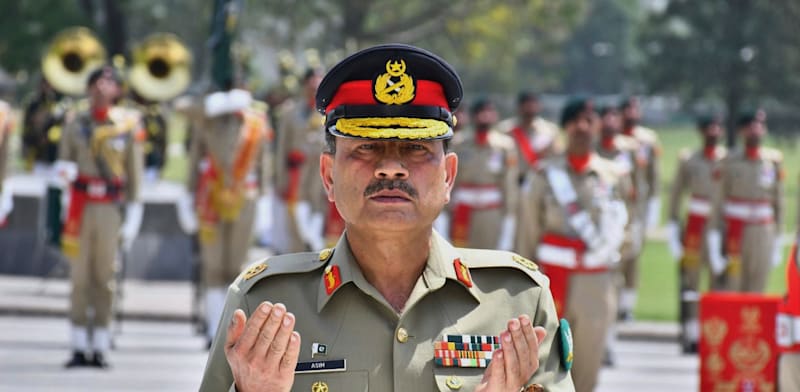
The possibility of a meeting between senior American officials and Iranian representatives on the soil of Islamabad was seen until recently as an almost imaginary scenario. For years, the axis of Middle Eastern diplomacy has moved between Doha, Cairo and Muscat, but in recent weeks, a quiet but significant shift has been registered in the arena. Pakistan found itself at the center of the mediation efforts between Washington and Tehran, not as part of chance but as a direct result of a well-planned strategic move.
● Underground missile cities: the Iranian project that is immune to Israeli attacks
● Report: The extremism scenario being examined in the Trump administration
The roots of the story do not lie in the outbreak of the current conflict, but many months before. While the eyes of the world were directed to other arenas, in Islamabad quiet and systematic work was going on to build a new diplomatic infrastructure with the aim of restoring relations with Washington. The move came after years of sharp tensions that included American accusations of a “double game” against the Taliban, alongside well-publicized security crises and growing concerns in the White House about Pakistan’s gradual drift towards China.
The bypass axis of Washington and Tehran
Over the years, Pakistan has made sure to maintain open channels of communication with Tehran even during times when other countries have lost direct access to the Iranian leadership. According to Reuters reports, these efforts went beyond the political level and included extraordinary economic and business moves designed to bring Pakistan closer to Donald Trump’s inner circle. The promotion of agreements in the field of crypto alongside American involvement in real estate projects related to the country reflected a deep understanding of the decision-making mechanisms around the former president, while the commander of the Pakistani army, Asim Munir, worked to establish a personal relationship with Trump that grew tighter over the past year.
The combination of these channels created an unprecedented dynamic in which Pakistan, which for years had struggled to position itself as a global mediator, found itself holding direct access to two hostile power centers. When the current conflict intensified and the traditional channels began to be blocked one by one, it became clear that Pakistan is no longer a secondary player but one of the few countries capable of conducting a dialogue with both sides at the same time. Thus, at the crucial moment when an effective mediator was required, the state was already prepared and ready to fulfill the role.
The current escalation between the United States and Iran has shaped a reality that is quite different from the one we knew in the past, as it is no longer a matter of quiet talks around limited agreements but a direct confrontation accompanied by real military threats and a growing fear of a regional flare-up. In such a system of pressures, the demands on the mediator change, and this is precisely where Pakistan’s strategic advantage as a nuclear power with a dominant and experienced army is manifested. When Islamabad warns of a deterioration, its words are not seen as a mere diplomatic statement but as a weighty security assessment by a country that fully understands the cost of miscalculations on the battlefield.
In the eyes of the regime in Tehran, this status has a decisive meaning, since Pakistan is not seen as an American affiliate and does not host US military bases in its territory, a fact that allows it to maintain a high level of trust even at the height of the crisis. At the same time, the administration in Washington recognizes in it a relatively stable factor capable of communicating with the senior ranks in Iran without being perceived as hostile.
Pakistan has a security interest
The relationship forged between Pakistani army chief Asam Munir and Donald Trump turned out to be one of the key factors in the change. According to the reports, the two also held direct talks during the past week in official coordination with the White House, which turns their relationship from a symbolic channel into a real and effective tool of action. In a system where fateful decisions are sometimes made outside the rigid institutional frameworks, the ability to speak directly with the highest level gives Islamabad a significant advantage that allows it to convey messages quickly and examine the feasibility of moves without being dragged into the usual layers of bureaucracy.
This channel was significantly strengthened through the involvement of key figures such as Steve Witkoff and Jared Kushner along with the promotion of joint projects, creating a broader and stronger relationship than the traditional political relationship. For Pakistan, this constitutes a powerful lever of influence that does not exist at the same level of complexity in other regional intermediaries.
At the same time as the strategic considerations, Pakistan acts out of a pressing internal need since it shares a long and explosive border with Iran. Any regional escalation could have a direct impact on its security stability, and in particular in the Balochistan region where armed separatist organizations that frequently cross the borders operate. For both countries, the transformation of the common border into an active front is a real strategic threat, a fact that creates a distinct interest in preventing a military deterioration that would reignite this arena.
A complex social challenge is added to the security dimension, since Pakistan is home to a large Shiite population that reacts sensitively to the events in Tehran. According to the reports, the attack on the Iranian leadership has already sparked a wave of protests throughout the country, which illustrates that the continuation of the fighting could undermine public order within Pakistan itself. Pakistan to prevent the conflict from spilling over into its territory in both the security, social and economic aspects.
Why not Qatar, Oman or Egypt?
As Pakistan moves forward, the traditional mediators find themselves in a complex situation arising from the combination of their strategic identity and the nature of the current conflict. Qatar, which was a major player in mediating with Hamas and was an asset for Washington, now suffers from an image of political closeness to the terrorist organization on the one hand, and a deep security dependence on the United States due to hosting its base on the other. This combination makes it difficult for it to be perceived as a neutral mediator in a conflict in which Iran faces Washington, while Oman encounters a different kind of limitation. Although in the past it served as a secret and reliable channel for the nuclear talks, the current conflict requires a political presence and strategic weight that goes beyond its low profile, what’s more, its identification with the old agreement places it in a less favorable position vis-a-vis an American administration seeking to define new rules of the game.
At the same time, Egypt operates within the limits of its deep involvement in the Palestinian arena, a fact that reduces its scope of action and its direct leverage vis-à-vis Tehran. The security burden and the sensitivity surrounding the situation in Gaza limit her ability to devote attention to broader regional mediation, leading to a result where none of the veteran players is able to fulfill the role fully. Pakistan enters this space, not as a direct replacement but as a different model of mediation that combines access to both sides with the required strategic weight.
Although Pakistan’s establishment as a mediator is not guaranteed in the long term, it is evident that it has managed to take advantage of a rare window of opportunity in the international arena. The unique combination of ties with both sides, military weight and a distinct internal interest, along with the ability to operate in official and unofficial channels at the same time, places it in a position it has not enjoyed in many years. According to estimates cited by Reuters, success in translating the current status into political achievements may significantly upgrade the country’s global status. However, even if no dramatic breakthrough is achieved, the mere fact that Islamabad has become the center of talks between the United States and Iran marks in itself a significant change of direction.
For your attention: The Globes system strives for a diverse, relevant and respectful discourse in accordance with the code of ethics that appears in the trust report according to which we operate. Expressions of violence, racism, incitement or any other inappropriate discourse are filtered out automatically and will not be published on the site.
https://www.trackyserver.com/profile/236360
https://profile.ameba.jp/icelsekvab
https://motion-gallery.net/users/929553
https://runtrip.jp/users/752193
https://app.thestorygraph.com/profile/isaacmitchell58
https://www.udrpsearch.com/user/AidenWhite40
https://hedgedoc.envs.net/s/EZCV6bCjr
https://pinshape.com/users/8929797-adriancarter80?tab=designs
https://graph.org/httpsbrazzporncom-03-16
https://www.infoq.com/profile/Leo-Moore.1/#allActivity
https://bestadsontv.com/profile/524527/icelsekvab-icelsekvab
https://www.siteinspire.com/profile/26508-brazzporn
https://www.callupcontact.com/b/businessprofile/brazzporn/10007589
https://telegra.ph/httpsbrazzporncom-03-16-2
https://www.tumblr.com/resonantsiegeprotector/811232347348516864/watch-hard-core-sex-videos-online-free-top?source=share
https://dev.to/icelsekvab
https://wallhaven.cc/user/icelsekvab
https://www.rcuniverse.com/forum/members/icelsekvab.html
https://www.dibiz.com/gpsytcnvgo
https://disqus.com/by/icelsekvab/about/
https://groover.co/en/band/profile/37a637.icelsekvab/
http://www.biblesupport.com/user/818463-alexanderperez22/
https://cinderella.pro/user/269264/DavidWilliams45/
https://topsitenet.com/profile/theodoremorris38/1561079/
https://jobs.suncommunitynews.com/profiles/8004149-daniel-wilson