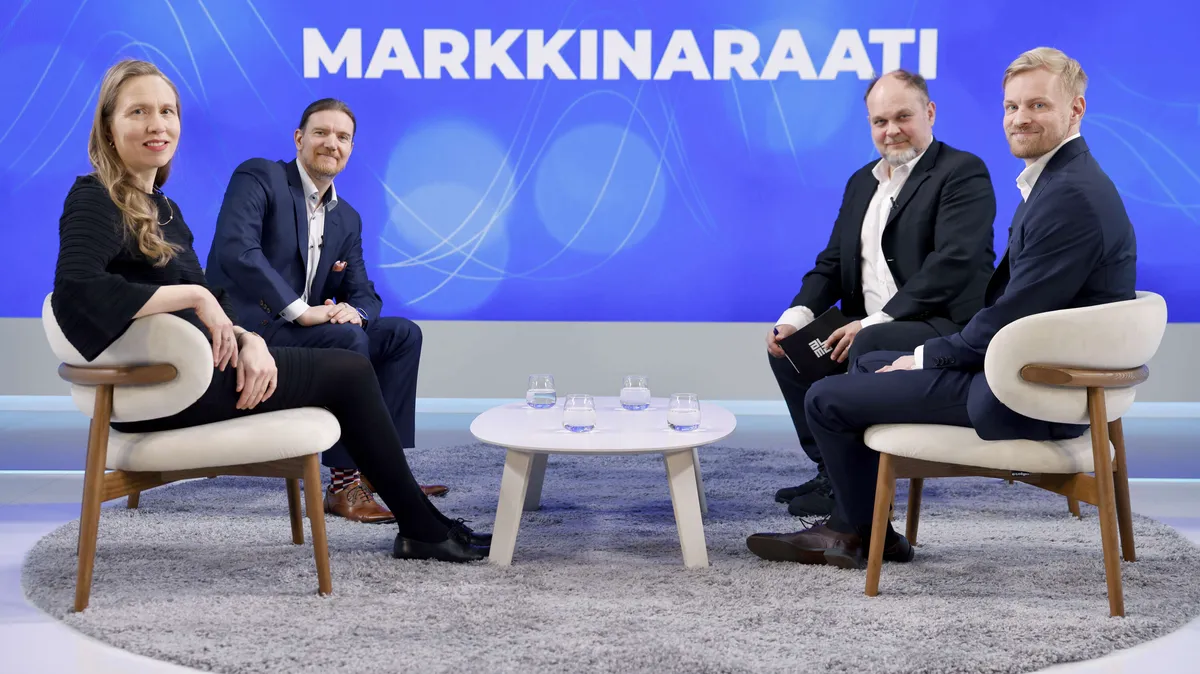
In the big picture, the valuation level of stock exchanges in developing markets is lower than in western markets. This is usually justified by higher risks. The generally higher interest rate in developing markets also tends to weigh on share valuations, and on the other hand, lower predictability. Reasons for a lower valuation can also be found in the distribution of industries, especially in countries with raw material production.
Actian portfolio manager And Paulamäki points out that higher interest rates in emerging markets have benefited interest-bearing classes.
“Of course, they are riskier, but nevertheless that risk has been benefited, i.e. a higher return has been obtained.”
So what are the most fatal risks in emerging markets, according to experts? Exchange rates are often seen as the single biggest risk for emerging market investors. Currency risk means that the returns do not only depend on the investment targets, but also on the value of the local currency against the Western currency.
Currency risk has been considered significant, as the currencies of developing countries typically fluctuate more than those of developed countries. However, last year was the opposite, i.e. in some developing countries it was more stable than normal.
“I think currency risk is very relevant in developing markets. Last year was quite good for many developing countries’ currencies, but before that there was a 15-year period that was quite bad. Of course, there are a lot of differences, that is, some currencies are clearly more stable than others”, sums up Nordic senior strategy Dear Alava.
Even if the investment goes up in Brazil, for example, the weakening of the currency can eat into the income or turn it into a loss.
“Latin America is perhaps at the worst end if you think about these fluctuating currencies. For example, typically at the same time as the Brazilian stock market rises, the currency strengthens and then when both reverse, both come down. So the currency is a clear risk.”
OP Pohjolan allocation manager Jani Stenius reminds that in a country like Brazil, risks and low valuation naturally bring opportunities. For example, he sees growth potential in the country’s financial sector.
Of course, there are plenty of other risks in developing markets.
In addition to market volatility and liquidity challenges, the main threats to investing in emerging markets have often been related to economic factors: high inflation, sovereign debt problems and a weak banking system. There are also risks associated with good governance and reporting culture.
“However, the risk related to the management method is not that relevant for the fund investor, because the events of individual companies usually do not shake the whole,” states Alava.
In addition, trade policy creates risks, as has been seen between China and the United States.
Finns have concretely experienced the realization of political risk, for example in the case of Russia, when the market completely disappeared from investors.
“If China were to make a similar attack on Taiwan, it would of course make it more difficult to invest in China in the future,” says Nordean Alava.
However, the general risks related to the developing countries’ own policies seem to be decreasing in at least some of the developing countries.
“We almost see a more traditional and responsible monetary policy there than in many Western countries, and indebtedness is reasonably well under control,” says Alava.
https://pad.hackerspace.gent/s/b9BNgfw-P
https://md.ha.si/s/T0u95jJE-
https://kuula.co/profile/darwinseoau
https://docs.stephtransition.fr/s/krYgidlyN
http://portal.merit.mn/es/user/toldosparabalconesibiza
https://medibang.com/author/27922893/
https://doodleordie.com/profile/rankonaicomau
https://hedgedoc.nixc.us/s/SHsKgXPgR
https://www.behance.net/rankonaicomau
http://semdinlitesisat.eskisehirgocukduzeltme.com/user/chefsupply98/
https://www.kickstarter.com/profile/88294923/about
https://audiomack.com/webdesigngeelongau
https://www.coursera.org/user/7b8b826a497c9150a622c4bf077e1f69
https://www.kickstarter.com/profile/388839984/about
https://dados.ifsc.edu.br/es/user/softwaremantenimientocloud
https://kktix.com/user/8512336
https://doc.cisti.org/s/9FFrQVsNU
https://id.kaywa.com/webdesigngeelongau
https://md.picasoft.net/s/7_UNC_l9Z
https://dati.fondazioneifel.it/es/user/productora-de-video
https://www.tomajazz.com/web/entrevista-con-riner-scivally-por-redaccion-de-bogui-jazz/
https://www.easyfie.com/read-blog/2443949_darwin-seo
https://repository.participatorylab.org/en/user/gramos-proteina-en-un-huevo
https://myanimelist.net/profile/webdesigngeelong
https://www.gravitysplash.com/b/findas-tokenomics/