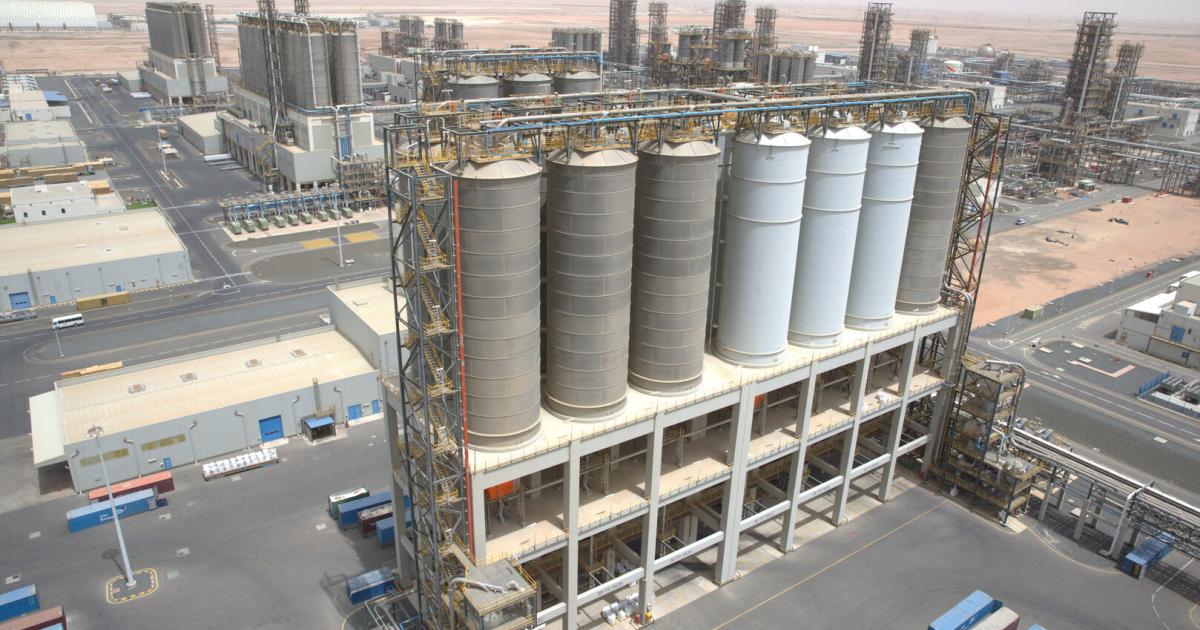
Negotiations took place for years, and the mega deal was formally completed on Tuesday. The partially state-owned OMV and major shareholder Adnoc, Abu Dhabi’s state-owned oil company, are merging their chemical divisions to form the giant Borouge Group International (BGI). The headquarters and the tax headquarters are in Austria.
Austria will undoubtedly receive a world-class company and the otherwise rather dry OMV boss Alfred Stern Don’t exaggerate when he cheers, “We’re playing along in the world.” The merger basically makes sense. Not only for Adnoc, the OMV plastics subsidiary Borealis particularly benefits from this.
Borealis, which is focused on Europe, would have little growth prospects on its own, experts estimate. The operating profitability (Ebitda margin) was recently around 25 percent for the North American Nova Chemicals, which was also merged into it, for Borouge it was 45 percent, but for Borealis it was only 15 percent. Borealis is the leader in research and patents in the new group.
Borealis will therefore be able to take part in the concert of global corporations in the future. Polyolefins are one of the most important plastics worldwide; the broad range of applications for the granules includes the automotive industry, packaging, consumer, electronics and construction through to household goods. Only two Chinese manufacturers and Exxon (USA) are currently larger than BGI.
But in the tense geopolitical situation, some clouds have gathered over the young global company. On the one hand, the Iran war, Adnoc facilities have already been damaged, Borouge’s production facilities are in the endangered zone. It is still unclear how the closure of the Strait of Hormuz will affect the export of granules. Nobody can currently judge how long the war will last.
Too optimistic
Added to this is the weak chemical economy, and the industry’s crisis has lasted much longer than expected. The development of the chemical industry depends directly on the growth of the global economy. The original forecasts are now turning out to be a little too optimistic, industry insiders observe. The shareholders feel this. The announced generous dividend of $500 million that BGI was supposed to pay out to OMV will be halved to $250 million (217 million euros) for 2026. According to the company’s calculations, the dividend per share for OMV shareholders will be reduced by 0.60 to 0.70 euros.
Therefore, BGI’s IPO, which was planned for 2026, will be temporarily postponed to 2027. The expected second listing on the Vienna Stock Exchange will not happen any time soon. A capital increase is planned in which OMV and Adnoc will not participate, so that their shares will fall to just under 47 percent.
To date, OMV has not presented any figures as to whether the entire deal is still as profitable for the company as expected. OMV has so far calculated synergies of $500 million, 75 percent of which in the first three years. There is no doubt in the industry that the merger is fundamentally worthwhile.
Another downer for the Alpine republic is that, as reported, there are no Austrians at the top of the new executive board and supervisory board. The strong man in the BGI is Adnoc CEO and Minister of Industry Sultan Al Jaber as chairman of the supervisory board. And becomes CEO Roger Kearns, previously head of Nova Chemicals.
Benko Foundation
This company was owned by Abu Dhabi’s sovereign wealth fund, Mubadala, which held the OMV stake for many years before Adnoc. Incidentally, Mubadala is the fund that granted Benkos Signa loans of over 700 million euros and achieved what the insolvency administrator and creditors could not.
By winning arbitration proceedings, the Abu Dhabis fired up the Laura private foundation. The fund can assert its claims against the foundation in which the Benkos store large parts of their private assets.
https://six6s-bangladesh.org/en-bd/welcome-bonus/
https://aviatrix-india.com/en-in/pin-up/pin-up-app/
https://aviatrix-india.com/en-in/odds96/odds96-app/
https://forum.videohelp.com/threads/420013-Need-the-Net-but-Have-No-Money/page4
https://aviatrix-india.com/en-in/registration/
https://six6s-bangladesh.org/en-bd/ios/
https://gitea.com/arvenCorex/-/projects
https://six6s-bangladesh.org/en-bd/withdrawal/
https://aviatrix-india.com/en-in/deposit/
https://six6s-bangladesh.org/en-bd/live-casino/
https://aviatrix-india.com/en-in/22bet/
https://seniorsdiscountclub.com.au/threads/hidden-cash-in-your-rubbish-this-19-year-old-has-already-collected-67-000-containers-worth-6-700.91443/page-3
https://steemit.com/casino/@neon73/how-to-strategically-use-no-deposit-bonuses-to-maximize-winnings-and-minimize-risks
https://aviatrix-india.com/en-in/10cric/10cric-app/
https://aviatrix-india.com/en-in/gg-bet/
https://forum.skullgirlsmobile.com/members/nexopatha.205787/#about
https://six6s-bangladesh.org/en-bd/registration/
https://aviatrix-india.com/en-in/withdrawal/
https://aviatrix-india.com/en-in/10cric/
https://chat.qwen.ai/s/deploy/t_a643d144-bfab-44d4-98a3-d35015440ed9