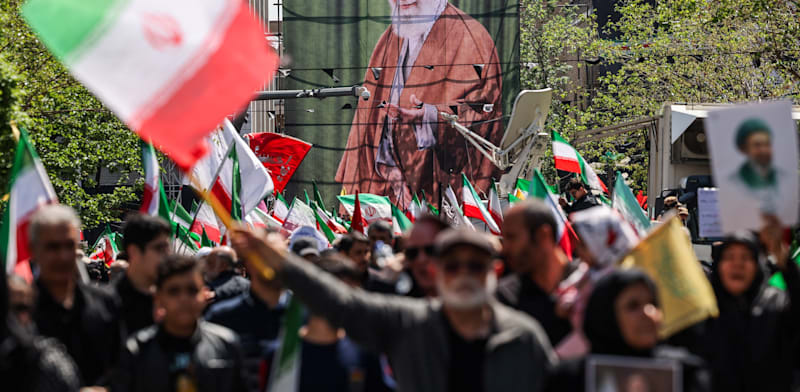
US President Donald Trump announced during the holiday a two-week ceasefire with Iran, and sent the best experts and commentators to a round of analyzes and guesses. Will it hold? What agreements will be reached at the end of the truce? What will happen to the Strait of Hormuz? And where does the terrorist organization Hezbollah stand in all these equations?
At this stage, naturally, the hidden is greater than the visible and it is very difficult to estimate where we will be in about two weeks. Still, the recent events are an opportunity for an interim summary (which may also become a general summary), and an attempt to answer the question – has this campaign brought us to a better place?
“High score for the Israeli home front”
“We have not returned Iran to the Stone Age, but this is certainly not their golden age,” begins Dr. Avner Golov, Vice President of Mind Israel and a former senior member of the MAL. “In the military arena, this is a total victory – we returned the nuclear and missile infrastructure years ago, the industrial base was severely damaged and the ability to restore was also damaged. It is true that we did not destroy all the capabilities, and the story of the 440 kg of enriched uranium is very disturbing. But overall, we are in good shape. It should be noted, the Iranians did not wage a military battle, it was a battle of attrition and there is a high score here for the Israeli rear.
“The problem is that the military arena and the home front are supposed to buy time, the question now is what do you do with it. And here we come to the political front – this is the stage that will determine the outcome of the war. In fact, this is the only front that does not buy time, but also shapes reality.”
And where do we stand on this front?
“A big question mark. The Iranians now think that they have passed the worst – an attack by the world’s greatest power. We need to prove to them that the worst is yet to come. There is a need for an entire international system that will prevent them from recovering militarily and economically and will increase the pressure on the regime. When you look at this ceasefire – Trump the businessman has defeated Trump the statesman. The businessman told him to pursue a deal and reduce risks, and this is a sign that we should be worried. Agreement with the regime will be a critical mistake.”
What is important to Israel in this negotiation? How do we get out of here with our hands on top?
“As far as Israel is concerned, we need to keep our eyes on the ball first of all regarding the nuclear issue, and I hope that the Americans will not compromise on the matter. Beyond that, the pressure on the regime must continue. Trump is now trying to sell a narrative that he has effected regime change and is checking to see if they are a good company – it is scary. If after all this, Iran buys the three years until Trump ends his term, and in the meantime recovers militarily and politically, that is very bad.
“In addition, the Americans are interested in two other things. First of all, Hormuz – for which currently they still haven’t found a solution and the message here is problematic. Beyond that, the Iranians made a mistake when they attacked the entire Middle East, and the Americans have an opportunity to create a regional alliance and show that they are the dominant power in the region.
US Secretary of Defense, Pete Hegseth / photo: ap, Alex Brandon
“You have to remember that the Americans don’t go to war to weaken their capabilities – they’re looking to destroy enemies or save allies. Therefore, from their point of view, a big change is needed here. As mentioned, they’re trying to sell regime change, but it’s less likely to work. I hope that this will lead to a reshaping of the Middle East with the dominance of the Americans. This could be a justification from their point of view for this war.”
“Trump was sold a boutique war”
“It is difficult to speak in terms of loss or victory,” continues Dr. Yoel Gozhansky, head of the Gulf program at INSS and who in the past coordinated the handling of the issue of Iran and the Gulf at MAL. “On the one hand, we obviously pushed them back with nuclear weapons and missiles – but today Iran is at a point where it can regain its capabilities within a few years. In the end, in this war Iran is projecting enormous power, when it stands against the greatest power in the world and survives. The American Secretary of War is indeed trying to convey victory, but that is not the case.”
Does the US regret entering the event?
“Trump was sold a boutique war. He thought that the elimination of the top officials in the opening blow might replace the regime, but as soon as that didn’t happen – it was clear from the second week that he wanted a ceasefire. In general, the president did not understand the weakness of the Gulf countries and their soft underbelly. Looking ahead, I think that the Gulf countries will try to return to their previous policy, before the war, to hedge risks and stop the tensions with Iran. It’s not that they want it, but Iran has stayed there And they have no choice. There is also a lesson here for the whole world: it is not easy to overthrow a regime.”
In general, it seems that a strategic mistake by Israel and the US lies in this part: the attempt to broadcast to the world as if the overthrow of the regime is an event that could easily happen. “It was a mistake,” adds Dr. Golov. “You don’t topple regimes in war, unless you put forces on the ground. The regime feels it has survived, and therefore sees it as a victory.”
Do you think they won?
“It depends on how you define victory. You can say that surviving and holding Hormuz is a victory, but I don’t think that Israel should test itself according to that. We can say that we have an unprecedented military achievement, but in the end, like in Gaza and Lebanon – what will make the difference will be the political side. If in three weeks there is an agreement between the Americans and the regime, we will continue to count records, but in two years we will return to the same situation. On the other hand, if the political campaign is successful, we may have bought a lot of time and increased the chance that during this time the Iranian regime will be replaced.”
“What else can Iran threaten?”
In addition to the situation in the US and Israel, we are trying to understand how things are seen in Iran. “The ceasefire raised the morale of the regime,” explains Benny Sabati, an expert on Iranian affairs at INSS. “It gives them time to regroup, collect their wounds and assess the damage.
“In general, it should be said that the Iranians do not place value on money, life and time. For them, there is endless time and money to build capabilities. When you live like this, you feel victorious all the time. Therefore, morale is high in the regime. However, I hear voices from among the conservatives in Iran talking about the amount of destruction and losses. I have never seen tweets like this before, even they now understand the pain. There is a feeling of a very hard blow.”
And on a personal level, do you think we won?
“In the military sense, we are winning big. If we were to fight against France, for that matter, she would have long ago admitted failure and gotten out of it. But in the sense of consciousness – the work is not finished, and we always leave things in the middle.”
What would you do differently now?
“I would continue with the assassinations. I don’t know what happened in the last two weeks, but no senior political figures were eliminated. The majority of the Iranian people are not satisfied – if a few more senior officials were eliminated, we would reach a level that would not want to be eliminated and it would be over. But something happened and we stopped it.”
So this campaign is a failure?
“Not a miss, a delay. We did half the job. We reduced capabilities, quantities of missiles, the nuclear industry was damaged and we prepared the ground for the crowd to take to the streets. But we haven’t finished the job. I think the next round will be soon, and the protest round is also close. The regime is showing its weakness, and Iran’s problems have not been solved – the citizens still have no tap water.”
Despite Iranian weakness, Hormuz is a significant hostage.
“A hostage situation actually brings the end closer. For 30 years, Hormuz served as a deterrent and a significant card for the Iranians, but they did nothing. Precisely the moment they used it – they have nothing left, it’s the last card. What else can Iran threaten?”
For your attention: The Globes system strives for a diverse, relevant and respectful discourse in accordance with the code of ethics that appears in the trust report according to which we operate. Expressions of violence, racism, incitement or any other inappropriate discourse are filtered out automatically and will not be published on the website.
https://royal-casino.eu.com/
https://mariacasino.co.dk/
https://maria-casino.co.dk/
https://maria-casino.eu/
https://mariacasino.eu.com/
https://mariacasinos.dk/
https://tivolicasino.co.dk/
https://tivoli-casino.co.dk/
https://tivolicasino.eu/
https://tivolicasinodk.dk/
https://tivolicasino.eu.com/
https://kapowcasino.co.dk/
https://kapow-casino.co.dk/
https://kapowcasinodk.dk/
https://kapowcasino-dk.org/
https://vavadacasino.ee/
https://fr-stake.com/
https://fr-stake.net/
https://fr-stake.org/
https://stake-fr.biz/
https://stake-fr.org/
https://stakecasino-fr.net/
https://stakecasino-fr.org/
https://stakecasino1fr.com/
https://stakecasino1fr.org/