China’s producer price index (PPI) has increased again since September 2022, due to the Middle East conflict causing oil prices to increase.
According to data from China’s National Bureau of Statistics, March PPI increased 0.5% compared to March 2025, ending the longest streak of production deflation in decades. This result is higher than forecast in Reuters poll, at 0.4%.
Production prices increased sharply in energy-consuming industries such as non-ferrous metal mining, up 36.4%; metallurgy and non-ferrous metal processing increased by 22.4%. In the first quarter, the producer price index still decreased by 0.6% compared to the same period in 2025.
The PPI of the world’s second largest economy increased again last month due to the Middle East conflict pushing up oil prices, causing fuel and raw material production costs to escalate. By April 10, Brent oil contract for June delivery was trading at 96.7 USD per barrel, up 33% since the fighting began. WTI oil contract for May delivery is priced at 98.5 USD per barrel, up 47%.
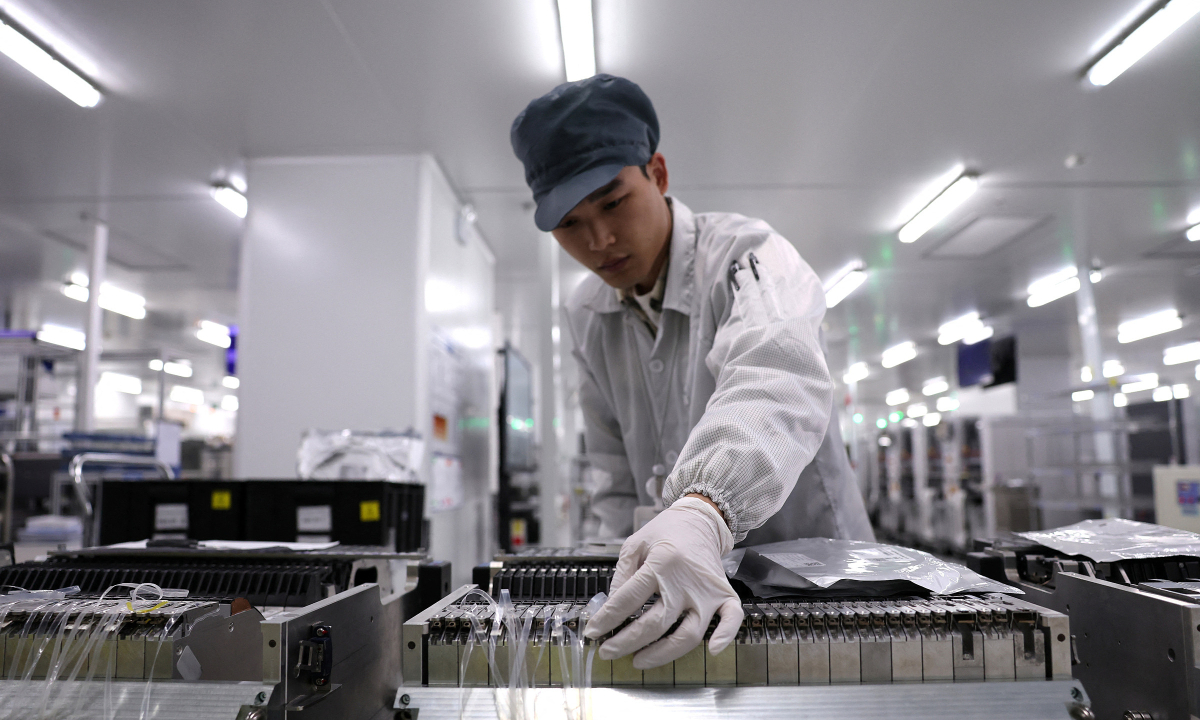
Workers on an electronics production line in Shenzhen on March 19. Image: Reuters
Since the end of February, China has allowed domestic fuel prices to increase, but with a ceiling, to reduce the impact of rising oil prices. Zhiwei Zhang, chief economist at Pinpoint Asset Management, said that the situation in the Middle East remains very unstable. “The inflation outlook for many countries, including China, is the same,” he said.
China is the world’s largest oil importer, but thanks to its large reserves and diverse energy supply, it has been able to reduce the economic impact of the conflict in the Gulf, according to Robin Xing, Chief China Economist at Morgan Stanley.
“China coped better than other countries with the oil shock, thanks to its flexibility in converting energy sources and policy space when inflation is low,” said Mr. Robin Xing. He forecasts that this country’s PPI will increase by 1.2% this year.
In March, China’s consumer price index (CPI) increased 1%, lower than the 1.2% forecast by economists surveyed by Reuters and slower than the 1.3% increase in February. Core CPI, excluding volatile items such as food and energy, increased 1.1% in March.
Mr. Xu Tianchen, senior economist at the Economist Intelligence Unit, said that among Asian economies that have published inflation data for March so far, China is the only country to record a month-on-month decrease in CPI.
With inflation low and rising due to cost push (input prices) rather than high demand, Marco Sun, Head of Financial Market Analysis at MUFG (China), predicts that Beijing will not make adjustments to economic operating policies.
The yuan and USD exchange rate stabilized after the release of inflation data, while mainland stock markets rallied.
Morgan Stanley has just lowered its China growth forecast this year by 10 basis points, to 4.7%, assuming average oil prices reach 110 USD per barrel in the second quarter before cooling down. In case the Middle East conflict escalates, pushing oil prices above 150 USD per barrel this quarter, China’s real GDP could decelerate to 4.2%.
“Even if the Strait of Hormuz is reopened, the slow supply normalization process and the need to restock could cause oil prices to remain high,” Mr. Xing said.
https://www.gamespot.com/profile/ginjacasino/
https://joguenoginja.weebly.com/
https://pantip.com/profile/9304421
https://quicknote.io/5775ee10-2ce7-11f1-8915-79e193fd1a6a
https://www.40billion.com/profile/413213021
https://www.deviantart.com/ginjacasino
https://sites.google.com/view/ginja-casino
https://www.pinterest.com/pin/1052575744201855605
https://medium.com/@EmiliaSik/a-experi%C3%AAncia-definitiva-de-jogos-online-em-portugal-21cc91a16591
https://ginjacasino.gumroad.com/
https://www.twitch.tv/ginjacasino
https://issuu.com/ginjacasinopt
https://www.pexels.com/ru-ru/@ginja-casinopt-2160745736/
https://www.goodreads.com/user/show/200159211-ginja-casino-pt
https://fliphtml5.com/home/jogue-no-Ginja
https://telegra.ph/Experi%C3%AAncia-no-Ginja-Casino-jogos-b%C3%B3nus-e-c%C3%B3digos-promocionais-04-07
https://coolors.co/u/ginjacasinoonline
https://leetcode.com/u/GinjaCasinoonline/
https://www.themoviedb.org/u/CasinoGinjaPT
https://muckrack.com/ginja-casino-online
https://myanimelist.net/profile/CasinoGinjaPT
https://pubhtml5.com/homepage/vxtum/
https://rada.crimea.ua/jak-tanci-zaminjujut-sportzal-i-trenujut-tilo/
https://uahistory.co/post/gora-z-gri-prestoliv-pidtverdiv-uchast-v-olimpiadi-na-steroyidakh/
https://www.6264.com.ua/list/554145