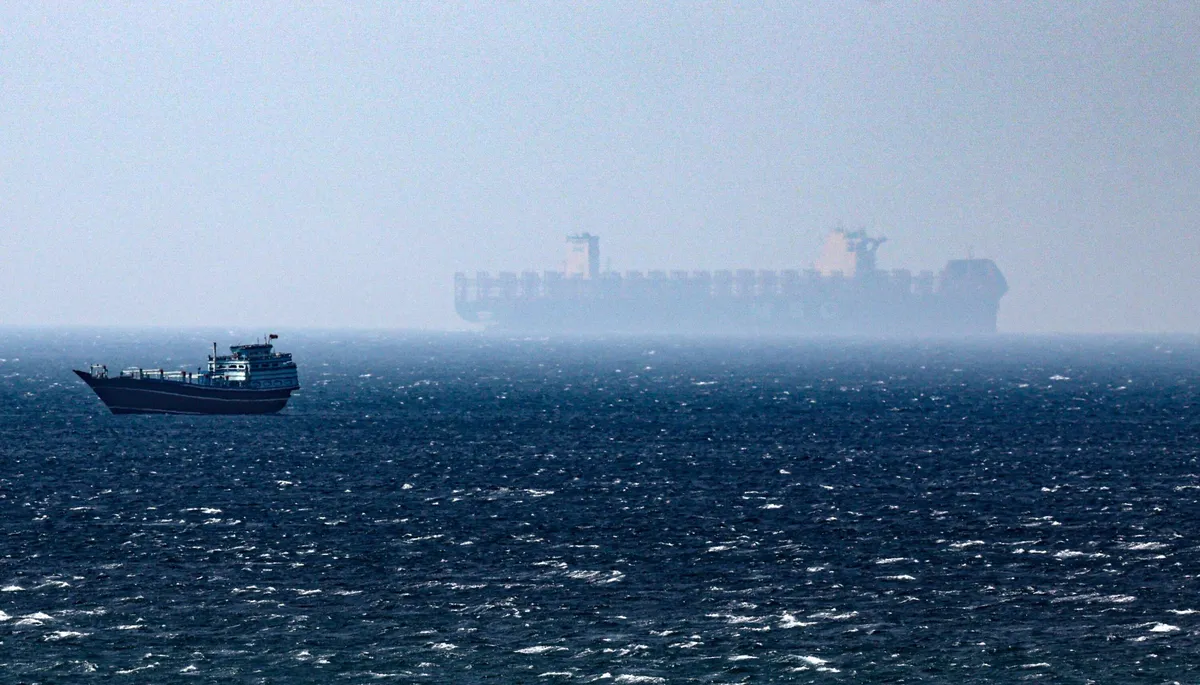
The failure of the Iran peace talks and the US president Donald Trump’s the decision to block the Strait of Hormuz are pushing the world economy into a new crisis. The Iranian regime has not accepted the blockade and has stated that the country has the means to respond to it.
The importance of the strait for global supply chains is critical. ACI Europe, which represents European airports, warned on Friday that there is only enough aviation fuel for about three weeks. The price of jet kerosene has already doubled in Europe, and a worsening shortage threatens air traffic as early as May.
The College of the European Commission will meet on Monday in an extraordinary meeting to assess the effects of the Iran war and the means by which critical functions can be guaranteed. For example, regarding energy, the chairman of the commission Ursula von der Leyen has already promised member countries “temporary and targeted” measures to curb the rise in energy costs.
Emergency model from the corona era
If airports start to close due to fuel shortages, according to information from Kauppalehti, the model during the corona pandemic may become relevant in the EU, which defines the critical services and functions that member countries must secure. The commission’s role would be to coordinate that the member countries jointly take care of, for example, necessary flights and other necessary actions.
The closure of the Strait of Hormuz is not as critical for the EU in terms of crude oil or natural gas, as relatively little energy enters Finland and Europe directly through the strait. However, the situation is different for jet kerosene and diesel: up to half of these come via the Strait of Hormuz, and Europe does not have sufficient refining capacity to compensate for the supply shortfall. “There will be a shortage of them already in May,” a commission official told Kauppalehti.
Energy measures package
The Commission’s selection of means may include, for example, joint procurement of energy and more flexible state aid rules. For example, member states could introduce windfall taxes for large companies benefiting from the energy crisis, whose extraordinary profits could be taxed. Vice President of the Commission and Economic Commissioner Valdis Dombrovskis already last week gave the green light to the introduction of windfall taxes for large companies.
There may also be an extra EU energy summit ahead.
“It’s still on the rafting table,” the official described.
There is also a so-called energy toolbox in preparation, which is scheduled to be published next week. It is expected to contain the first concrete proposals to curb energy prices.
Cancer imaging at risk
The concern is not limited to fuels. Critical raw materials are also transported through the Strait of Hormuz, such as helium, which is needed, for example, in imaging equipment for cancer diagnostics and which is hardly produced in Europe.
“The strictness is also beginning to be seen in medicine and health care”, the commission official assessed the effects of the closure of the Strait of Hormuz.
At the same time, the EU’s foreign policy wish is to calm the situation, i.e. a ceasefire and a peace agreement.
https://deschutesrecords.org/inmate-search
https://deschutesrecords.org/property-records
https://deschutesrecords.org/warrant-search
https://duvalrecords.org/
https://duvalrecords.org/arrest-records
https://duvalrecords.org/court-records
https://duvalrecords.org/criminal-records
https://duvalrecords.org/divorce-records
https://duvalrecords.org/inmate-search
https://duvalrecords.org/property-records
https://duvalrecords.org/warrant-search
https://elpasorecords.org/arrest-records
https://elpasorecords.org/court-records
https://elpasorecords.org/criminal-records
https://elpasorecords.org/divorce-records
https://elpasorecords.org/inmate-search
https://elpasorecords.org/property-records
https://elpasorecords.org/warrant-search
https://fresnorecords.org/
https://fresnorecords.org/arrest-records
https://fresnorecords.org/court-records
https://fresnorecords.org/criminal-records
https://fresnorecords.org/inmate-search
https://fresnorecords.org/property-records
https://fresnorecords.org/warrant-search