To this day, tormenting relationships prevail between literary studies and literary criticism. From their university silos, many professors are eagerly looking for the colorful gray of the newspaper columns and at the same time despise the journalistic cords that are up to mischief. In the laying batteries of the editors, in turn, one longs for intellectual lighting shapes and is not wrongly afraid of a male German, to which philologists also understand each other.
Peter von Matt had developed a healthy defensive attitude against the dangers of both sociceopes. From the hysterical mine in daytime, he stayed as far as from the academic box sets. In his essays, he jumped on the objects with the same energy as they jumped. He formulated pointed, does not look for Eaber for punch lines. He said thinking and thought to be narrative, to the border on which the gradient of primary and secondary text disappeared. The materiality of language melted on his tongue and he penetrated her tissue until the last colon. Von Matt had understood early: Good writing comes from exactly reading.
He showed critics where the happiness of literary knowledge lies, professors, where they should be afraid, and to understand a poem, a narrative or a novel. To do this, he was decorated with all relevant prices.
In the end someone who apparently did so much did not do so much can only be explained with a not particularly widely scattered intuition gift, which in their case is pairing with a patient struggle for the best possible sentence.
I agree that the external content is displayed. This means that personal data can be transmitted to third -party platforms. You can find more information in the data protection settings. You can find this at the bottom of our page in the footer so that you can manage or revoke your settings at any time.
Writing according to your own laws
The impressive work he created did not fall on the lap of Peter von Matt, born in Lucerne in 1937. Its replacement of average Germanistry can be dated to 1980. As he once told Herlinde Koelbl, he had taken over an visiting professorship at Stanford University and decided to only follow his own laws from one day to the other California day. However, he also confessed that this departure did not go out painlessly: to this day he will be eaten when writing doubts.
He had studied at Emil Staiger, whose chair at the University of Zurich later took over, and did his doctorate on Franz Grillparzer’s stage art. Already Staiger, the most influential Germanist around the middle of the last century, had profiled himself as a meticulous reader, but has increasingly bunker into a cultural conservative attitude against everything modern – a notch that is dilapidated by matt with astonished curiosity to the old and the youngest.
The “literary history of human face” under the title “… is finished” with which he celebrated his new freedom for the first time in 1983 was already an impressive testimony of his departure. Using the example of an unusual object, the example of an unusual object was what a radical writer Franz Kafka was, how eventful a sentence can be and how often in a paragraph the thinking sometimes changes towards, not only interpretative. They only really work in the way in which the physiognomies of their fellow human beings can be studied.
Theoretically clever, psychoanalytically moved
In the best sense, Peter von Matt attempts to find out the astonishing strategies of literary world development, far beyond the proverbial Staigerian “understand what we are taking”. Theoretically, he was clever, especially psychoanalytically moved, but despite his knowledge of knowledge, not on that hermeneutic Easter egg hunt that only wants to discover in texts what the author allegedly hidden in them.
In the triad of the analysis of a speaking detail, aesthetic basic research and the link in terms of life world, he demonstrated what literature knows what only it knows – and above all how different it knows it as philosophy or psychology.
In this way he has gotten better and better. Von Matt wrote basic books about the “delay” and family disaster (“deteriorated sons, missed daughters”), which have long since exceeded the Germanistic in the direction of the comparative table. And in “The Calf before the Gotthardpost” he has pruded himself at his Swiss.
Reading poems with anthropological access
Also great his reclam band “What is a poem?”, The revised and updated version of an essay that opened “The suspicious splendor” 20 years ago: an initiation for poetry that has no second in its anthropological access. Finally, at Hanser, “Seven Kisses”, using the example of Virginia Woolf, F. Scott Fitzgerald, Gottfried Keller, Franz Grillparzer, Heinrich von Kleist, Marguerite Duras and Anton Czechow, clarify “Happiness and Unpathy in Literature”.
Von Matt always developed a plea for the obstinity of great literature and the objection to any packaging aesthetics. Literature, he explains, says in scenes: “The unconditional happiness in the literature also mostly appears as a scene, and in a thousand cases the kiss belongs to this scene. Kissing is a common business. If the unconditional happiness were connected to every kiss, humanity lived in paradise.”
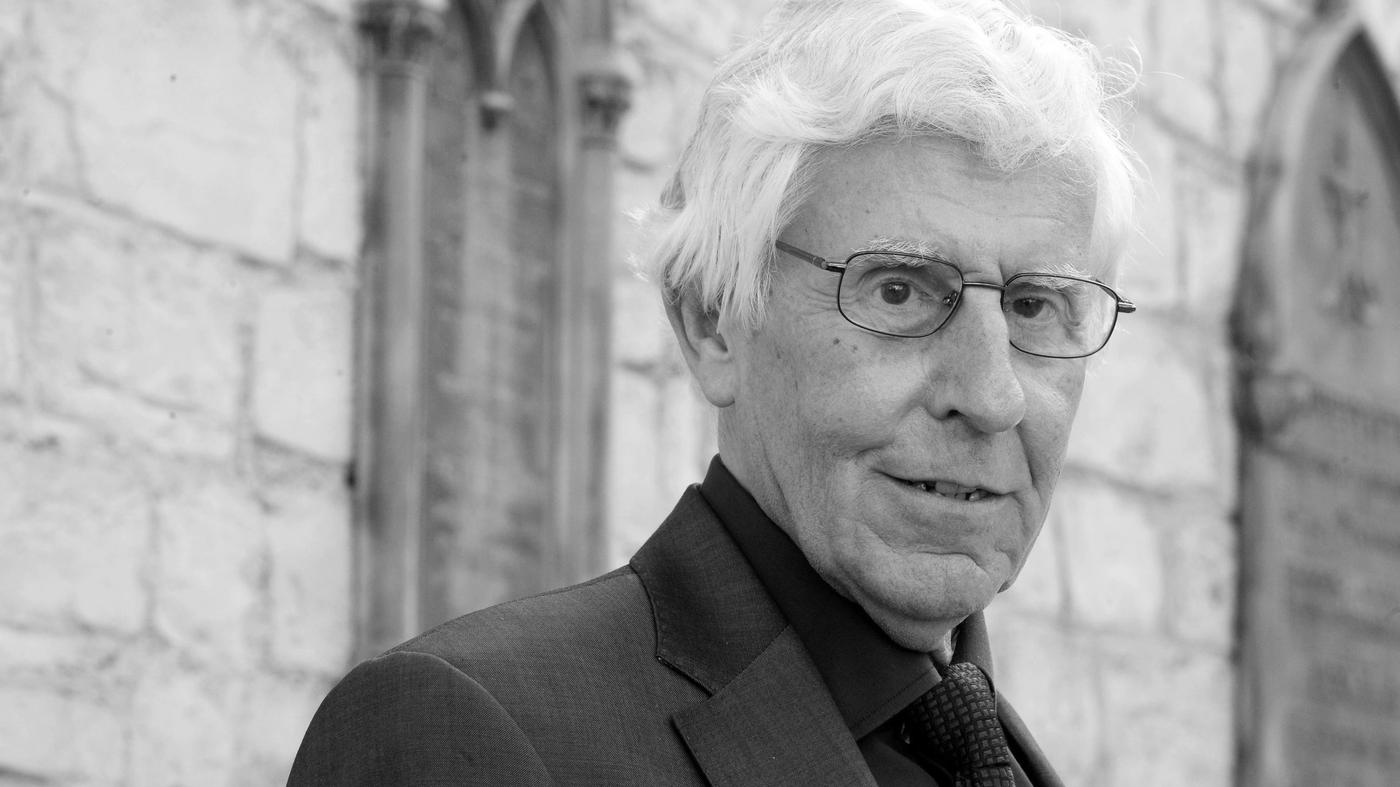
The last prank, published in 2023, the band “Upper Pelenders, Dry Schleicher, Lichtgestaltung”, collected essays, speeches and post -words, which he had all written after his emeritus in 2002. The objects, from Adelbert from Chamisso’s “Peter Schlemihl” to Heinrich Hoffmann’s “Struwwelpeter”, were again very diverse, but were held together by a usual sparkling intelligence. She has now gone out. On Monday he died after a long illness in Zurich at the age of 87.