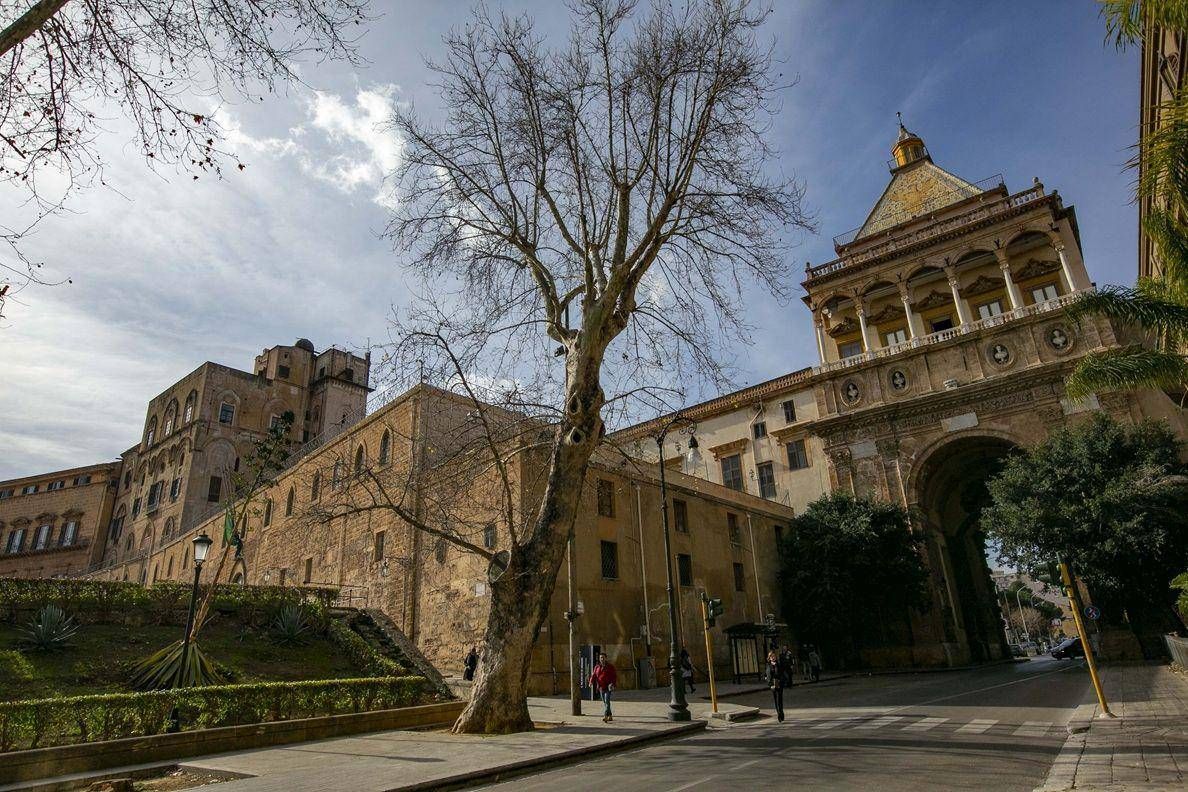
From the building of the Ministry of Education and Merit in Rome to the Palazzo delle Finanze in Milan passing through the San Giovanni in Monte complex in Bologna or Porta Nuova in Palermo. Without forgetting an unprecedented itinerary to commemorate the 800 years since the death of Saint Francis of Assisi, with a selection of openings in 8 regions that will enhance the figure and the spiritual and cultural heritage of the patron saint of Italy. FAI, the Italian Environment Fund, opens the doors to 780 places of culture in 400 cities which can be visited for free on the occasion of the 34th edition of the FAI Spring Days scheduled for 21 and 22 March.
“The Spring FAI Days – underlined Marco Magnifico, president of the FAI during the presentation of the initiative in the Spadolini Room of the Mic – are increasingly a large and powerful megaphone to tell what the FAI is and what it does every day; not a spectacular isolated event but the witness of a daily and widespread commitment throughout the country, of a courage, a curiosity, a spirit of service and a concrete attention to the issues of protection which relies on the support of an ever-increasing number of citizens to continue, alongside and with the institutions of the State, to do good for the most beautiful country in the world: ours. For this reason, the registrations to the FAI and the donations that we collect during the event are fundamental to supporting the complex daily reality of a Foundation that acquires, restores and enhances cultural and landscape assets of every type, size and variety, capable of telling their story, with theirs, that of Italy 365 days a year – and not just two”. Thanks to 7,500 volunteers from the Delegations and FAI Groups and 17,000 Ciceroni Apprentices, hundreds of flagships of our cultural heritage that are often little known or little appreciated will open their doors.
There are many places that can be visited. TO Romadoors open to the Court of Cassation, a complex built to a design by the architect Guglielmo Calderini between 1888 and 1910. In the capital it will be possible to visit the Palazzo della Cancelleria, the first great example of Renaissance architecture in the Roman context and home to some ecclesiastical courts, such as the Sacra Rota, and the Palazzo Corrodi (reserved for FAI members), created on the initiative of the painter Hermann Corrodi at the beginning of the 20th century as a complex of ateliers for artists and which over time has become a central place for Italian poetry, radio and cinema. Also in Rome, worth mentioning is the opening of Villa Lante al Gianicolo for FAI members.
A Milano doors open at Palazzo Turati, the new headquarters of Istituto Marangoni Moda, on whose main floor you can admire the rooms sumptuously decorated with the works of great masters of 19th century Lombardy. Also visitable is the Libeskind Tower (reserved for FAI members and by reservation), a building designed by the American architect Daniel Libeskind and built between 2015 and 2020, nicknamed the Curved due to its shape, and the Rai Headquarters in Corso Sempione (visits by reservation), with 5 television and 5 radio studios, where visitors will be able to experience firsthand the effects of Extended Reality and discover the technical innovations used during the broadcasts of the Winter Olympics.
And still in Emilia-Romagna: doors open to the San Giovanni in Monte complex in Bologna, born as a convent, which later became a prison, now home to the University’s Department of History, Culture and Civilization, with a large Renaissance cloister and the refectory frescoed by Bartolomeo Cesi, protagonist of Bolognese painting between the 16th and 17th centuries; doors also open for the former Monastery of San Sisto in Piacenza, transformed into a barracks, which preserves a large part of the original Renaissance environments and where today the exercises and training activities of the second Bridge Engineers Regiment are hosted, often involved in supporting the population by restoring roads compromised by natural events. Visits also to the Guiglia Castle (Modena), also known as Montecuccoli Castle, opened as a preview for the new visiting season.
Going south, a Napolithe Maradona Stadium, inaugurated in 1959, will be accessible, where visitors will be able to observe the pitch from the sidelines and walk the so-called ‘Blue Mile’, just like the athletes do. Doors open at the Palazzo d’Avalos in Vasto (reserved for Fai members), which over the centuries has become a real urban palace, now undergoing important restorations and exceptionally accessible for Fai. Still in the North, in Liguriathe Lantern of Genoa will be accessible, the most famous monument of the city, the first written testimonies of which date back to 1128, and the Helicopter Station of the Navy in Sarzana (La Spezia), with a route between hangars, helicopters and simulators to get to know first-hand the training and operations of the crews involved in security and rescue, also in support of the Civil Protection and 118 during emergencies and disasters.
A Torinodoors open to the Palazzo di Città, seat of the Town Hall, with richly decorated rooms, such as the Mayor’s Hall – exceptionally accessible – the Marble Hall and the Council Hall, with velvets and red damasks on the walls. Doors also open for the Opificio delle Rosine, a historic city institution founded in 1756 to support the emancipation of women through training and self-employment, today an artistic and cultural hub with a strong social vocation, and “behind the scenes” visits to the Rai Arturo Toscanini Auditorium, since 1872 reserved almost exclusively for concert activity and equipped with the most recent technological recording systems, which has hosted the Orchestra since 1994 RAI National Symphony Orchestra.
A Firenzedoors to Palazzo Cerretani (visits by reservation), seat of the Tuscany Region Council, with the splendid Sala del Barbarossa frescoed in the first half of the 18th century by Vincenzo Meucci, and to Palazzo Buontalenti, or Casino Mediceo di San Marco, built as the “workshop” of Grand Duke Francesco I and today, after having hosted the Court of Appeal, home to the School of Transnational Governance (EUI).
Giuli: “The FAI represents the beauty and goodness of Italy”
“The FAI is the plastic representation of everything that represents the beautiful and the good within the civil fabric of this extraordinary nation called Italy”, said the Minister of Culture, Alessandro Giuli. The Italian Environment Fund “is the representation of a relationship not of mutual dependence, but of mutual love towards what makes the nation that holds records vital. And holding a record is not only a privilege deserved by our ancestors, it is a duty to be shared. Because if there is no sharing, the record fades and becomes a medal pinned on the worn uniform of a sloppy inclination towards isolationism”. Giuli then added: “We want to be brothers of the 17,000 Cicerone apprentices who mobilize together with us, we are brothers and students of the students who are trained through the teaching of FAI and of anyone who wants to guide the public on the path of beauty, in this widespread dance around knowledge, around the safety of us and our heritage. We – concluded the minister – are the fruit of a cultural construction. Our tradition is in progress and every year it is renewed and challenges us on the need to build culture”.