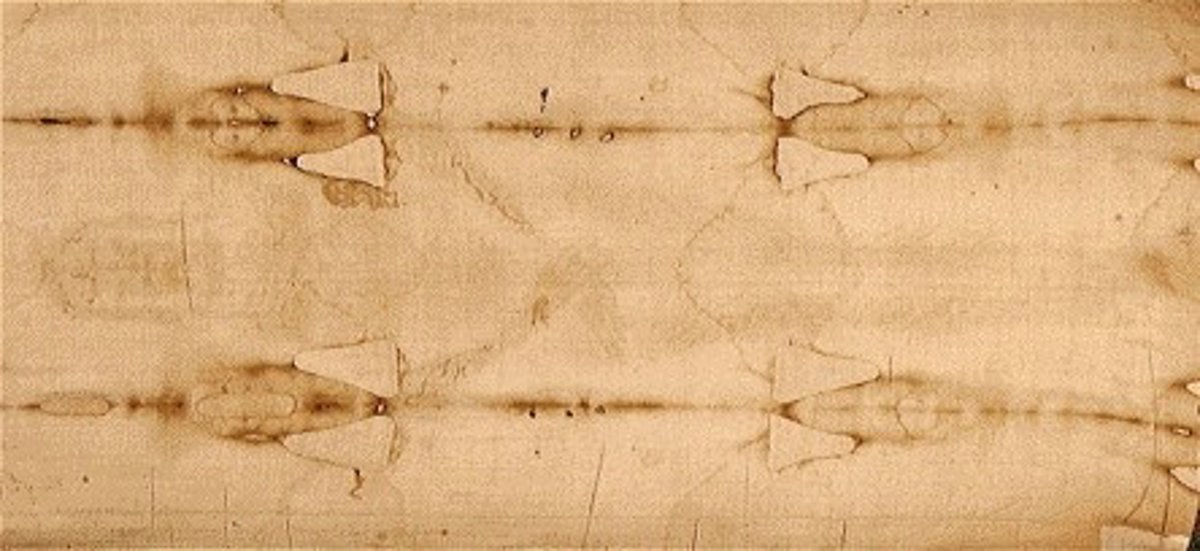
New scientific research confirms the presence of a predominant genome in the Middle East region on the Shroud of Turin, in addition to detecting microorganisms that thrive in environments with very high salinity.
The scientific article, signed by Professor Gianni Barcaccia, professor of Genetics and Genomics at the University of Padua, and other researchers, suggests that the canvas would have been in a very saline environment, such as the Dead Sea, in addition to confirming its stay in the Middle East, as reported by ‘Vatican News’.
Already in the eighties, Pier Luigi Baima Bollone, a professor of Forensic Medicine, claimed to have detected the presence of human blood in the Shroud of group AB.
Later, in 2015, Barcaccia had already published an article in ‘Nature Scientific Reports’ announcing the discovery of the presence of contamination DNA from people who had touched the Shroud: more than 55.6% from the Middle East and around 38.7% from India, while Europeans represented less than 5.6%.
Now, researchers suggest that the presence of approximately 38.7% Indian ethnic lineages could be the result of historical interactions or the importation of linen by the Romans from regions near the Indus Valley, associated with the term Hindoyin present in rabbinic texts.
“In particular, the term Shroud, derived from the Greek Sindôn, meaning fine linen, could be related to Sindh, a region famous for its high-quality fabrics,” they add.
Precisely, historical evidence supports the commercial links between India and the Mediterranean, underlining the importance of these fabrics. Thus, the reevaluation of these results based on the analysis of the DNA traces found in the Shroud of Turin suggests “the possible wide diffusion of the fabric in the Mediterranean region and the possibility that the thread was produced in India.”
This new research confirms the presence of aplogroup H33, “prevalent in the Middle East and frequent among the Druze” and ensures that the Druze population shares a common genetic origin with Jews and Cypriots and, throughout history, has mixed with other Levantine populations, including Palestinians and Syrians.
“As for microorganisms, it is interesting that the reconstructed microbiome of the Shroud reveals a rich variety of microorganisms commonly present in the human epidermis, as well as communities of archaea adapted to high salinity and fungi, including molds,” they say.
https://bengaligame.com/bonuses/
https://bengaligame.com/cookies-policy/
https://bengaligame.com/dafabet/
https://bengaligame.com/dafabet/dafabet-app/
https://bengaligame.com/demo/
https://bengaligame.com/deposit/
https://bengaligame.com/download/
https://bengaligame.com/how-to-play/
https://bengaligame.com/jeetbuzz/
https://bengaligame.com/jeetbuzz/jeetbuzz-app/
https://bengaligame.com/krikya/
https://bengaligame.com/krikya/krikya-app/
https://bengaligame.com/megapari/
https://bengaligame.com/megapari/megapari-app/
https://bengaligame.com/nagad88/
https://bengaligame.com/nagad88/nagad88-app/
https://bengaligame.com/planbet/
https://bengaligame.com/planbet/planbet-app/
https://bengaligame.com/predictor/
https://bengaligame.com/privacy-policy/
https://bengaligame.com/promo-code/
https://bengaligame.com/provider/
https://bengaligame.com/registration/
https://bengaligame.com/responsible-gaming/
https://bengaligame.com/signals/