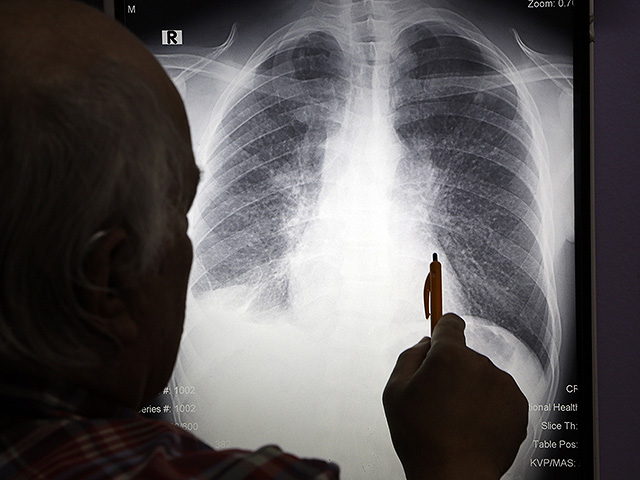
According to a study published in the journal npj Digital Medicine, an artificial intelligence model performed better than radiologists when analyzing CT images for the presence of hard-to-see foreign bodies. The findings demonstrate the potential of AI to help doctors diagnose complex and life-threatening conditions.
Foreign body aspiration (FBA) occurs when a foreign object, most often a food particle or small object, enters the airway. If objects such as plant fibers or fragments of crustacean shells are radiolucent (that is, not visible on X-rays and difficult to see even on CT scans), their detection becomes extremely difficult. This often leads to erroneous or late diagnosis and, as a result, increases the risk of serious complications. In adults, up to 75% of cases of AIT occur due to radiolucent objects.
To solve this problem, the researchers developed a deep learning model that combines 3D precision airway mapping (MedpSeg) with a neural network that can analyze CT images and detect hidden signs of foreign bodies. The model was trained and tested on data from three independent groups of patients, including more than 400 people, in collaboration with medical institutions in China. To evaluate the accuracy of the system, its results were compared with the diagnosis of three experienced radiologists, each of whom had over ten years of clinical practice. The specialists had to analyze 70 CT images, of which 14 represented confirmed cases of radiolucent AIT detected by bronchoscopy.
When radiologists recognized a case of AIT, they did so accurately—there were no false-positive results. However, they were only able to identify 36% of all cases, highlighting the difficulty of recognizing such objects. The AI model, on the contrary, showed an accuracy of 77%, but at the same time identified 71% of all cases of AIT, significantly surpassing doctors in terms of completeness of detection. According to the integral indicator F1, which reflects the balance between accuracy and completeness, AI also showed an advantage – 74% versus 53% for radiologists.
Scientists note that the developed system is not intended to replace radiologists, but to support their work – it should serve as an additional tool that increases the confidence of specialists in complex or ambiguous cases.