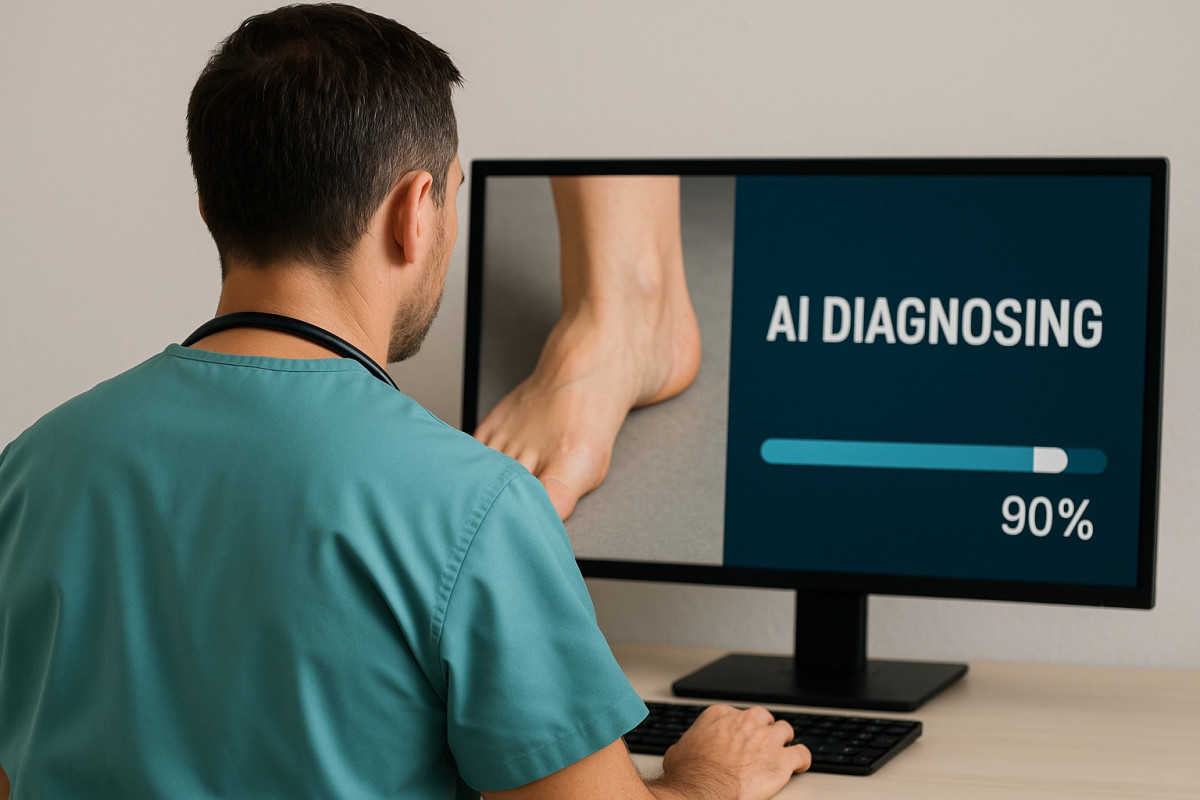
The IDF Medical Corps is entering a new era of digital medicine: an artificial intelligence system developed by the corps’ doctors is beginning to learn to diagnose skin diseases based on pictures of soldiers. After a successful pilot phase in which it reached 92% accuracy in identifying lesions such as petra and the Jericho rash, the IDF plans to expand the project so that in the future the system will be able to identify hundreds of different skin diseases within seconds, shorten diagnostic processes and improve the availability of medical treatment in the field
The artificial intelligence system is trained by exposing it to tens of thousands of medical images of diseased and healthy skin. Using an artificial neural network – a computational system that simulates the activity of the human brain learns to identify patterns, colors, boundaries and textures characteristic of each lesion. Gradually she “understands” which characteristics indicate a disease and which are not significant. After thousands of learning cycles, the system manages to self-diagnose new medical conditions that were not included in the initial training, while predicting the exact probability of each diagnosis.
Diagnostic devices based on artificial intelligence are already in use in medical centers in Israel. One of them, developed at Sheba Hospital, detects a stroke in CT scans with over 95% accuracy and alerts the medical teams in real time. This system has already led to the saving of human lives when it was able to detect a stroke minutes before the doctors noticed it themselves.
The Medical Corps states that in the first phase the system will focus on diagnosing foot and mouth ulcers, common lesions among soldiers serving in hot areas or in the desert. Later, the capacity of the system will be expanded and it will be able to help diagnose hundreds of skin diseases that are usually diagnosed based on external observation only. This ability is expected to significantly shorten diagnosis times, allow for early treatment and reduce the burden on military skin clinics.
The new system, which is still in the initial development phase, was presented for the first time at the Medical Corps’ military medicine conference held at Bar Ilan University, and received great interest from medical experts and technological developers.